On eBird ↗
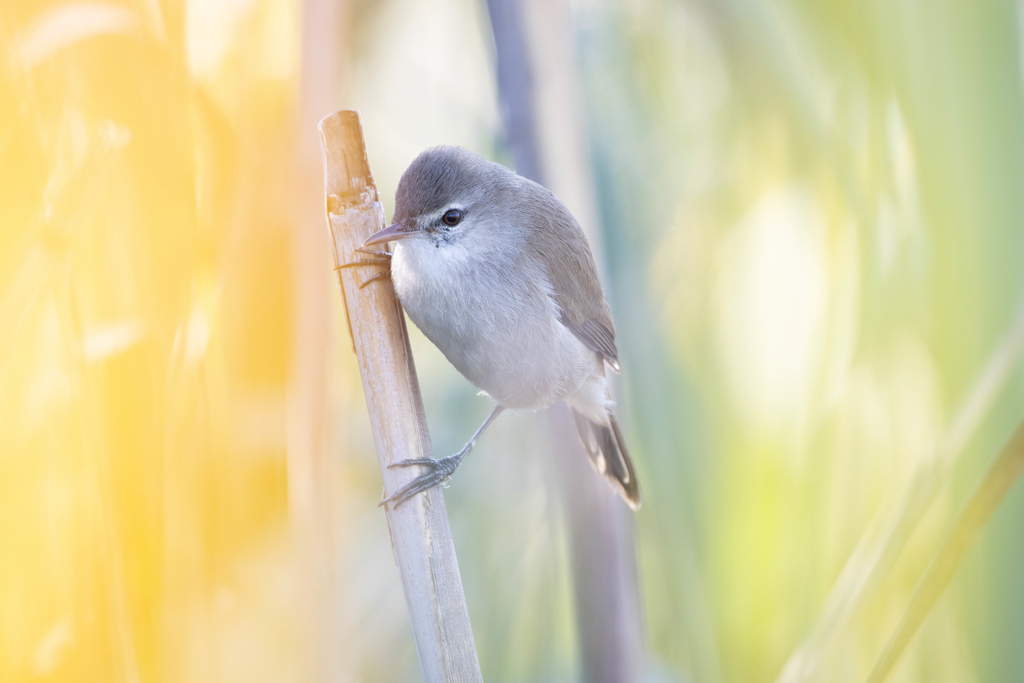
Lesser Swamp Warbler
Live sightings near you, the range map, bar charts of when it is seen, and Macaulay Library photos and recordings.
Lesser Swamp Warbler
Acrocephalus gracilirostris
The lesser swamp warbler or Cape reed warbler (Acrocephalus gracilirostris) is an Old World warbler in the genus Acrocephalus. It is a resident breeder in Africa from the Democratic Republic of the Congo, the Chad and Ethiopia south to South Africa. This is a common species of reedbeds in standing water.
From the article Lesser swamp warbler on Wikipedia (CC BY-SA), quoted section by section
Description
The lesser swamp warbler is a plain-coloured smallish bird 14–16 cm long and weighing around 20 g. Its upperparts are rich brown, and it has a white supercilium. The underparts are white, with a rufous wash to the flanks. The long, strong bill has a slightly down-curved upper mandible; it is blackish-yellow with a yellower base. The legs are blue-grey and the eyes are brown. Adults of both sexes and juvenile birds are very similar in appearance. The song is rich and melodious, a series of bubbly phrases that include trilling notes, cheerup chee trrreee and a large number of variations, with pauses between phrases.
What it does
The lesser swamp warbler builds a deep, firm cup nest from strips of reed blades, grass and sedges, which is lined with finer grasses. It is always placed in reeds above water. It nests mainly from August to December, with the earliest nesters being those in the winter rainfall areas of the Western Cape Province. It lays two or three brown eggs. This species is monogamous, pairing for life. The lesser swamp warbler is usually seen alone or in pairs, moving through wetland reedbeds, and clambering up and down reed stems. It eats insects and other small invertebrates.
Wikipedia: “Behaviour”
Listen
Looking for field recordings…
Where it lives
Recorded sightings
—
geo-referenced records in GBIF, from museums, herbaria and field observers.
Drag the globe to turn it. Dots are where records exist, not a range map; darker means more records.
In the stacks
Searching the stacks…
Every page naming Acrocephalus gracilirostris in the Biodiversity Heritage Library →
This page is assembled live from iNaturalist, GBIF, Wikipedia, the Source Library and the Internet Archive. It is not yet part of the hand-edited codex. iNaturalist taxon 116798.