On eBird ↗
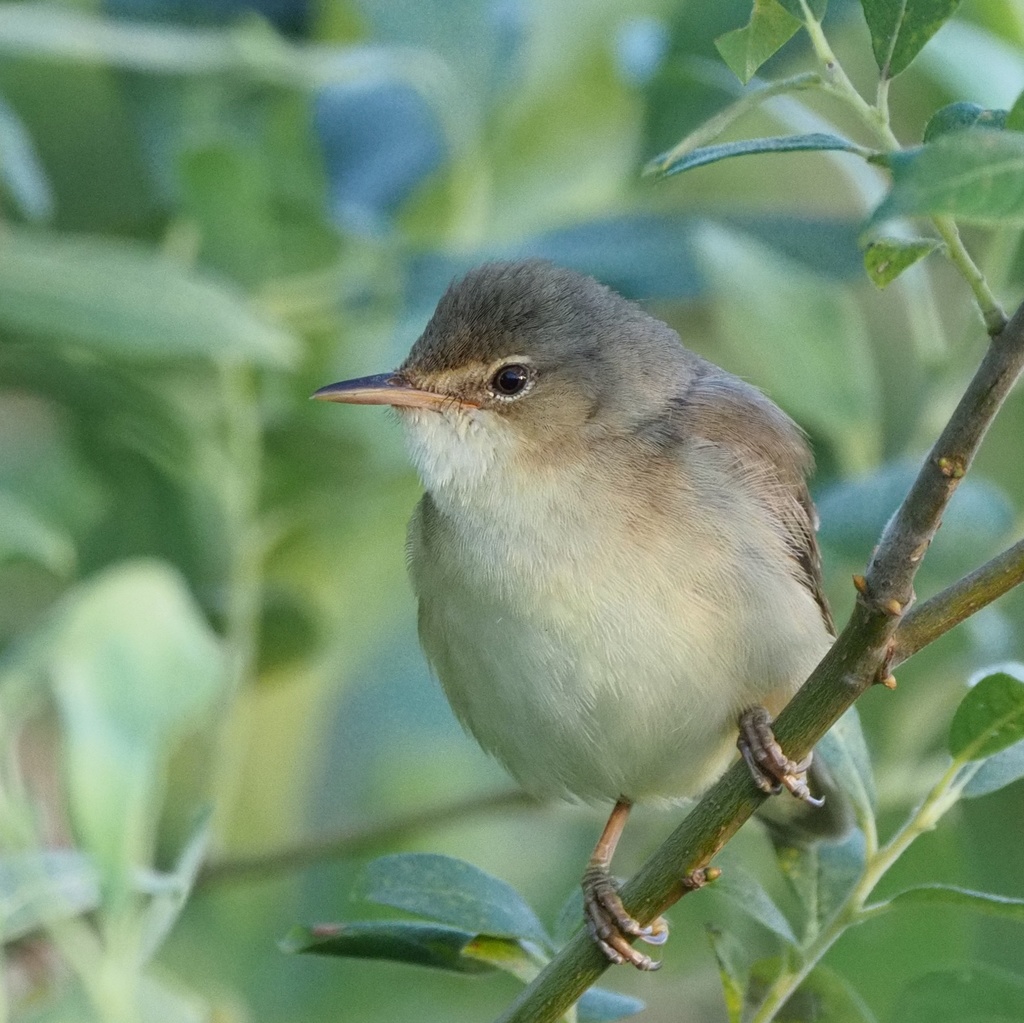
Marsh Warbler
Live sightings near you, the range map, bar charts of when it is seen, and Macaulay Library photos and recordings.
Marsh Warbler
Acrocephalus palustris
The marsh warbler (Acrocephalus palustris) is an Old World warbler currently classified in the family Acrocephalidae. It breeds in temperate Europe and the western Palearctic and winters mainly in southeast Africa. It is notable for incorporating striking imitations of a wide variety of other birds into its song.
The marsh warbler breeds in a variety of mostly damp habitats, but in Africa winters mainly in dry, well-vegetated areas. It is common over much of its breeding range and expanding its distribution in some areas. However, in Britain it is now virtually extinct as a breeding bird, though the reasons for its decline are unclear. This insectivorous warbler can be easily confused with several close relatives, but the imitative song of the male is highly distinctive.
From the article Marsh warbler on Wikipedia (CC BY-SA), quoted section by section
Description
This is a medium-sized warbler. It is very similar in appearance to several other acrocephaline warblers, such as the reed warbler which also occurs in wetlands and has a similar breeding range. The male's distinctive song is useful for identification, as no other member of the genus mimics other birds to any significant extent. The marsh warbler also tends to avoid the stands of pure reed which are the reed warbler's favoured habitat. The sexes are alike in appearance. Hybridisation with both reed warbler and Blyth's reed warbler has been occasionally recorded. The marsh warbler is best known for the highly imitative song uttered by males, and very occasionally by females. Each male marsh warbler incorporates imitations of a wide range of other birds into its song. Other passerines are most commonly imitated, but the calls of other kinds of bird such as waders, hornbills and pigeons have been noted too. On average, each male bird incorporates imitations of 75 other species into its song, with rather more African than northern species mimicked. All learning seems to take place in the summer the bird is hatched in Europe or Asia, and in its first winter in Africa. The calls of birds heard in subsequent years are not added to the warbler's repertoire. Females may utter a simple, non-imitative song, and a range of other calls are also known.
Range & habitat
The marsh warbler breeds in the middle latitudes of Europe and western Asia, from the English Channel to about 70 degrees east. It mainly occupies areas with a continental climate, but breeds, or has bred, in Britain and northern France as well. It is principally a bird of the lowlands, but occurs at altitudes of up to 3000m in Georgia. In recent decades it has expanded its range to the north, with increasing numbers of birds breeding in Scandinavia and north-west Russia. Singing males are occasionally heard in Ireland, most recently in 2017. In western Europe the marsh warbler breeds mainly in rank vegetation on damp or seasonally flooded soils, and is particularly attracted to tall herbaceous vegetation such as nettles, meadowsweet, willowherbs and to young osiers and other low woody plants. It may breed in urban brownfield sites with suitable vegetation, for instance in Berlin, and also occasionally in arable crops. In the eastern part of its range, it breeds on dry hillsides with shrubs and in open woodland, as well as the kind of damper habitats it frequents in the west. The marsh warbler winters mainly in south-east Africa, from Cape Province north to Zambia and Malawi. It makes use of a range of well-vegetated habitats, from moist scrub to dense thickets and woodland edge, at altitudes up to 2400m. …
Wikipedia: “Distribution and habitat”
What it does
The marsh warbler is mostly insectivorous, but also takes some spiders and small numbers of snails. It generally gleans insects from vegetation but sometimes catches them on the ground or in mid-air. In autumn small numbers of berries may be eaten. There have been no detailed studies of the bird's diet in Africa, though foraging techniques during winter are known to be very similar to those in other seasons.
Wikipedia: “Food and feeding”
Listen
Looking for field recordings…
Where it lives
Recorded sightings
—
geo-referenced records in GBIF, from museums, herbaria and field observers.
Drag the globe to turn it. Dots are where records exist, not a range map; darker means more records.
In the stacks
Searching the stacks…
Every page naming Acrocephalus palustris in the Biodiversity Heritage Library →
This page is assembled live from iNaturalist, GBIF, Wikipedia, the Source Library and the Internet Archive. It is not yet part of the hand-edited codex. iNaturalist taxon 116802.