
Ciliates
Ciliophora
The ciliates are a group of protozoans characterized by the presence of hair-like organelles called cilia, which are identical in structure to eukaryotic flagella, but are in general shorter and present in much larger numbers, with a different undulating pattern than flagella. Cilia occur in all members of the group (although the peculiar Suctoria only have them for part of their life-cycle) and are variously used in swimming, crawling, attachment, feeding, and sensation.
8 branches of this phylum, most-observed first

Intramacronucleata
subphylumIntramacronucleata
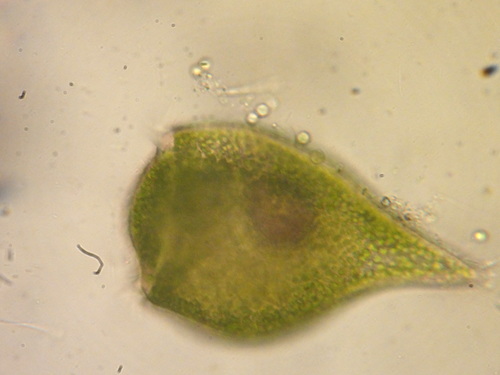
Postciliodesmatophora
subphylumPostciliodesmatophora
Dendrocometidae
familyDendrocometidae
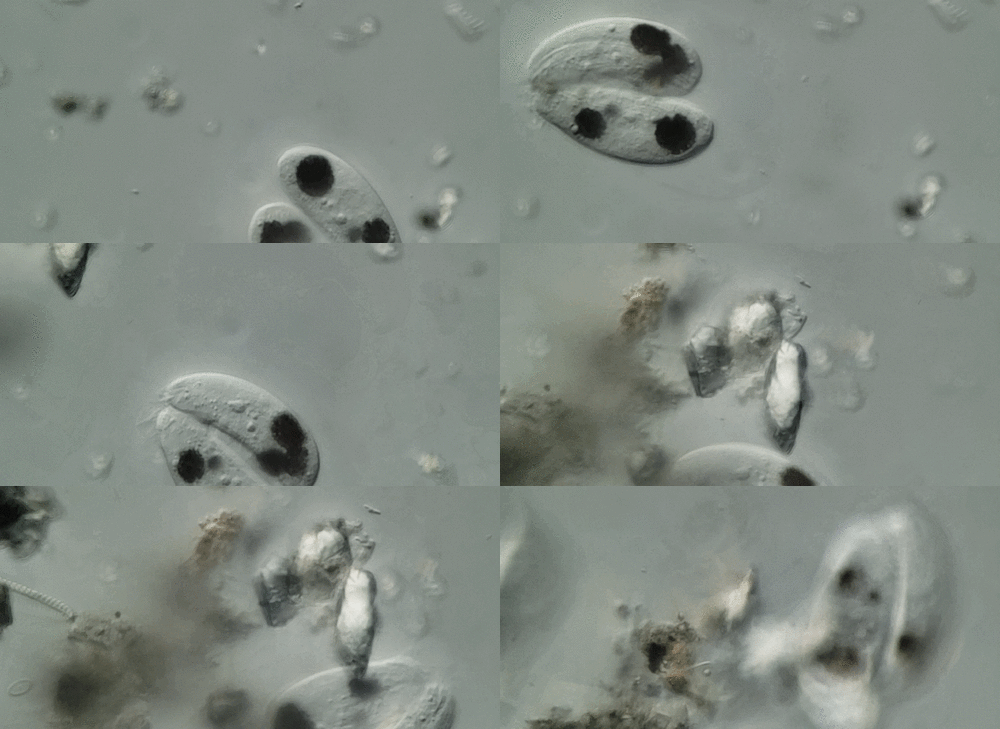
Lagynophryidae
familyLagynophryidae

Spirozonidae
familySpirozonidae
Arachnidiopsis
genusArachnidiopsis
Malacophryidae
familyMalacophryidae
Ciliofaureidae
familyCiliofaureidae
Where it lives
Recorded sightings
—
geo-referenced records in GBIF, from museums, herbaria and field observers.
Drag the globe to turn it. Dots are where records exist, not a range map; darker means more records.
In the stacks
Searching the stacks…
Every page naming Ciliophora in the Biodiversity Heritage Library →
This page is assembled live from iNaturalist, GBIF, Wikipedia, the Source Library and the Internet Archive. It is not yet part of the hand-edited codex. iNaturalist taxon 118996.