Buxbaumiaceae
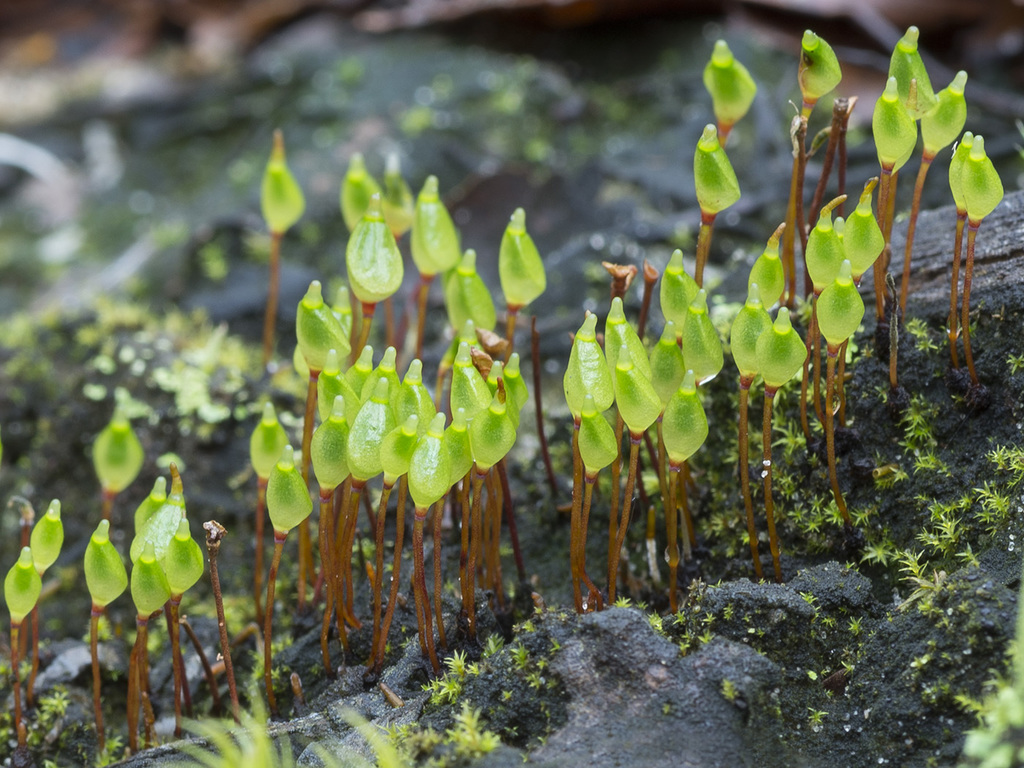
Buxbaumia (bug moss, bug-on-a-stick, humpbacked elves, or elf-cap moss) is a genus of twelve species of moss (Bryophyta). It was first named in 1742 by Albrecht von Haller and later brought into modern botanical nomenclature in 1801 by Johann Hedwig to commemorate Johann Christian Buxbaum, a German physician and botanist who discovered the moss in 1712 at the mouth of the Volga River. The moss is microscopic for most of its existence, and plants are noticeable only after they begin to produce their reproductive structures. The asymmetrical spore capsule has a distinctive shape and structure, some features of which appear to be transitional from those in primitive mosses to most modern mosses.
1 branches of this family, most-observed first
See this branch on the Wheel of Life →
Where it lives
Recorded sightings
—
geo-referenced records in GBIF, from museums, herbaria and field observers.
Drag the globe to turn it. Dots are where records exist, not a range map; darker means more records.
In the stacks
Searching the stacks…
Every page naming Buxbaumiaceae in the Biodiversity Heritage Library →
This page is assembled live from iNaturalist, GBIF, Wikipedia, the Source Library and the Internet Archive. It is not yet part of the hand-edited codex. iNaturalist taxon 124849.