- Animals
- ›Chordates
- ›Vertebrates
- ›Ray-finned Fishes
- ›Spiny-rayed fishes
- ›Cusk-eels
- ›Cusk-eels
- ›Ophidiinae
- ›Genypterus
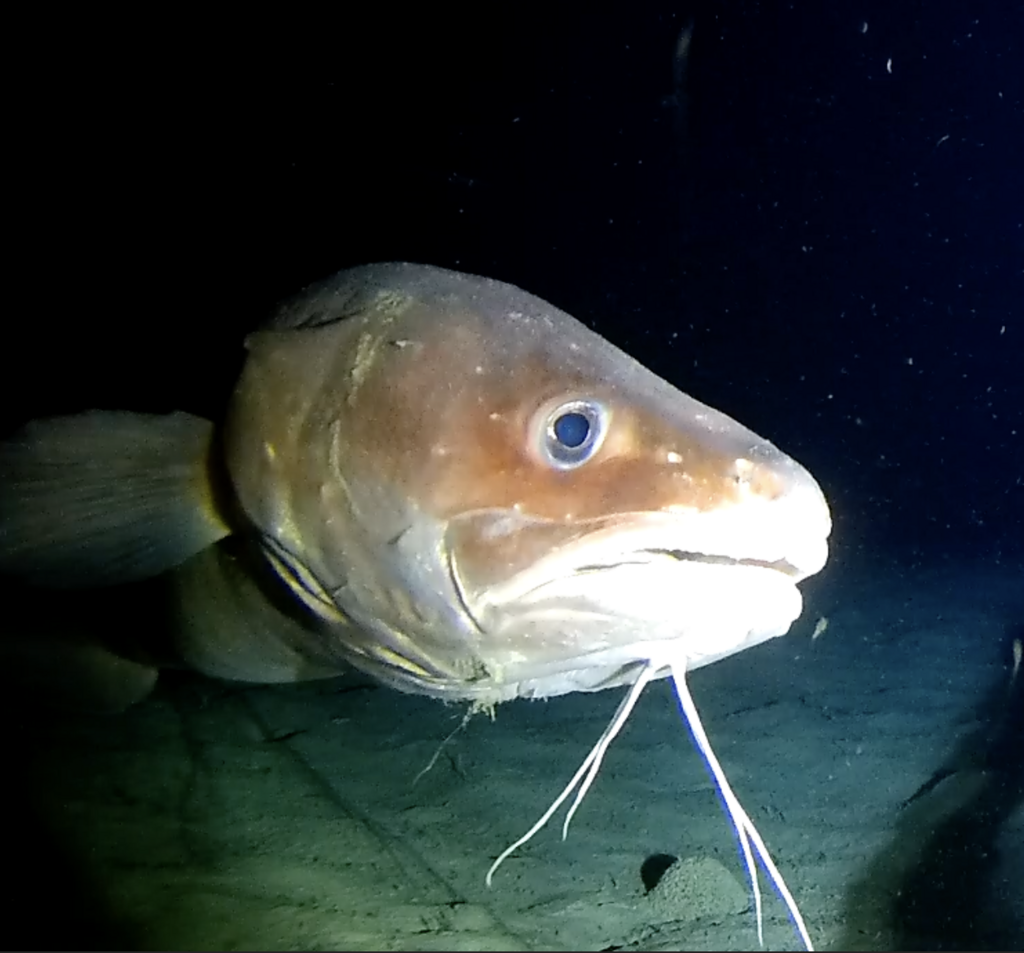
Pink Ling
Genypterus blacodes
The pink cusk-eel, Genypterus blacodes, is a demersal species of cusk-eel in the family Ophidiidae found in the oceans around southern Australia, Chile, Brazil, and around New Zealand except the east coast of Northland, in depths of 22 to 1,000 metres (70 to 3,280 ft; 10 to 550 fathoms). It is found in the Chilean Patagonia fjords, one of the least researched ocean regions in the world.
Other names for the pink cusk-eel include ling, Australian rockling, New Zealand ling, kingklip, pink ling, and northern ling. The South African kingklip is a similar, related species (Genypterus capensis)
From the article Pink cusk-eel on Wikipedia (CC BY-SA), quoted section by section
Range & habitat
The pink cusk-eel is found exclusively in the southern hemisphere. Their range extends from New Zealand, southern coast of Australia from New South Wales to western Australia, and to southern South America from Argentina to southern Chile. The first official pink cusk-eel landings in Chile were recorded four decades ago, in 1978. In Chile, pink cusk-eel is distributed from 32°00′S to the last tip of Patagonia at 57°00′S Pink cusk-eel populations are divided into northern and southern stocks, each with significantly different life history traits. There has been no evidence of large-scale movements. In the month-long NORFANZ Expedition of 2003 which was examining the biodiversity of the seamounts and slopes of the Norfolk Ridge near New Zealand, a single specimen weighing 6.3 kg (13 lb 14 oz) was collected.
Wikipedia: “Distribution”
What it does
This species feeds on crustaceans, such as the lobster krill Munida gregaria, isopods (Cirolana spp., Serolidae), stomatopods (Pterygosquilla armata) and gammarid amphipods. Fish are also eaten by the cusk-eel, such as the notothenioid Patagonotothen ramsayi and the Argentine hake (Merluccius hubbsi). It was also reported to have fed on cephalopods. It has been caught on the bottom during the spawning season of the blue grenadier (Macruronus novaezelandiae) while feeding on the species. In northern regions G. blacodes preyed mainly upon fish followed by crustaceans, whereas in southern regions crustaceans were the main prey group, followed by fish and cephalopods. Juvenile specimens of pink cusk-eel feed mainly on crustaceans. G. blacodes presents a digestive tract typical of a carnivorous benthonic fish.
Wikipedia: “Diet”
In human culture
The ling, Genypterus blacodes, is an important and abundant commercial species on the New Zealand continental shelf and also supports fisheries off Chile, Argentina, the Falkland Islands, and Australia. Little is known regarding the nutritional requirements and feed ingredients, which has been recognized as one of the main critical limitations to be overcome for aquafeed development. Feeding studies to assess the nutritional value of the novel ingredient Schizochytrium limacinum for G. blacodes have been performed. S. limacinum is a heterotrophic microalgae commercially available and sustainably produced that can produce high levels of lipids rich in DHA (docosahexaenoic acid). This microalgae has been assessed successfully as a replacement for fish oil in aquaculture feeds for other fishes. Studies are being conducted to assess potential in cusk-eel grown to harvestable weight class and to determine the effects of whole-cell S. limacinum meal on nutrient digestibility and fatty acid concentrations of muscle tissue in the diet of pink cusk-eel.
Wikipedia: “Aquaculture”
Where it lives
Recorded sightings
—
geo-referenced records in GBIF, from museums, herbaria and field observers.
Drag the globe to turn it. Dots are where records exist, not a range map; darker means more records.
In the stacks
Searching the stacks…
Every page naming Genypterus blacodes in the Biodiversity Heritage Library →
This page is assembled live from iNaturalist, GBIF, Wikipedia, the Source Library and the Internet Archive. It is not yet part of the hand-edited codex. iNaturalist taxon 125290.