- Animals
- ›Chordates
- ›Vertebrates
- ›Amphibians
- ›Frogs and Toads
- ›Southern Frogs
- ›Leptodactylinae
- ›Leptodactylus
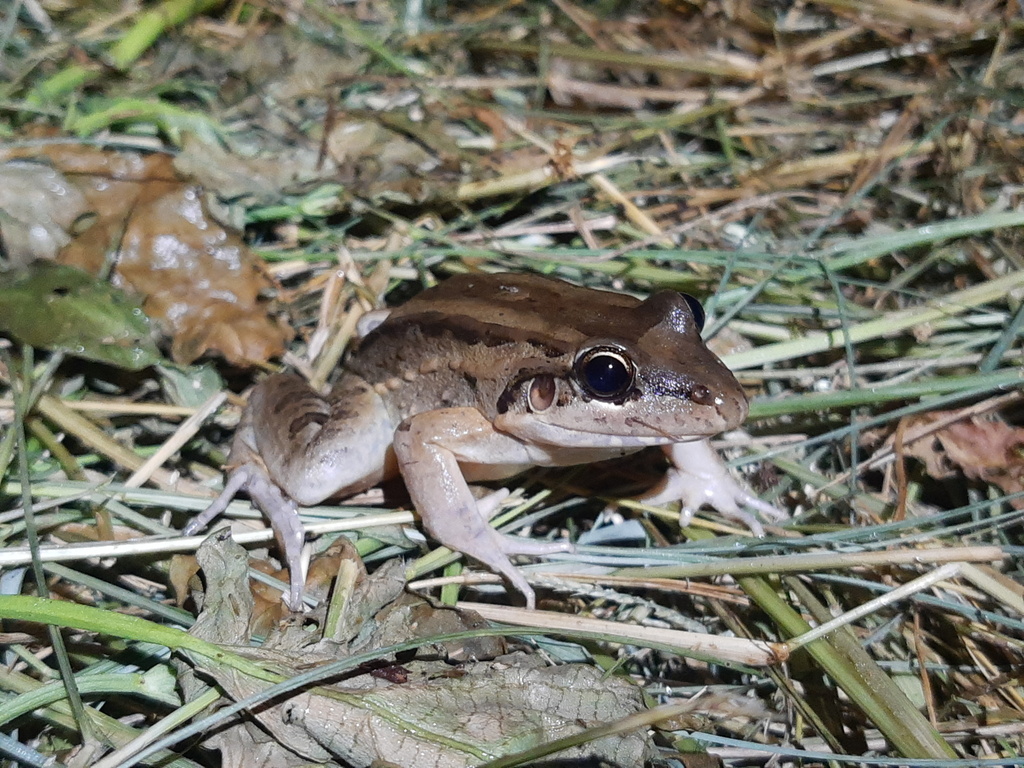
Spotted Foam-nest Frog
Leptodactylus insularum
Leptodactylus insularum (San Miguel Island frog or Caribbean ditch frog) is a species of frog in the family Leptodactylidae. The species is found in Costa Rica, Panama, Colombia, Venezuela, and Trinidad and Tobago. Scientists suspect it might also live in Bolivia.
From the article Leptodactylus insularum on Wikipedia (CC BY-SA), quoted section by section
Description
The adult male frog measures 66–104.6 mm in snout-vent length and the adult female frog 60.4–99.1 mm. The skin of the dorusm has several folds and dark marks on it. There is a dark line from the nose to each eye. The backs of the legs have a dark pattern on them with light spots in irregular shapes. The flanks are light brown with dark brown spots. The belly is very light brown in color. The adult frogs use the aposematic coloration on their legs to confuse predators.
Range & habitat
These frogs live in forests near streams. Scientists saw the frog in many protected places.
Wikipedia: “Habitat”
What it does
The adult frogs eat water insects, such as those of the families Elateridae, Formicidae, Belastomatidae, and Lycosidae. The tadpoles feed on decaying matter, often things that have fallen into the water.
Wikipedia: “Diet”
Listen
Looking for field recordings…
Where it lives
Recorded sightings
—
geo-referenced records in GBIF, from museums, herbaria and field observers.
Drag the globe to turn it. Dots are where records exist, not a range map; darker means more records.
In the stacks
Searching the stacks…
Every page naming Leptodactylus insularum in the Biodiversity Heritage Library →
This page is assembled live from iNaturalist, GBIF, Wikipedia, the Source Library and the Internet Archive. It is not yet part of the hand-edited codex. iNaturalist taxon 126247.