- Animals
- ›Chordates
- ›Vertebrates
- ›Mammals
- ›Therians
- ›Placental Mammals
- ›Primates, Rodents, and Allies
- ›Primates
- ›Monkeys, Apes, and Tarsiers
- ›Monkeys and Apes
- ›Apes and Old World Monkeys
- ›Apes
- ›Great Apes
- ›African Hominids
- ›Australopithecus
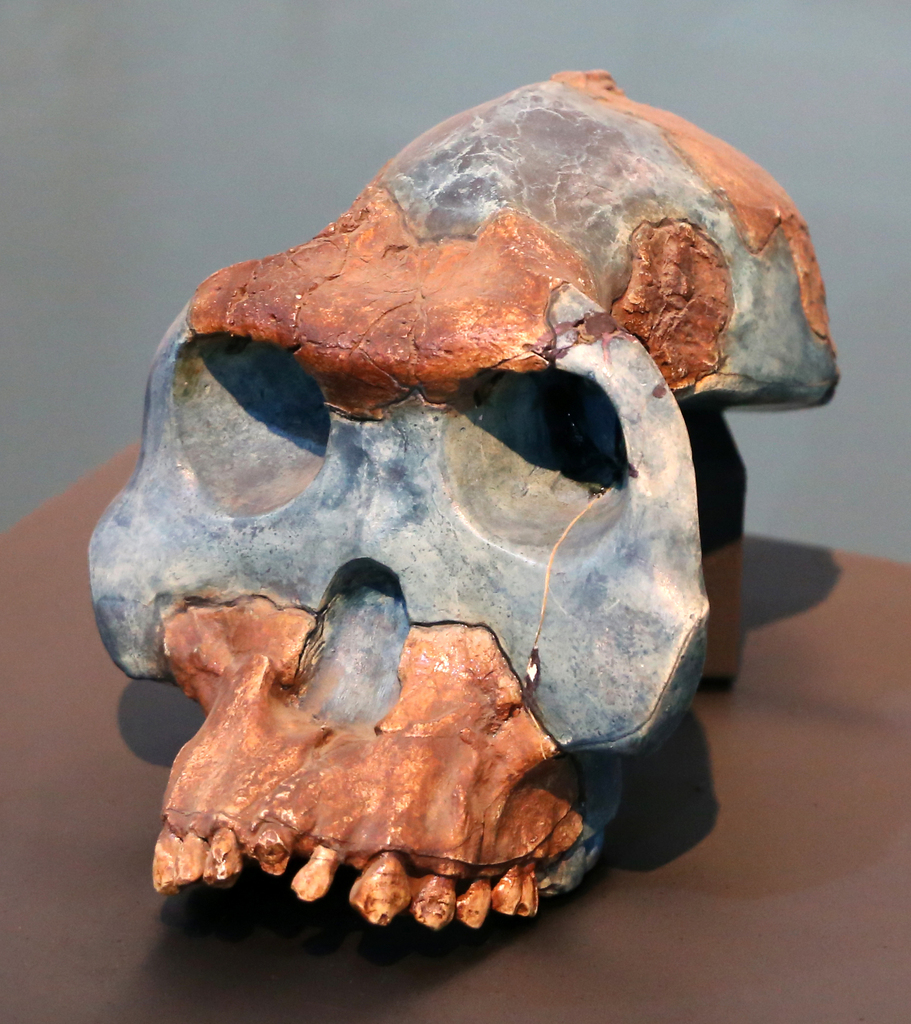
Australopithecus garhi
Australopithecus garhi is a species of australopithecine from the Bouri Formation in the Afar Region of Ethiopia 2.6–2.5 million years ago (mya) during the Early Pleistocene. The first remains were described in 1999 based on several skeletal elements uncovered in the three years preceding. A. garhi was originally considered to have been a direct ancestor to Homo and the human line, but is now thought to have been an offshoot. Like other australopithecines, A. garhi had a brain volume of 450 cc (27 cu in); a jaw which jutted out (prognathism); relatively large molars and premolars; adaptations for both walking on two legs (bipedalism) and grasping while climbing (arboreality); and it is possible that, though unclear if, males were larger than females (exhibited sexual dimorphism). One individual, presumed female based on size, may have been 140 cm (4 ft 7 in) tall.
A. garhi is the first pre-Homo hominin postulated to have manufactured tools—using them in butchering—and may be counted among a growing body of evidence for pre-Homo stone tool industries (the ability to manufacture tools was previously believed to have separated Homo from predecessors). A. garhi possibly produced the Oldowan industry which was previously considered to have been invented by the later H. habilis, though this may have instead been produced by contemporary Homo.
From the article Australopithecus garhi on Wikipedia (CC BY-SA), quoted section by section
Description
Like other australopithecines, A. garhi had a brain volume of about 450 cc (27 cu in), a sagittal crest running along the midline of the skull, and a prognathic jaw (the jaw jutted out). Relatively, the postcanine teeth, the molars and premolars, are massive (post-canine megadontia), similar to or greater than those of other australopithecines and of the large-toothed Paranthropus robustus. Like the earlier A. afarensis from the same region, A. garhi had a humanlike humerus to femur ratio, and an apelike brachial index (lower to upper arm ratio) as well as curved phalanges of the hand. This is generally interpreted as adaptations for both walking on two legs (habitual bipedalism) as well as for grasping while climbing in trees (arboreality). The BOU-VP-35/1 humerus specimen is notably larger than the humerus of the BOU-VP-12/1 specimen, which could potentially indicate size-specific sexual dimorphism with males larger than females to a similar degree to what is postulated in A. afarensis, but it is unclear if this does not represent normal size variation of the same sex as this is based on only two specimens. Nonetheless, on the basis of size, BOU-VP-12/130 is considered male and BOU-VP-17/1 female. Contemporary hominins from Kenya are about the same size as A. garhi. …
Wikipedia: “Anatomy”
What it does
The large teeth of Australopithecus species have historically been interpreted as having been adaptations for a diet of hard foods, but the durable teeth may instead have only served an important function during leaner times for harder fallback foods. That is, dental anatomy may not accurately portray normal Australopithecus diet, rather abnormal diet during times of famine. Though it was not found with any tools, mammalian bones associated with the A. garhi remains exhibit cut and percussion marks made from stone tools: the left mandible of an alcelaphine bovid with three successive, unambiguous cut marks presumably made while removing the tongue; a bovid tibia with cut marks, chop marks, and impact scars from a hammerstone, possibly inflicted to harvest the bone marrow; and a Hipparion (a horse) femur with cut marks consistent with dismemberment and filleting. As to why stone tools were not present, because the Hatayae locality was likely a featureless, grassy lake margin with so few raw materials for making stone tools, it is possible these hominins were creating and carrying tools some ways with them to butchering sites, intending to use them many times before discarding. …
Wikipedia: “Palaeoecology”
Listen
Looking for field recordings…
Where it lives
Recorded sightings
—
geo-referenced records in GBIF, from museums, herbaria and field observers.
Drag the globe to turn it. Dots are where records exist, not a range map; darker means more records.
In the stacks
Searching the stacks…
Every page naming Australopithecus garhi in the Biodiversity Heritage Library →
This page is assembled live from iNaturalist, GBIF, Wikipedia, the Source Library and the Internet Archive. It is not yet part of the hand-edited codex. iNaturalist taxon 127272.