- Animals
- ›Chordates
- ›Vertebrates
- ›Birds
- ›Swifts and Hummingbirds
- ›Hummingbirds
- ›Bee Hummingbirds, Emeralds, Mountain-gems, and Allies
- ›Emerald Hummingbirds and Allies
- ›Chionomesa
On eBird ↗
Sapphire-spangled Emerald
Live sightings near you, the range map, bar charts of when it is seen, and Macaulay Library photos and recordings.
Sapphire-spangled Emerald
Chionomesa lactea
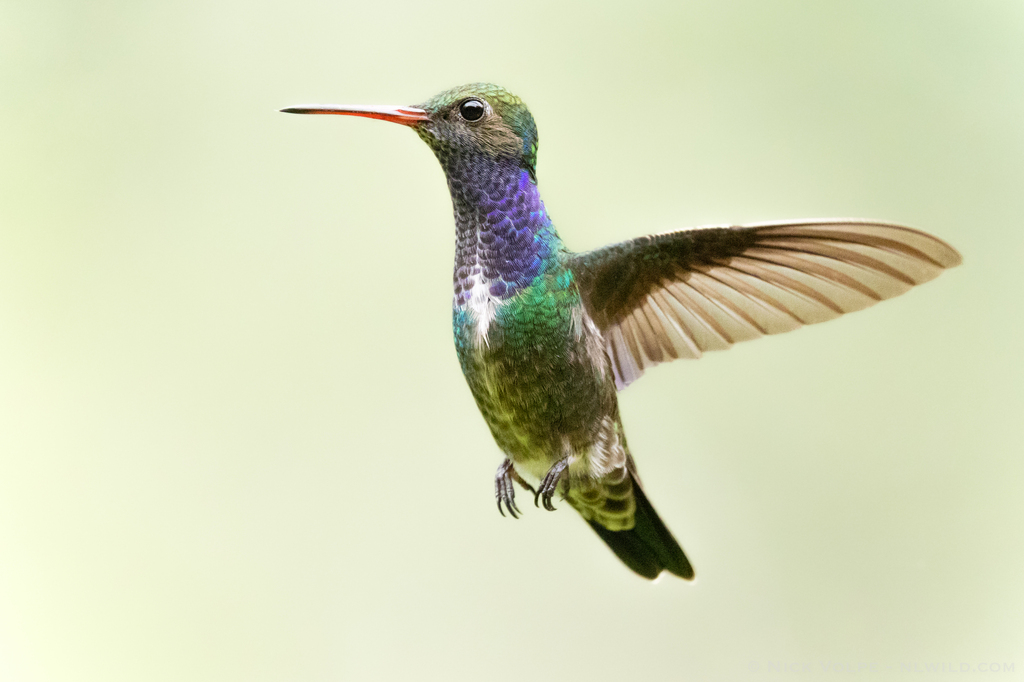
The sapphire-spangled emerald (Chionomesa lactea) is a species of hummingbird in the "emeralds", tribe Trochilini of subfamily Trochilinae. It is regularly found in Bolivia, Brazil, Peru, and Venezuela; as a vagrant in Argentina; and has possibly occurred in Ecuador.
From the article Sapphire-spangled emerald on Wikipedia (CC BY-SA), quoted section by section
Description
The sapphire-spangled emerald is 8 to 11 cm (3.1 to 4.3 in) long and weighs 3.6 to 5 g (0.13 to 0.18 oz). Both sexes of all subspecies have a medium length straight bill with a blackish maxilla and a pinkish to horn colored mandible with a darkish to blackish tip. Males of the nominate subspecies C. l. lactea have golden- to bronze-green upperparts with bronze-green crown, neck, and flanks. Their throat and upper breast are glittering violet-blue, the center of their lower breast white, their belly grayish, and their undertail coverts whitish with brown streaks. Their central tail feathers have shining green or bronzy green bases that darken to the end and their outer tail feathers are bluish black. Adult females are similar but have a grayish throat with glittering turquoise spots and their outermost tail feathers have grayish tips. Juveniles are similar to adult females but with much grayish on their underparts. Males of subspecies C. l. zimmeri have a smaller patch of glittering violet-blue than the nominate; it does not extend from the throat onto the breast. Females have a whiter throat and belly than the nominate. Males of C. l. bartletti have a brighter green crown than the nominate, a grayish fringe on the throat feathers, a greenish center to the belly, a grayish lower belly, and much brown on the undertail coverts. Females resemble the males but are duller. …
Range & habitat
The three subspecies of sapphire-spangled emerald have separate ranges. C. l. zimmeri is the northernmost; it is found only in southeastern Venezuela's Bolívar state. The nominate C. l. lactea is found in eastern Brazil from Bahia south through Minas Gerais, Rio de Janeiro, and São Paulo into Paraná. It has also been recorded as a vagrant in northern Argentina. C. l. bartletti is found in eastern and southeastern Peru, northern Bolivia, and adjacent western Brazil. There is at least one undocumented record in extreme eastern Ecuador and the SACC classes it as hypothetical there. The sapphire-spangled emerald in general inhabits semi-open landscapes such as the edges of rainforest, gallery forest, secondary forest, river edges, and clearings. It mostly occurs at elevations below 1,000 m (3,300 ft) but in Venezuela has the narrow elevational range between 1,100 to 1,400 m (3,600 to 4,600 ft). In addition to the semi-open landscapes, C. l. lactea is also found in open cerrado, campos rupestres, parks, and gardens. In elevation it is mostly near sea level but has been recorded locally as high as about 1,300 m (4,300 ft).
Wikipedia: “Distribution”
What it does
The sapphire-spangled emerald forages for nectar at a wide variety of native and introduced flowering plants, shrubs, and trees. Some favored families are Leguminaceae, Malvaceae, Heliconiaceae, Bromeliaceae, and Rubiaceae, with Verbenaceae and Lythraceae being lesser sources. Males defend feeding territories. In addition to nectar, the species feeds on insects caught by hawking from a perch.
Wikipedia: “Feeding”
Listen
Looking for field recordings…
Where it lives
Recorded sightings
—
geo-referenced records in GBIF, from museums, herbaria and field observers.
Drag the globe to turn it. Dots are where records exist, not a range map; darker means more records.
In the stacks
Searching the stacks…
Every page naming Chionomesa lactea in the Biodiversity Heritage Library →
This page is assembled live from iNaturalist, GBIF, Wikipedia, the Source Library and the Internet Archive. It is not yet part of the hand-edited codex. iNaturalist taxon 1289638.