- Animals
- ›Chordates
- ›Vertebrates
- ›Birds
- ›Perching Birds
- ›Old World Flycatchers, Robins, and Chats
- ›Ficedula
On eBird ↗
Black-banded Flycatcher
Live sightings near you, the range map, bar charts of when it is seen, and Macaulay Library photos and recordings.
Black-banded Flycatcher
Ficedula timorensis
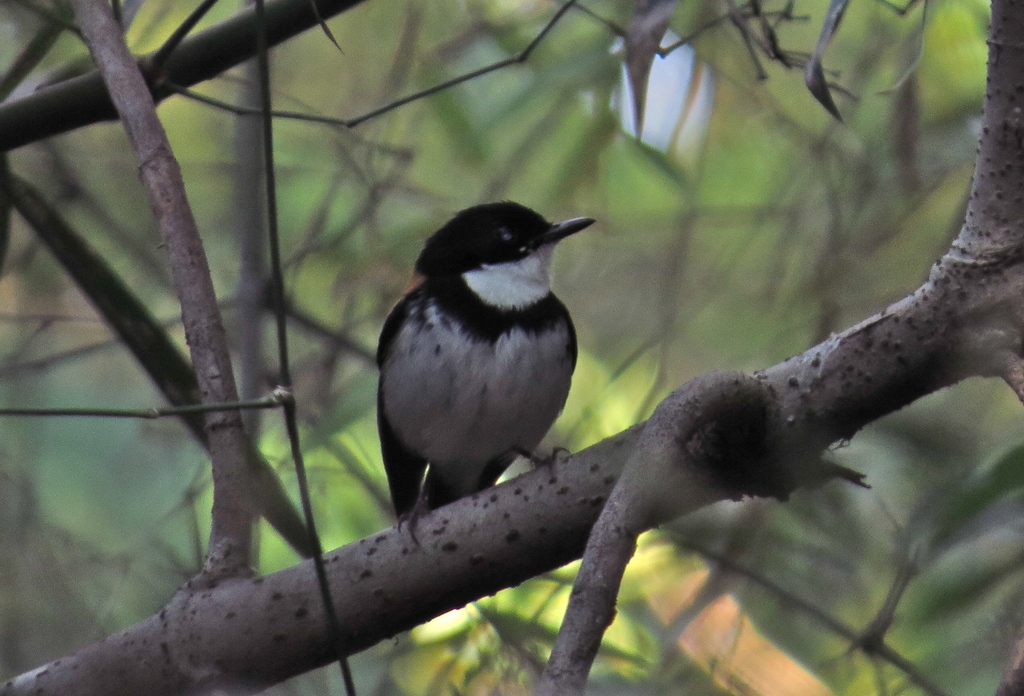
The black-banded flycatcher (Ficedula timorensis), also known as the Timor flycatcher, is a species of bird in the family Muscicapidae. In the past the species was considered to be related to the Australasian robins but this was as the result of convergent evolution. It is endemic to Timor island. The black-banded flycatcher is small with a broad bill and distinctive plumage. The species has a white belly, lower rump and throat with a thin black band across the chest. The tail, neck and wings are black and the back, upper wing and shoulders rich chestnut. The plumage of the head is sexually dichromatic, with the head being black in the males and dark grey in the females. The eye and bill is black and the feet and legs are yellow. The calls consist of soft whistles, some of which sound similar to the Timor stubtail.
The black-banded flycatcher is an uncommon species that is difficult to see and very little is known about its biology. The natural habitat of the species is lowland monsoon forests and hill forests up to 1200 m. Nothing is known about its breeding behaviour, the only observations of this are adults feeding recently fledged chicks in December. It feeds singly or in pairs on invertebrates, taking its prey mostly by gleaning with a few sallying flights to snatch aerial prey. The species is currently listed as near threatened. It is threatened by habitat loss.
Listen
Looking for field recordings…
Where it lives
Recorded sightings
—
geo-referenced records in GBIF, from museums, herbaria and field observers.
Drag the globe to turn it. Dots are where records exist, not a range map; darker means more records.
In the stacks
Searching the stacks…
Every page naming Ficedula timorensis in the Biodiversity Heritage Library →
This page is assembled live from iNaturalist, GBIF, Wikipedia, the Source Library and the Internet Archive. It is not yet part of the hand-edited codex. iNaturalist taxon 13125.