- Animals
- ›Chordates
- ›Vertebrates
- ›Birds
- ›Perching Birds
- ›Old World Flycatchers, Robins, and Chats
- ›Ficedula
On eBird ↗
Collared Flycatcher
Live sightings near you, the range map, bar charts of when it is seen, and Macaulay Library photos and recordings.
Collared Flycatcher
Ficedula albicollis
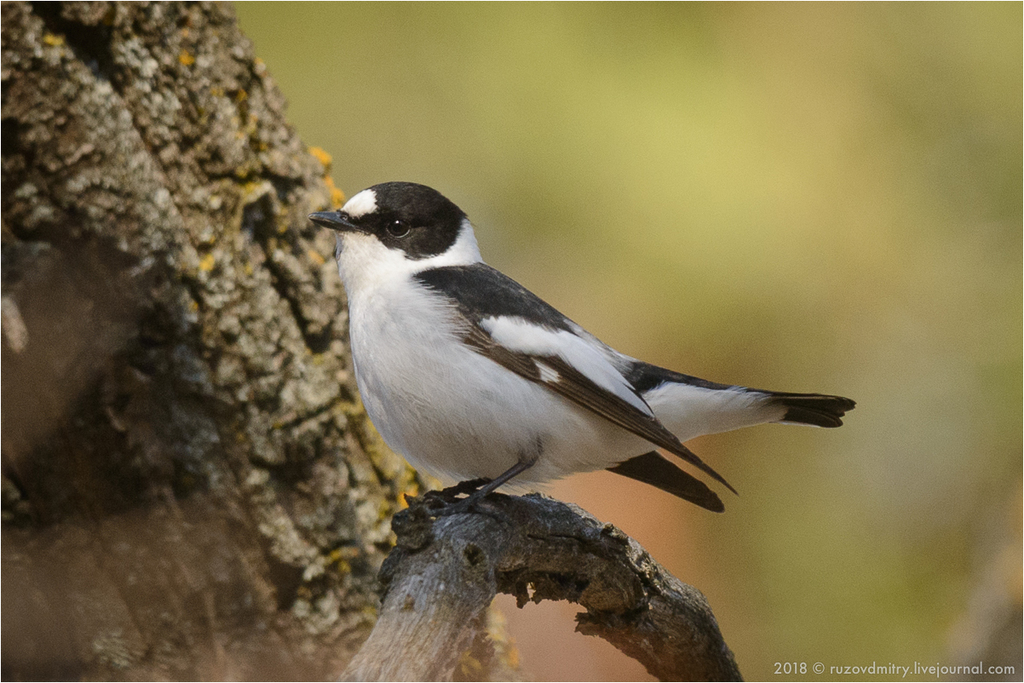
The collared flycatcher (Ficedula albicollis) is a small passerine bird in the Old World flycatcher family, one of the four species of Western Palearctic black-and-white flycatchers. It breeds in southeast Europe (isolated populations are present in the islands of Gotland and Öland in the Baltic Sea, Sweden) and Eastern France to the Balkan Peninsula and Ukraine and is migratory, wintering in Sub-Saharan Africa. It is a rare vagrant in western Europe.
This is a 12–13.5 cm long bird. The breeding male is mainly black above and white below, with a white collar, large white wing patch, black tail (although some males have white tail sides) and a large white forehead patch. It has a pale rump. The bill is black and has the broad but pointed shape typical of aerial insectivores. As well as taking insects in flight, this species hunts caterpillars amongst the oak foliage, and will take berries.
From the article Collared flycatcher on Wikipedia (CC BY-SA), quoted section by section
Range & habitat
In the 1960s, collared flycatchers expanded their breeding range northward, colonizing the Swedish island of Öland in the Baltic Sea. This expansion, a response to climate change, brought them into sympatry with the European pied flycatcher. The breeding population dynamics and hybridization between these two species have been monitored on the island since 2002, giving scientists the rare opportunity to study life-history traits, hybridization, climate adaptation, and speciation. On Öland, the socially dominant collared flycatcher, which rely heavily on high-quality habitat, have displaced most European pied flycatcher to poorer breeding habitats. Although hybridization occurs in approximately 4% of the population, there is a strong selection against hybrids. The resulting F1 hybrids of both sexes have lower fitness and are sterile: females experience hatching failure, while males suffer from impaired sperm morphology.
Wikipedia: “Range expansion and hybridisation with F. hypoleuca on Öland, Sweden”
Listen
Looking for field recordings…
Where it lives
Recorded sightings
—
geo-referenced records in GBIF, from museums, herbaria and field observers.
Drag the globe to turn it. Dots are where records exist, not a range map; darker means more records.
In the stacks
Searching the stacks…
Every page naming Ficedula albicollis in the Biodiversity Heritage Library →
This page is assembled live from iNaturalist, GBIF, Wikipedia, the Source Library and the Internet Archive. It is not yet part of the hand-edited codex. iNaturalist taxon 13133.