- Animals
- ›Chordates
- ›Vertebrates
- ›Mammals
- ›Therians
- ›Placental Mammals
- ›Primates, Rodents, and Allies
- ›Rodents
- ›Ctenohystricans
- ›Hystricognaths
- ›African Molerats
- ›Cryptomys
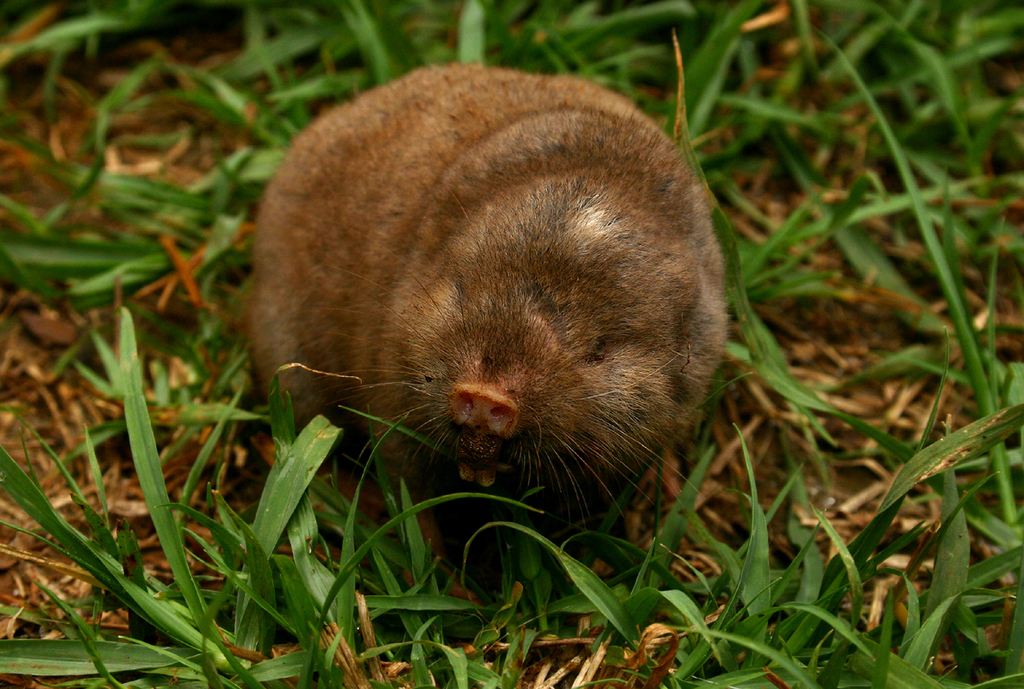
Matabeleland Mole-rat
Cryptomys nimrodi
The common mole-rat, African mole-rat, or Hottentot mole-rat, (Cryptomys hottentotus) is a burrowing rodent found in Southern Africa, in particular in the Western Cape province of South Africa. It also occurs in Eswatini, Lesotho, Malawi, Mozambique, Tanzania, Zambia, and Zimbabwe. It is a species in the subfamily Bathyerginae.
From the article Common mole-rat on Wikipedia (CC BY-SA), quoted section by section
What it does
Common mole-rats form colonies, essentially family groups with the largest female and male being the only reproductive pair. Mating begins in September and October. During courtship the female raises her tail and allows the mate to smell her genital region. The male then gently chews on her hind region, mounts and mates. The birth of offspring is restricted to the southern hemisphere summer, during which there may be one or two litters of up to five pups. The gestation period is about 81 days. The average age at reproductive maturity is about 450 days. Females maintain reproductive function during non-reproductive months.
Wikipedia: “Reproduction and development”
Listen
Looking for field recordings…
Where it lives
Recorded sightings
—
geo-referenced records in GBIF, from museums, herbaria and field observers.
Drag the globe to turn it. Dots are where records exist, not a range map; darker means more records.
In the stacks
Searching the stacks…
Every page naming Cryptomys nimrodi in the Biodiversity Heritage Library →
This page is assembled live from iNaturalist, GBIF, Wikipedia, the Source Library and the Internet Archive. It is not yet part of the hand-edited codex. iNaturalist taxon 1360141.