- Animals
- ›Chordates
- ›Vertebrates
- ›Mammals
- ›Therians
- ›Placental Mammals
- ›Primates, Rodents, and Allies
- ›Primates
- ›Monkeys, Apes, and Tarsiers
- ›Monkeys and Apes
- ›New World Monkeys
- ›Cebid Monkeys
- ›Capuchins
- ›Cebus
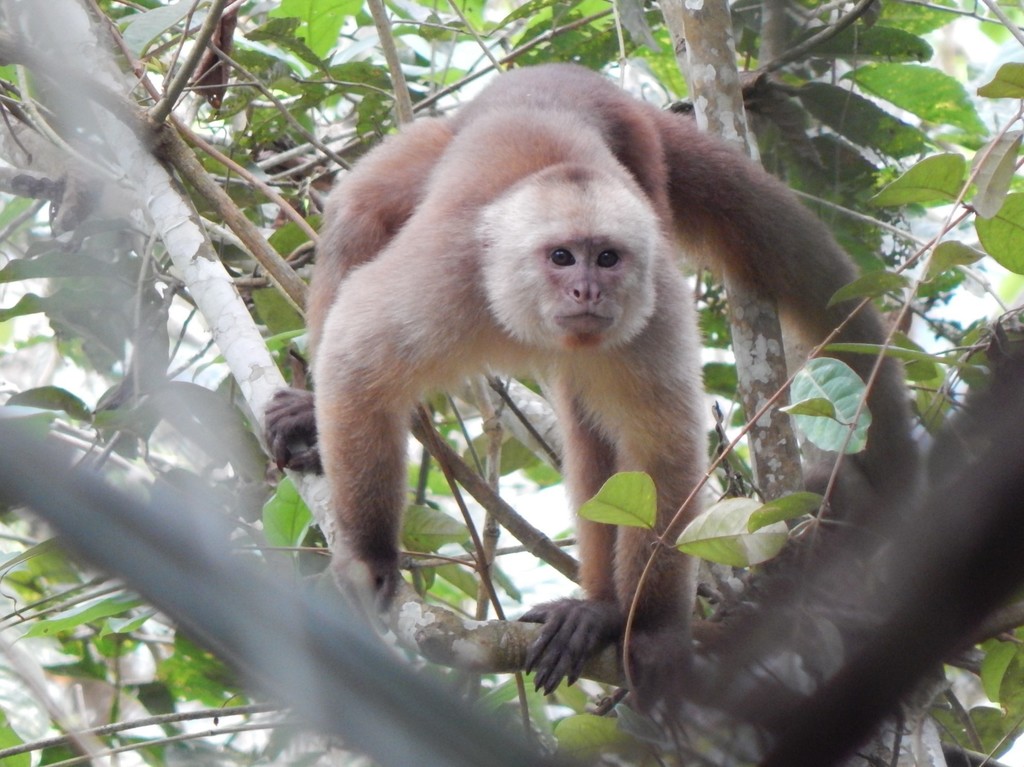
Ecuadorian White-fronted Capuchin
Cebus aequatorialis
The Ecuadorian capuchin (Cebus aequatorialis), or Ecuadorian white-fronted capuchin is a species of gracile capuchin monkey of the family Cebidae. It was formerly classified as a subspecies of the white-fronted capuchin (C. albifrons). Mittermeier and Rylands elevated it to a separate species in 2013. The primary physical distinction between C. albifrons and C. aequatorialis is their coloration. Due to low density and distribution researchers have not been able to make a confident molecular genetic assessment of the C. aequatorialis population, but assign it species status based on geographical isolation, morphological characteristics, and the phylogenetic species concept. The location range of the Ecuadorian Capuchin is from Western lowland Ecuador to North West Peru. The conservation status of the Ecuadorian Capuchin was originally near threatened but was revised in 2008 by the IUCN to critically endangered due to the population's rapid decline. Anthropogenic factors such as habitat fragmentation from rapid deforestation, creation of agricultural lands, and persecution from farmers are to blame for the species' critically endangered status.
From the article Ecuadorian capuchin on Wikipedia (CC BY-SA), quoted section by section
Range & habitat
Suitable habitat for the Ecuadorian Capuchin is determined to be a high percentage of tree cover (most important factor and maximized when over 25%), land cover (as deciduous, evergreen broad leaved, or forested cropland mosaic), mild temperature seasonality, low annual precipitation, and low human population density. According to Tleimat, the Ecuadorian Capuchin requires about 500ha to use their energy expenditure. The dispersal of the Ecuadorian capuchin has been restricted due to deforestation and habitat fragmentation, as a result the distribution range used to be from western Ecuador to northwestern Peru. As a result of Hurtado et al.'s study they state the Ecuadorian capuchin has a low encounter rate with low density through their distribution, and this should make them a high priority for conservation. Through the combination of the IUCN's map and the study of Campos and Jack, the Ecuadorian capuchin has lost over 90% of its habitat. The Ecuadorian Capuchin habitat faces various threats from habitat fragmentation, deforestation, and anthropogenic factors (farmers burning bushes, grazing, and illegal mining/logging).
Habitat fragmentation. Habitat fragmentation is a severe issue for primates as it restricts movement, there is a higher energy expenditure for the primate to find food, and leads to inbreeding or a decrease in gene flow. …
Wikipedia: “Habitat and distribution”
What it does
New behaviour has been recorded for the Ecuadorian Capuchin, Guerrero-Casado et al. state that this species was found in a new location of Ecuador within low tree cover which is unusual behaviour, as this species prefers high tree cover. From this study, results showed that during fall/winter when trees lost their leaves and when fruits have fallen, it forces the Ecuadorian Capuchin to come down to forage on the ground. Another reason for this new behaviour can originate from a decrease in food sources from up in trees or due to habitat fragmentation. Habitat fragmentation and environmental factors are forcing the Ecuadorian capuchin to change its behaviours as a coping mechanism to survive.
Wikipedia: “New behavior”
Listen
Looking for field recordings…
Where it lives
Recorded sightings
—
geo-referenced records in GBIF, from museums, herbaria and field observers.
Drag the globe to turn it. Dots are where records exist, not a range map; darker means more records.
In the stacks
Searching the stacks…
Every page naming Cebus aequatorialis in the Biodiversity Heritage Library →
This page is assembled live from iNaturalist, GBIF, Wikipedia, the Source Library and the Internet Archive. It is not yet part of the hand-edited codex. iNaturalist taxon 1369301.