On eBird ↗
Madanga
Live sightings near you, the range map, bar charts of when it is seen, and Macaulay Library photos and recordings.
Madanga
Anthus ruficollis
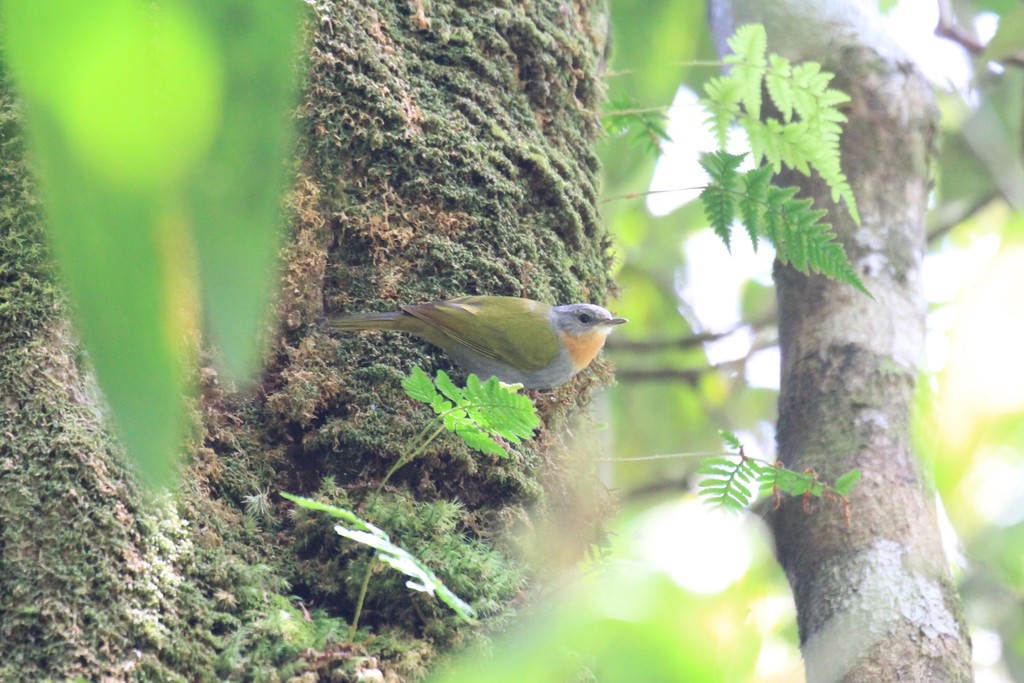
The madanga or rufous-throated white-eye (Anthus ruficollis) is a species of bird that was formerly included in the family Zosteropidae but is now thought to be an atypical member of the family Motacillidae, consisting of the pipits and wagtails. Its close relatives are tree pipits of the genus Anthus, and is endemic to the moist, mountainous, subtropical and tropical forest of the Indonesian island Buru. The bird was initially described from four specimens collected in April 1922 from one area in the western part of the island, near the settlement Wa Fehat, at elevations between 820 and 1,500 m (2,690 and 4,920 ft). These observations were reproduced on two birds in December 1995 at Wakeika, at an elevation of 1,460 m (4,790 ft); changes in the bird's habitat at Wa Fehat were also noted in 1995. The bird was observed only in a few localities and neither its habitat area nor population is reliably known. The population is estimated at more than several hundred individuals, and the habitat at several hundred km2 from the available area above 1,200 m (872 km²) and above 1,500 m (382 km²); the birds are believed to disperse over their habitat rather than form groups. Because the species is restricted to a single island and its habitat is threatened by logging and other human activities, it is listed as endangered by the IUCN since 1996.
The madanga most likely eats small invertebrates recovered from bark and lichen.
Listen
Looking for field recordings…
Where it lives
Recorded sightings
—
geo-referenced records in GBIF, from museums, herbaria and field observers.
Drag the globe to turn it. Dots are where records exist, not a range map; darker means more records.
In the stacks
Searching the stacks…
Every page naming Anthus ruficollis in the Biodiversity Heritage Library →
This page is assembled live from iNaturalist, GBIF, Wikipedia, the Source Library and the Internet Archive. It is not yet part of the hand-edited codex. iNaturalist taxon 1429029.