 NL·0606
Herbarium of the Nature Library
- Name
- Catreus wallichii
- Family
- Phasianidae
- Native to
- Western and central Himalaya from northern Pakistan (now very rare) through Himachal Pradesh and Uttarakhand to central Nepal
- Habitat
- Montane grassland, Scrub
On eBird ↗
Cheer Pheasant
Live sightings near you, the range map, bar charts of when it is seen, and Macaulay Library photos and recordings.
Cheer pheasant
Catreus wallichii
Also calledChir (Hindi/Nepali) · Cǎi zhì 彩雉 (Chinese) · Wallich's pheasant
A pale, long-tailed pheasant of steep grassy Himalayan slopes, buff-grey and heavily barred, with a long backward-pointing crest. Its dependence on scrubby grassland maintained by grazing and fire makes it unusual among Himalayan pheasants.
The cheer pheasant, also known as Wallich's pheasant and chir pheasant, is a vulnerable species of the pheasant family, Phasianidae. It is the only member in the genus Catreus. The scientific name commemorates Danish botanist Nathaniel Wallich. Wikipedia
What it can do
- iLives on precipitous grass and scrub slopes most pheasants avoid
- iiDigs for roots and tubers with its bill
- iiiPairs and families call in loud chorus at dawn and dusk
In the field
Field marks
- aPale buff and grey body barred and spotted with black
- bVery long, broadly barred, pointed tail
- cLong, wispy crest swept back from the crown
- dBare red skin around the eye
- Voice
- A loud, ringing 'chir-a-pir, chir-a-pir, chir chir chirwa', given in duet or chorus at dawn and dusk
- Not to be confused with
- Kalij pheasant is dark blue-black with a white rump; Koklass is greyer with a dark head and long ear-tufts; Cheer's pale barred plumage and very long tail are distinctive.
- Where to see it
- Majathal Sanctuary and Chail in Himachal Pradesh; Dhorpatan Hunting Reserve in Nepal
- When
- Resident; most vocal in spring
Listen
Looking for field recordings…
Life & habits
- Diet
- Roots, tubers, seeds, grubs and insects
- Habitat
- Steep grassy slopes with scattered scrub and trees, roughly 1,200–3,000 m
- Size
- Males about 90–118 cm including the long tail
Coveys feed quietly in dense grass and are very hard to see; they call loudly at dawn and dusk and fly off downhill when disturbed.
Where it lives
Recorded sightings
—
geo-referenced records in GBIF, from museums, herbaria and field observers.
Native range
Western and central Himalaya from northern Pakistan (now very rare) through Himachal Pradesh and Uttarakhand to central Nepal
Drag the globe to turn it. Dots are where records exist, not a range map; darker means more records.
In the old herbals & bestiaries
No plate in the Source Library names this exact species, so these show its closest relatives as the old naturalists drew them: same genus, or the same kind of animal. Click a plate to read the page it came from, with translation.

Ulyssis Aldrovandi ... Ornithologiae
Relative · Aldrovandi, Ulisse · 1610 · p.475

Collected Illustrations of the Three Powers (Sancai Tuhui), Vol. 63
Relative · 王圻, 王思義 · 1609 · p.52

Sancai Tuhui (Vol. 65)
Relative · 王圻, 王思義 · 1609 · p.26

Sancai Tuhui (Vol. 86)
Relative · 王圻, 王思義 · 1609 · p.54

Historia naturalis Brasiliae
Relative · Willem Piso / Georg Marcgraf · 1648 · p.343

The Tudor Pattern Book (Herbal-Bestiary)
Relative · Anonymous · 1525 · p.66

History of Animals, Book I: On Viviparous Quadrupeds
Relative · Conrad Gessner · 1554 · p.844

Historiae Animalium Liber III: De Avium Natura
Relative · Conrad Gesner · 1555 · p.699

Noah's Ark
Relative · Athanasius Kircher · 1675 · p.132

Collected Illustrations of the Three Powers (Sancai Tuhui), Vol. 63
Relative · 王圻, 王思義 · 1609 · p.56
In the stacks
Searching the stacks…
Every page naming Catreus wallichii in the Biodiversity Heritage Library →
Marginalia
The scientific name honours Nathaniel Wallich, the Danish botanist who directed the Calcutta Botanic Garden in the early 19th century.
Curiosity
Unlike most pheasants, it seems to depend on grassland kept open by village grazing, grass-cutting and burning, so changes in traditional land use can harm it.
Kinship
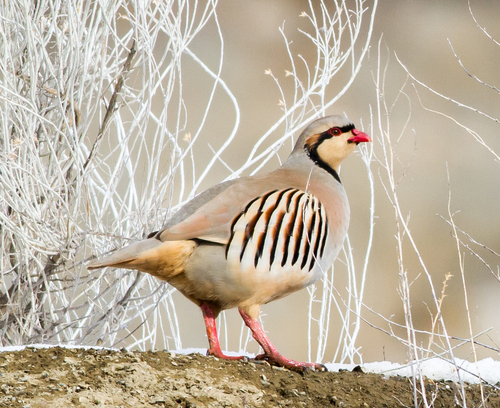
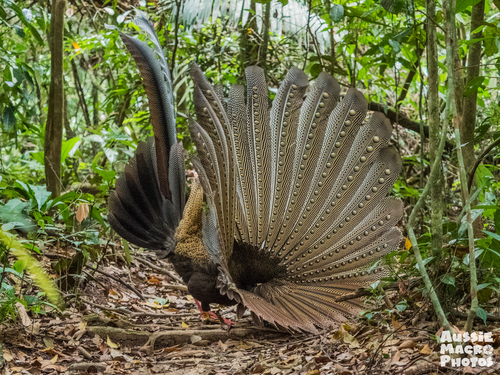

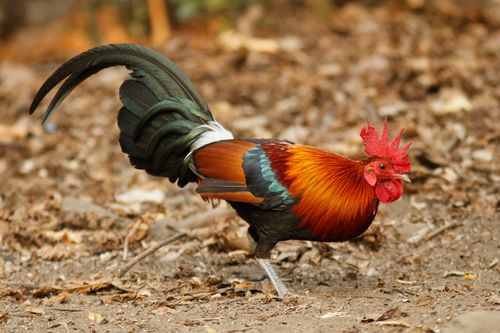
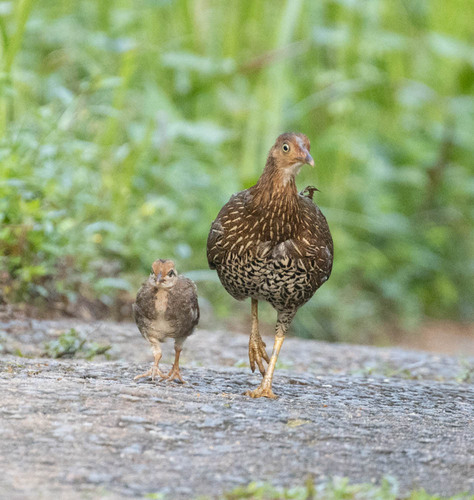
Photographs: iNaturalist contributors under the licences shown. Records: GBIF.org. Historical plates: Source Library (CC BY-SA 4.0; originals public domain). Summary text: Nature Library editors and Wikipedia (CC BY-SA). Medicinal and edibility notes are historical and educational, not advice. iNaturalist taxon 144430.