- Animals
- ›Chordates
- ›Vertebrates
- ›Birds
- ›Shorebirds and Allies
- ›Gulls, Terns, and Skimmers
- ›True Terns
- ›Chlidonias
On eBird ↗
Black-fronted Tern
Live sightings near you, the range map, bar charts of when it is seen, and Macaulay Library photos and recordings.
Black-fronted Tern
Chlidonias albostriatus
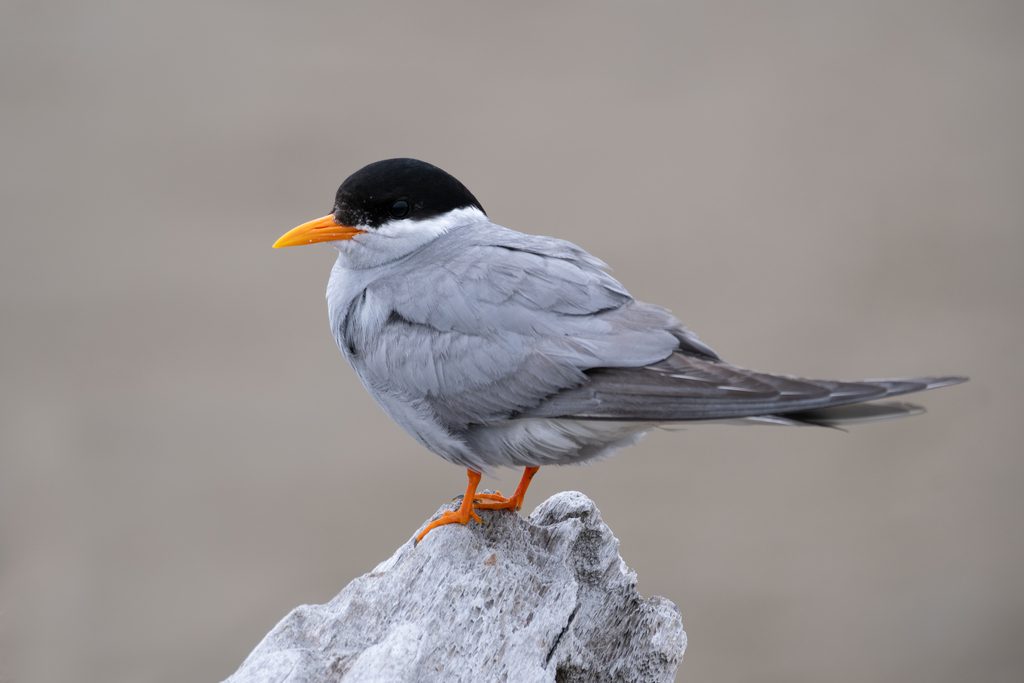
The black-fronted tern (Chlidonias albostriatus), sea martin, ploughboy, or tarapiroe (Māori), is a medium-small tern endemic to New Zealand. Black-fronted terns can be found in coastal habitats from the southern tip of the North Island to the eastern South Island as well as Stewart Island. Their breeding range is restricted to the South Island, where they will form breeding colonies on braided river islands.
The species is globally and nationally endangered, due to its small and declining national population. Black-fronted terns are vulnerable to a range of threats, including predation by introduced mammals, habitat loss (land use changes and weed encroachment), resource abstraction (gravel and water), human disturbance, and climate change.
From the article Black-fronted tern on Wikipedia (CC BY-SA), quoted section by section
Description
Black-fronted terns are considered medium-small in size. Adults measure 28–30 cm in length, with a 65–72 cm wingspan and an average weight of 95 g. They have short orange bills, short orange legs, and a body that is dark grey above and light grey below with a white rump and a distinctive black cap. During the non-breeding season, the black cap recedes and becomes flecked with white.
Range & habitat
Within New Zealand, black-fronted terns are found from the southern tip of the North Island, and along much of the eastern South Island from Marlborough to Southland, and to Stewart Island. There is an outlying population along the Buller and upper Motueka Rivers in southern Nelson. Black-fronted terns frequent coastal areas, including estuaries, harbours, and farmland (up to 3 km or 1.86 mi inland), where they will forage for insects and small fish. They will forage up to 10 km (6.21 mi) out to sea particularly in calm weather.
Wikipedia: “Distribution and habitat”
What it does
Black-fronted terns are particularly vulnerable to a number of threats including predation by introduced mammals, habitat loss (land use changes and weed encroachment), resource abstraction (gravel and water), human disturbance, and climate change. Conservation methods involve predator control, habitat enhancement (modification of river islands and weed control), and the use of chick shelters.
Predation. Black-fronted terns at all stages of life are vulnerable to exotic mammals that have been introduced to New Zealand. Due to the country's long isolation from other land masses, endemic New Zealand species have not evolved alongside mammalian predators and therefore have no effective defences against them. Predation is considered the leading cause of nest failure, though the predators responsible depend on the location of the colony. The following species have been recorded predating black-fronted tern adults, chicks, and eggs:
Mustelids (Mustela spp.), including stoats (M. erminea) and weasels (M. nivalis) Feral cats (Felis catus). There have been multiple known instances wherein a lone feral cat has depredated a significant number of tern nests in a single visit. …
Wikipedia: “Ecology and conservation”
Listen
Looking for field recordings…
Where it lives
Recorded sightings
—
geo-referenced records in GBIF, from museums, herbaria and field observers.
Drag the globe to turn it. Dots are where records exist, not a range map; darker means more records.
In the stacks
Searching the stacks…
Every page naming Chlidonias albostriatus in the Biodiversity Heritage Library →
This page is assembled live from iNaturalist, GBIF, Wikipedia, the Source Library and the Internet Archive. It is not yet part of the hand-edited codex. iNaturalist taxon 144538.