 NL·0532
Herbarium of the Nature Library
- Name
- Anthochaera phrygia
- Family
- Meliphagidae
- Native to
- South-eastern Australia, mainly inland slopes of the Great Dividing Range in New South Wales and Victoria
- Habitat
- Box-ironbark woodland, Eucalypt woodland, River-oak forest
On eBird ↗
Regent Honeyeater
Live sightings near you, the range map, bar charts of when it is seen, and Macaulay Library photos and recordings.
Regent honeyeater
Anthochaera phrygia
Also calledMéliphage régent (French)
A striking black-and-gold honeyeater of south-eastern Australia's box-ironbark woodlands, now so rare that many males never hear an adult of their own species and fail to learn its song. Fewer than about 300 are thought to remain in the wild.
The regent honeyeater is a critically endangered bird endemic to southeastern Australia. It is commonly considered a flagship species within its range, with the efforts going into its conservation having positive effects on many other species that share its habitat. Recent genetic research suggests it is closely related to the wattlebirds. Wikipedia
What it can do
- iPollinates flowering eucalypts such as mugga ironbark, yellow box and white box while feeding on nectar
- iiTracks irregular eucalypt flowering across hundreds of kilometres
- iiiYoung males learn song from adults, which is why the song is fading as numbers fall
In the field
Field marks
- aBlack head, neck and upper breast
- bPale yellow scalloping on back and breast
- cBright yellow edges to wing and tail feathers
- dBare, warty pinkish skin around the eye
- eDown-curved black bill
- Voice
- A soft, bell-like, metallic warble; males that have not learned it may give mimicked songs of other honeyeaters instead.
- Not to be confused with
- Painted honeyeater has a pink bill, plain black upperparts and unscalloped white underparts. New Holland honeyeater has white-streaked underparts, a white eye and yellow wing panels but no bare facial skin.
- Where to see it
- Capertee Valley and Hunter Valley (NSW), Chiltern-Mt Pilot National Park (Victoria); release sites in north-east Victoria
- When
- Nomadic resident; movements follow eucalypt flowering
Listen
Looking for field recordings…
Life & habits
- Diet
- Nectar, especially of eucalypts and mistletoe; also lerp, honeydew and insects
- Habitat
- Dry box-ironbark eucalypt woodland and riparian forest
- Size
- 20–24 cm; about 35–50 g
In a 2021 study, around 12% of wild males sang the songs of other species, such as friarbirds and wattlebirds, rather than their own, having had no regent honeyeater tutors.
Where it lives
Recorded sightings
—
geo-referenced records in GBIF, from museums, herbaria and field observers.
Native range
South-eastern Australia, mainly inland slopes of the Great Dividing Range in New South Wales and Victoria
Drag the globe to turn it. Dots are where records exist, not a range map; darker means more records.
In the old herbals & bestiaries
No plate in the Source Library names this exact species, so these show its closest relatives as the old naturalists drew them: same genus, or the same kind of animal. Click a plate to read the page it came from, with translation.

Jean Baptiste Audebert — Histoire naturelle des grimpereaux et des oiseaux de paradis (1802)
Relative · Jean Baptiste Audebert · 1802 · p.302

François Le Vaillant — Histoire naturelle des promerops et des guêpiers (1807)
Relative · François Le Vaillant · 1807 · p.124

François Le Vaillant — Histoire naturelle des promerops et des guêpiers (1807)
Relative · François Le Vaillant · 1807 · p.302
In the stacks
Searching the stacks…
Every page naming Anthochaera phrygia in the Biodiversity Heritage Library →
Marginalia
Taronga Zoo has bred regent honeyeaters for release since the 1990s, and captive young are now tutored with recordings of wild song before release.
Curiosity
It is one of the first wild birds documented losing its song culture because the population became too small and scattered for young males to find tutors.
Kinship
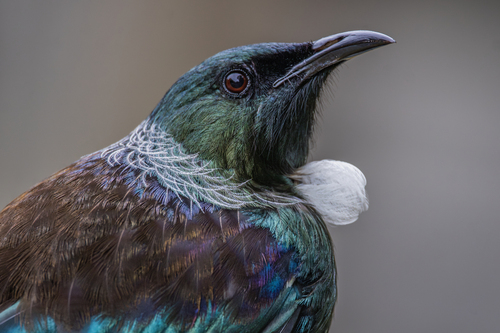


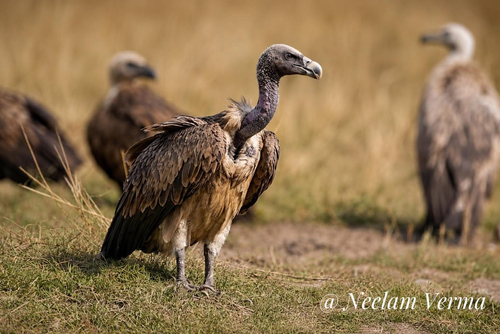


Photographs: iNaturalist contributors under the licences shown. Records: GBIF.org. Historical plates: Source Library (CC BY-SA 4.0; originals public domain). Summary text: Nature Library editors and Wikipedia (CC BY-SA). Medicinal and edibility notes are historical and educational, not advice. iNaturalist taxon 144707.