orthoherpesviruses
Orthoherpesviridae
Orthoherpesviridae, previously named and more widely known as Herpesviridae, is a large family of DNA viruses that cause infections and certain diseases in animals, including humans. The members of this family are commonly known as herpesviruses. The family name is derived from the Greek word ἕρπειν (herpein 'to creep'), referring to spreading cutaneous lesions, usually involving blisters, seen in flares of herpes simplex 1, herpes simplex 2 and herpes zoster (shingles). In 1971, the International Committee on the Taxonomy of Viruses (ICTV) established Herpesvirus as a genus with 23 viruses among four groups. Since then, the number of identified herpesviruses has grown to more than 100. Herpesviruses can cause both latent and lytic infections.
Nine herpesvirus types are known to primarily infect humans, at least five of which are extremely widespread among most human populations, and which cause common diseases: herpes simplex 1 and 2 (HSV-1 and HSV-2, also known as HHV-1 and HHV-2; both of which can cause orolabial and genital herpes), varicella zoster (VZV or HHV-3; the cause of chickenpox and shingles), Epstein–Barr (EBV or HHV-4; implicated in several diseases, including mononucleosis and some cancers), and human cytomegalovirus (HCMV or HHV-5). More than 90% of adults have been infected with at least one of these, and a latent form of the virus remains in almost all humans who have been infected.
3 branches of this family, most-observed first

alphaherpesviruses
subfamilyAlphaherpesvirinae
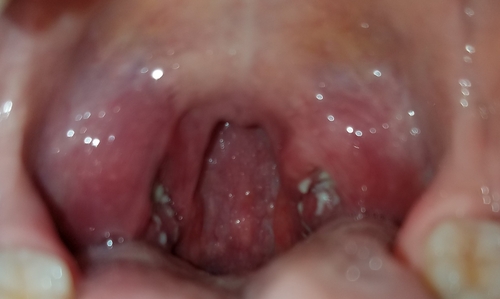
gammaherpesviruses
subfamilyGammaherpesvirinae

betaherpesviruses
subfamilyBetaherpesvirinae
Where it lives
Recorded sightings
—
geo-referenced records in GBIF, from museums, herbaria and field observers.
Drag the globe to turn it. Dots are where records exist, not a range map; darker means more records.
In the stacks
Searching the stacks…
Every page naming Orthoherpesviridae in the Biodiversity Heritage Library →
This page is assembled live from iNaturalist, GBIF, Wikipedia, the Source Library and the Internet Archive. It is not yet part of the hand-edited codex. iNaturalist taxon 1470928.