 NL·0640
Herbarium of the Nature Library
- Name
- Poecilia reticulata
- Family
- Poeciliidae
- Native to
- North-eastern South America (Venezuela, Guyana, Suriname, northern Brazil) and Trinidad, Tobago and Barbados; introduced across the tropics
- Habitat
- Streams, Ponds, Ditches, Brackish lagoons
Guppy
Poecilia reticulata
Also calledLebistes (aquarium, older) · Barrigudinho (Portuguese) · Millions fish (Caribbean) · Pez millón (Spanish)
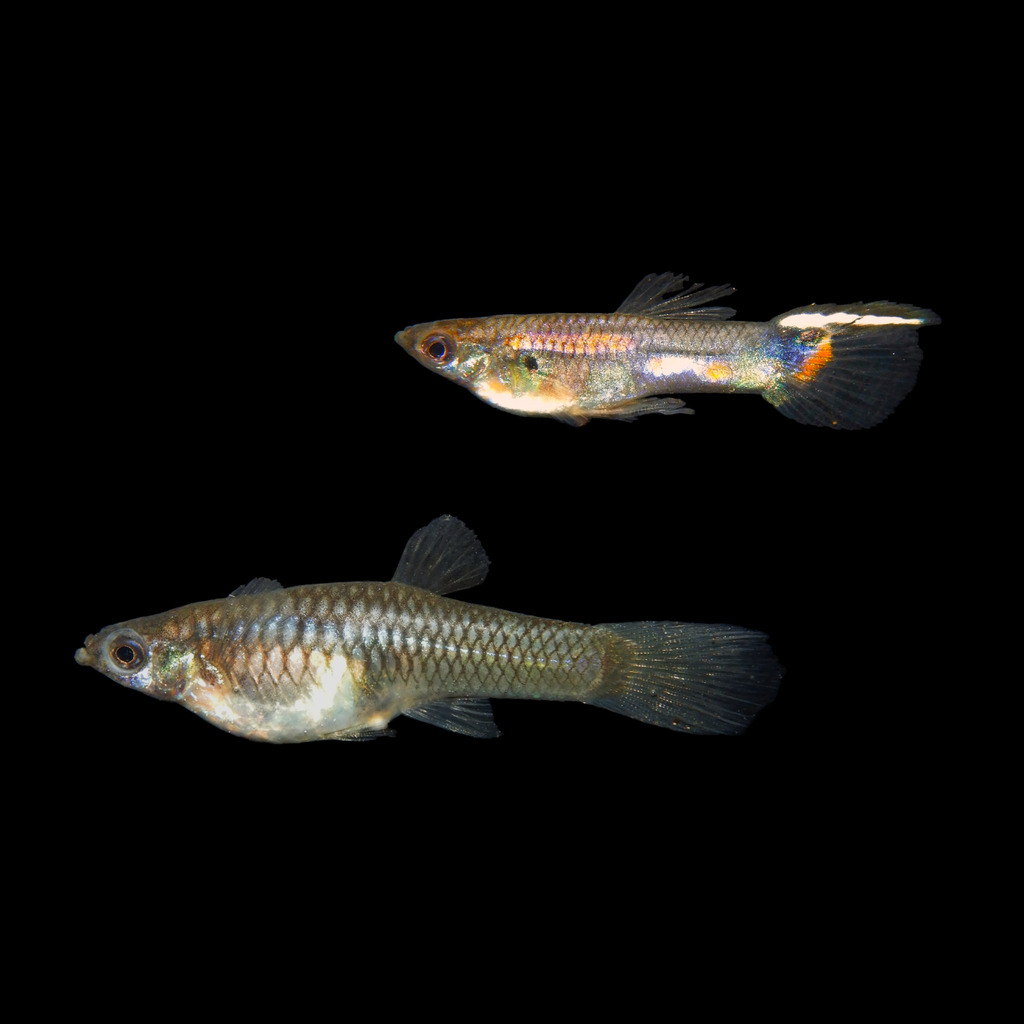
A tiny, live-bearing fish of Trinidad and northern South America whose wildly patterned males made it a star of evolution research and the world's best-known aquarium fish. It has been released worldwide to eat mosquito larvae.
The guppy, also known as the peacock fish, millionfish or rainbow fish, is a member of the family Poeciliidae and, akin to most New World members of the family, is classified as a livebearer. Male guppies, which are smaller than females, have ornamental caudal and dorsal fins. Wild guppies generally feed on a variety of food sources, including benthic algae and the larvae of aquatic insects. Wikipedia
What it can do
- iGives birth to live young; females store sperm and can have several broods from one mating
- iiWild populations evolve duller or brighter males within a few generations depending on predators, as shown by experiments in Trinidad
- iiiTolerates polluted, warm and brackish water
In the field
Field marks
- aMales tiny with mosaic patterns of orange, black, blue and iridescent spots, and often a large tail
- bFemales larger, drab olive-grey, with a dark 'gravid spot' near the vent
- cMale anal fin modified into a tube-like gonopodium
- dUpturned mouth
- Not to be confused with
- Mosquitofish (Gambusia) are similar livebearers but males are plain grey, sometimes with black spots. Endler's guppy (Poecilia wingei) from Venezuela has smaller, more metallic males.
- Where to see it
- Streams of Trinidad's Northern Range (Aripo and Yarra rivers); drains and canals across the tropics where introduced
- When
- Resident; breeds year-round
Life & habits
- Diet
- Omnivore: algae, mosquito and other insect larvae, small invertebrates and detritus
- Habitat
- Shallow streams, pools, ditches and ponds, including disturbed and polluted waters
- Size
- Males about 2–3 cm; females to about 5 cm
- Lifespan
- About 2 years
Males constantly court females with sigmoid displays or attempt sneaky matings. Females prefer males with more orange.
Where it lives
Recorded sightings
—
geo-referenced records in GBIF, from museums, herbaria and field observers.
Native range
North-eastern South America (Venezuela, Guyana, Suriname, northern Brazil) and Trinidad, Tobago and Barbados; introduced across the tropics
Drag the globe to turn it. Dots are where records exist, not a range map; darker means more records.
In the stacks
Searching the stacks…
Every page naming Poecilia reticulata in the Biodiversity Heritage Library →
Marginalia
Named after Robert John Lechmere Guppy, who sent specimens from Trinidad to the British Museum in 1866. John Endler's experiments in Trinidad in the late 1970s, moving guppies above waterfalls, became a classic demonstration of natural selection in the wild.
Curiosity
Female guppies can store sperm for months, so a single female introduced to new water can found a whole population.
Kinship



Photographs: iNaturalist contributors under the licences shown. Records: GBIF.org. Historical plates: Source Library (CC BY-SA 4.0; originals public domain). Summary text: Nature Library editors and Wikipedia (CC BY-SA). Medicinal and edibility notes are historical and educational, not advice. iNaturalist taxon 173412.