On eBird ↗
Christmas Island White-eye
Live sightings near you, the range map, bar charts of when it is seen, and Macaulay Library photos and recordings.
Christmas White-eye
Zosterops natalis
The Christmas white-eye (Zosterops natalis) is a species of bird in the family Zosteropidae. It is endemic to Christmas Island. Its natural habitats are tropical and subtropical moist broadleaf forests and subtropical or tropical moist shrubland. It is threatened by habitat destruction.
From the article Christmas white-eye on Wikipedia (CC BY-SA), quoted section by section
Description
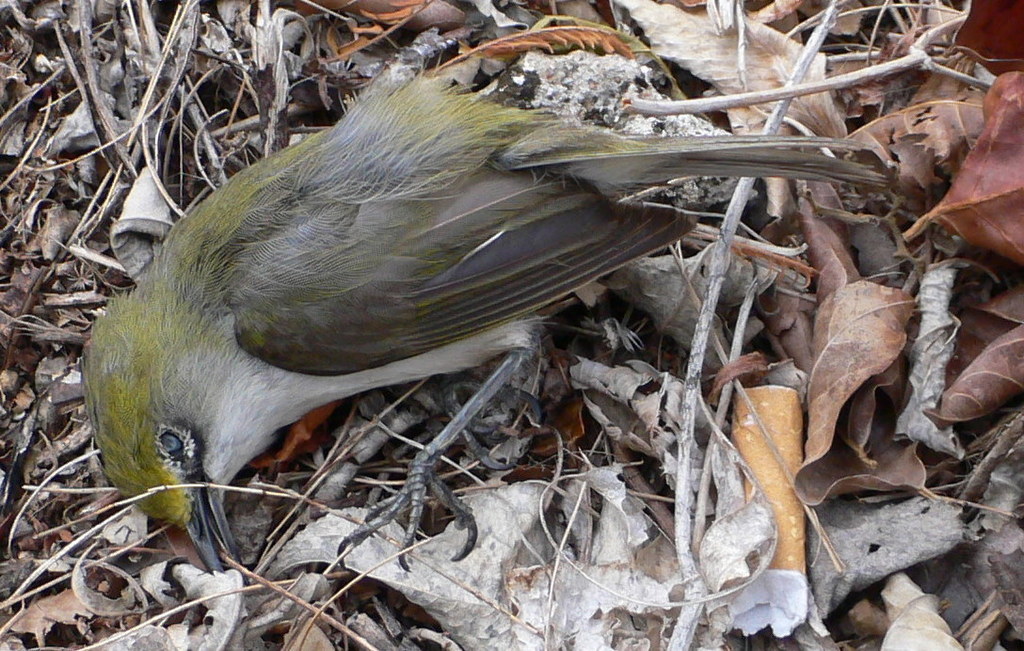
The Christmas white-eye has a length of between 11.7 and 13.5 cm (4.6 and 5.3 in). The upper parts are greyish-olive and the underparts whitish. There is a yellowish streak above the eye and a distinctive white feather ring surrounding the eye.
Range & habitat
The genus Zosterops is an island specialist, with 82 of the 98 species being restricted to islands, and many species being known from only a single island. It is a highly successful group, having an unspecialised diet and a great dispersal capacity. The Christmas white-eye is endemic to Christmas Island, but it has also been successfully introduced to the Cocos (Keeling) Islands where it has become established, but mostly around human settlements. On Christmas Island it occurs in forests all over the island at altitudes up to about 360 m (1,200 ft), as well as in gardens, the vicinity of abandoned mines and weedy agricultural land.
Wikipedia: “Distribution and habitat”
What it does
The Christmas white-eye has a varied diet including fruits, seeds, nectar and insects.
Wikipedia: “Behaviour”
Listen
Looking for field recordings…
Where it lives
Recorded sightings
—
geo-referenced records in GBIF, from museums, herbaria and field observers.
Drag the globe to turn it. Dots are where records exist, not a range map; darker means more records.
In the stacks
Searching the stacks…
Every page naming Zosterops natalis in the Biodiversity Heritage Library →
This page is assembled live from iNaturalist, GBIF, Wikipedia, the Source Library and the Internet Archive. It is not yet part of the hand-edited codex. iNaturalist taxon 17488.