
Woodpeckers and Allies
Piciformes
Nine families of largely arboreal birds make up the order Piciformes (), the best-known of them being the Picidae, which includes the woodpeckers and close relatives. The Piciformes contain about 71 living genera with a little over 450 species, of which the Picidae make up about half.
In general, the Piciformes are insectivorous, although the barbets and toucans mostly eat fruit and the honeyguides are unique among birds in being able to digest beeswax (although insects make up the bulk of their diet). Nearly all Piciformes have parrot-like zygodactyl feet—two toes forward and two back, an arrangement that has obvious advantages for birds that spend much of their time on tree trunks. An exception are a few species of three-toed woodpeckers. The jacamars aside, Piciformes do not have down feathers at any age, only true feathers. They range in size from the rufous piculet at 8 centimetres in length, and weighing 7 grams, to the toco toucan, at 63 centimetres long, and weighing 680 grams. All nest in cavities and have altricial young.
9 branches of this order, most-observed first · about 437 known species

Woodpeckers
familyPicidae
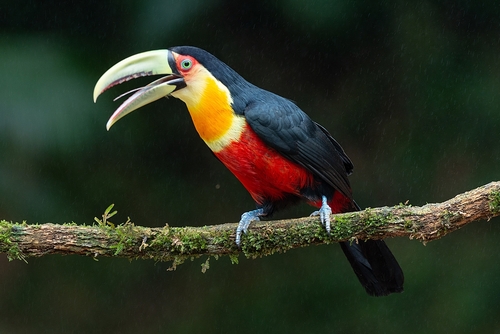
Toucans
familyRamphastidae
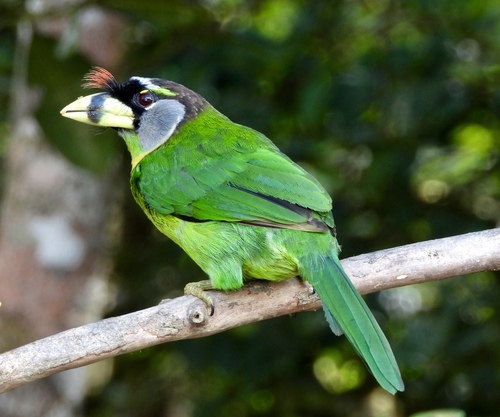
Asian Barbets
familyMegalaimidae

African Barbets
familyLybiidae

Puffbirds
familyBucconidae

Jacamars
familyGalbulidae
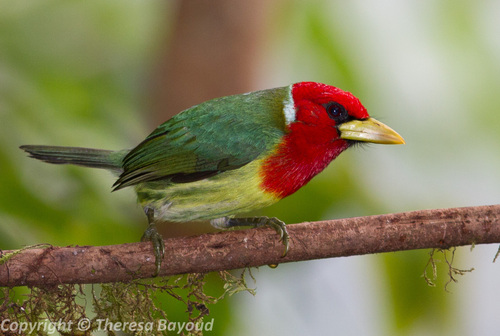
New World Barbets
familyCapitonidae
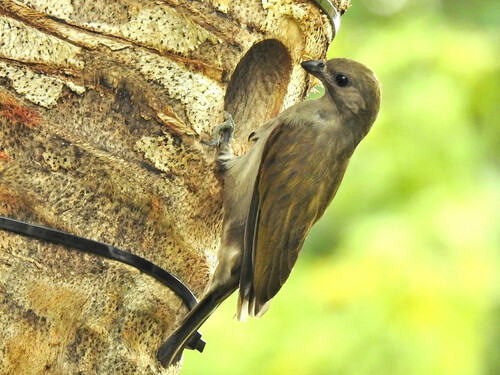
Honeyguides
familyIndicatoridae
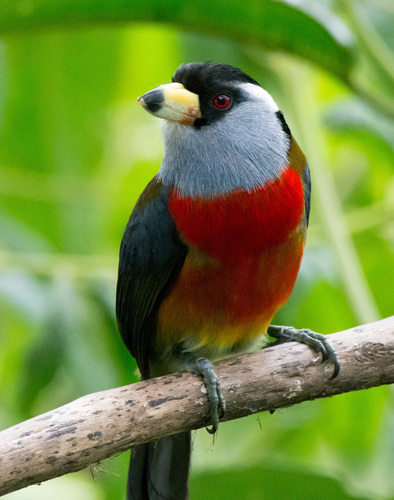
Toucan-Barbets
familySemnornithidae
Where it lives
Recorded sightings
—
geo-referenced records in GBIF, from museums, herbaria and field observers.
Drag the globe to turn it. Dots are where records exist, not a range map; darker means more records.
In the stacks
Searching the stacks…
Every page naming Piciformes in the Biodiversity Heritage Library →
This page is assembled live from iNaturalist, GBIF, Wikipedia, the Source Library and the Internet Archive. It is not yet part of the hand-edited codex. iNaturalist taxon 17550.