- Animals
- ›Chordates
- ›Vertebrates
- ›Ray-finned Fishes
- ›Spiny-rayed fishes
- ›Mullets and Glassfishes
- ›Mullets
- ›Cestraeus
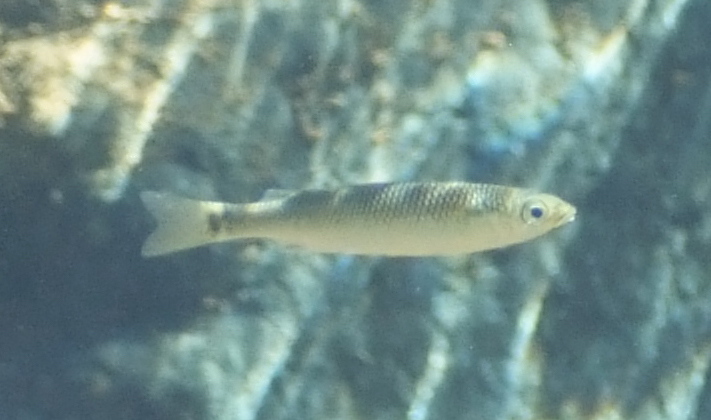
lobed river mullet
Cestraeus plicatilis
The lobed river mullet (Cestraeus plicatilis), also known as ludong or banak, is a freshwater mullet. While it is claimed to be endemic to Cagayan River and tributaries extending through the watersheds of Cagayan Valley and the Santa-Abra River Systems of Ilocos Sur and Abra in the Philippines, verifiable and reliable sources have listed Celebes, New Caledonia, New Hebrides, and Fiji as areas where the lobed river mullet may also be found.
According to the BFAR, this fish is habituating in the deep pools of Addalem River in Aglipay, Quirino, and rapids of Didimpit in Lacab, Jones, Isabela.
From the article Lobed river mullet on Wikipedia (CC BY-SA), quoted section by section
Description
The Ludong is herbivorous, eating only the filamentous algae that live on rocks and boulders in and near river rapids. A mature fish weighs from 0.25 to 2 kg (0.55 to 4.41 lb) and costs P4,000- P5,000 a kilo, making it one of the most expensive fish in the country. It commands a very high price in the market because it is seasonal and difficult to catch. It is sometimes called as the "President's fish" because it was known as the favorite fish of former Philippine President Ferdinand Edralin Marcos. This species is known for its unique taste and peculiar aroma when cooked. In fact, its unique taste makes it one of the most sought-after ingredients in making delicious dishes. A study in 2022, by Escaño, et al., was successful in identifying Ludong through genetic barcoding, as Cestraeus goldiei.
What it does
This elusive fish is catadromous in nature; it migrates to the ocean to breed. It swims to salt water to spawn from October to December and returns to upstream ponds after. It undergoes upstream migration during December, January, and February, and this coincides with the "ipon-run phenomenon' wherein different species of fish fry also undergo upstream migration. After the ludong had undergone downstream migration, it can be caught in Cagayan River and tributaries.
Wikipedia: “Reproduction”
Where it lives
Recorded sightings
—
geo-referenced records in GBIF, from museums, herbaria and field observers.
Drag the globe to turn it. Dots are where records exist, not a range map; darker means more records.
In the stacks
Searching the stacks…
Every page naming Cestraeus plicatilis in the Biodiversity Heritage Library →
This page is assembled live from iNaturalist, GBIF, Wikipedia, the Source Library and the Internet Archive. It is not yet part of the hand-edited codex. iNaturalist taxon 187215.