- Animals
- ›Chordates
- ›Vertebrates
- ›Birds
- ›Parrots
- ›Old World Parrots
- ›Broad-tailed Parrots and Allies
- ›Cyanoramphus
On eBird ↗
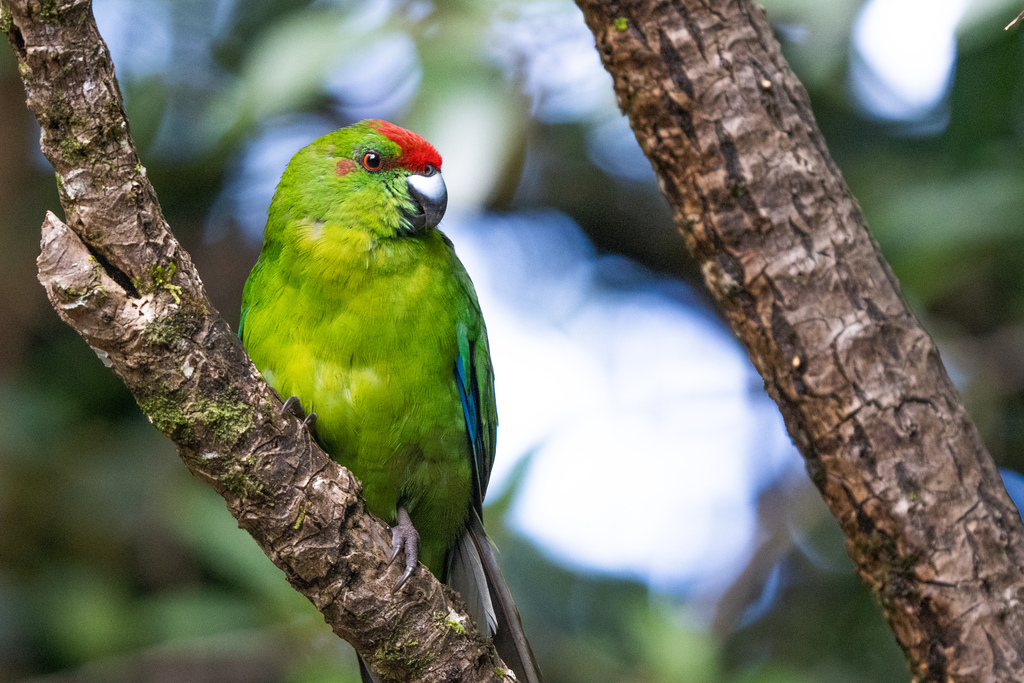
Norfolk Island Parakeet
Live sightings near you, the range map, bar charts of when it is seen, and Macaulay Library photos and recordings.
Norfolk Parakeet
Cyanoramphus cookii
The Norfolk parakeet (Cyanoramphus cookii), also called Tasman parakeet, Norfolk Island green parrot or Norfolk Island red-crowned parakeet, is a species of parrot in the family Psittaculidae. It is endemic to Norfolk Island (located between Australia, New Zealand and New Caledonia in the Tasman Sea). The species was once considered a subspecies of the red-fronted parakeet of New Zealand. The name Tasman parakeet is used by Christidis and Boles on the argument that this species and...
From the article Norfolk parakeet on Wikipedia (CC BY-SA), quoted section by section
Range & habitat
Originally found throughout Norfolk Island (to which it is endemic), it vanished from much of its range until by 1908 it was restricted to forest around Mount Pitt in the northwestern corner of the Island. Its natural habitats are native rainforest, from which it ventures into surrounding plantations and orchards.
Wikipedia: “Distribution and habitat”
What it does
Seeds make up over half the Norfolk parakeet's diet, particularly in winter. Five species make up 85% of its diet, including the Norfolk pine (Araucaria heterophylla), niau palm (Rhopalostylis baueri), ake ake (Dodonaea viscosa), as well as the introduced African olive (Olea europaea subsp. cuspidata) and cherry guava (Psidium cattleyanum).
Wikipedia: “Diet”
Listen
Looking for field recordings…
Where it lives
Recorded sightings
—
geo-referenced records in GBIF, from museums, herbaria and field observers.
Drag the globe to turn it. Dots are where records exist, not a range map; darker means more records.
In the stacks
Searching the stacks…
Every page naming Cyanoramphus cookii in the Biodiversity Heritage Library →
This page is assembled live from iNaturalist, GBIF, Wikipedia, the Source Library and the Internet Archive. It is not yet part of the hand-edited codex. iNaturalist taxon 18925.