On eBird ↗
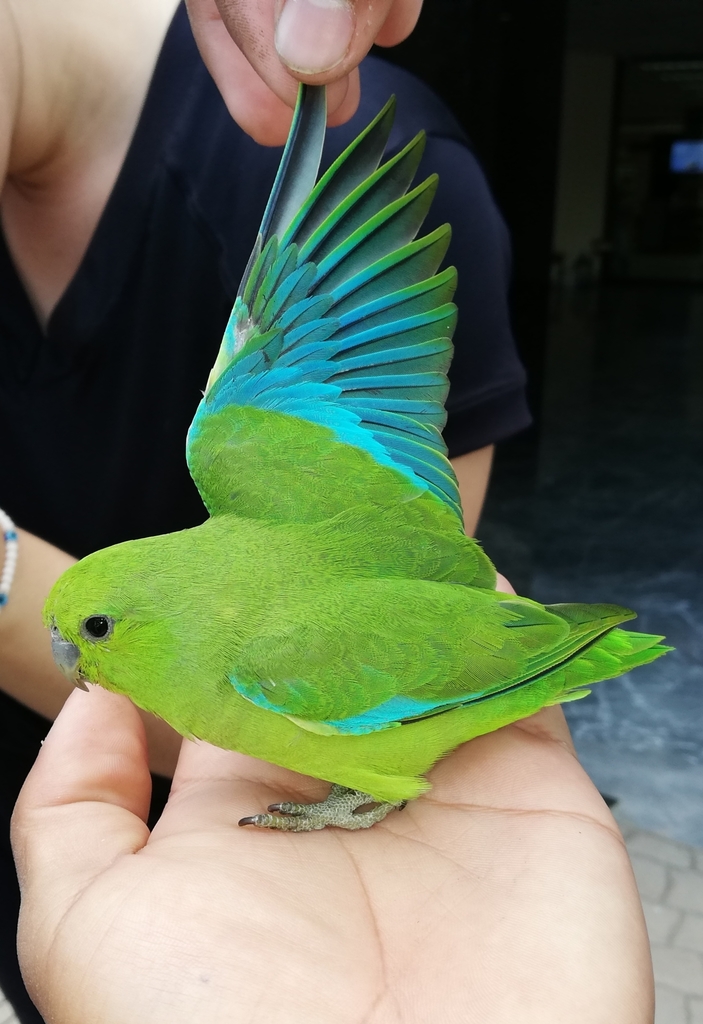
Mexican Parrotlet
Live sightings near you, the range map, bar charts of when it is seen, and Macaulay Library photos and recordings.
Mexican Parrotlet
Forpus cyanopygius
The Mexican parrotlet (Forpus cyanopygius), also known as the turquoise-rumped parrotlet or the Mexican blue-rumped parrotlet, is a species of parrot in the family Psittacidae.
There are two subspecies: Grayson's parrotlet or the Tres Marias parrotlet (F. c. insularis) and F. c. cyanopygius.
From the article Mexican parrotlet on Wikipedia (CC BY-SA), quoted section by section
Range & habitat
Mexican parrotlets are endemic to western Mexico. Their range extends from southern Sonora to Colima. This species is the northernmost member of the genus Forpus. Though they are non-migratory, they wander throughout their range to follow the blooming and growth patterns of the plants they prefer to feed on.
Natural habitats are subtropical or tropical dry scrublands, deciduous forests, open grasslands with scattered trees, heavily degraded former forest, plantations, and woodlands along watercourses. They are not found at altitudes higher than 1,300 metres (4,300 ft) above sea level.
Wikipedia: “Distribution and habitat”
What it does
Mexican parrotlets typically breed between May and July, and lay clutches of up to 3 small, white eggs. They are typically incubated for at least 19 days, and chicks fledge 4–5 weeks after hatching. Mexican parrotlets can live to be over 20 years old. Mexican parrotlets usually nest in tree cavities, cacti, and other similar structures.
Wikipedia: “Reproduction”
In human culture
Mexican parrotlets are uncommon, though not unheard of, in aviculture. Because of their protections, they cannot legally be captured from the wild and sold as pets, so the captive population relies on breeding programs.
Wikipedia: “Aviculture”
Listen
Looking for field recordings…
Where it lives
Recorded sightings
—
geo-referenced records in GBIF, from museums, herbaria and field observers.
Drag the globe to turn it. Dots are where records exist, not a range map; darker means more records.
In the stacks
Searching the stacks…
Every page naming Forpus cyanopygius in the Biodiversity Heritage Library →
This page is assembled live from iNaturalist, GBIF, Wikipedia, the Source Library and the Internet Archive. It is not yet part of the hand-edited codex. iNaturalist taxon 19067.