- Animals
- ›Chordates
- ›Vertebrates
- ›Mammals
- ›Therians
- ›Placental Mammals
- ›Ungulates, Carnivorans, and Allies
- ›Bats
- ›Yangochiroptera
- ›Noctilionoid Bats
- ›New World Leaf-nosed Bats
- ›Stenodermatine Bats
- ›Stenodermatini
- ›Dermanura
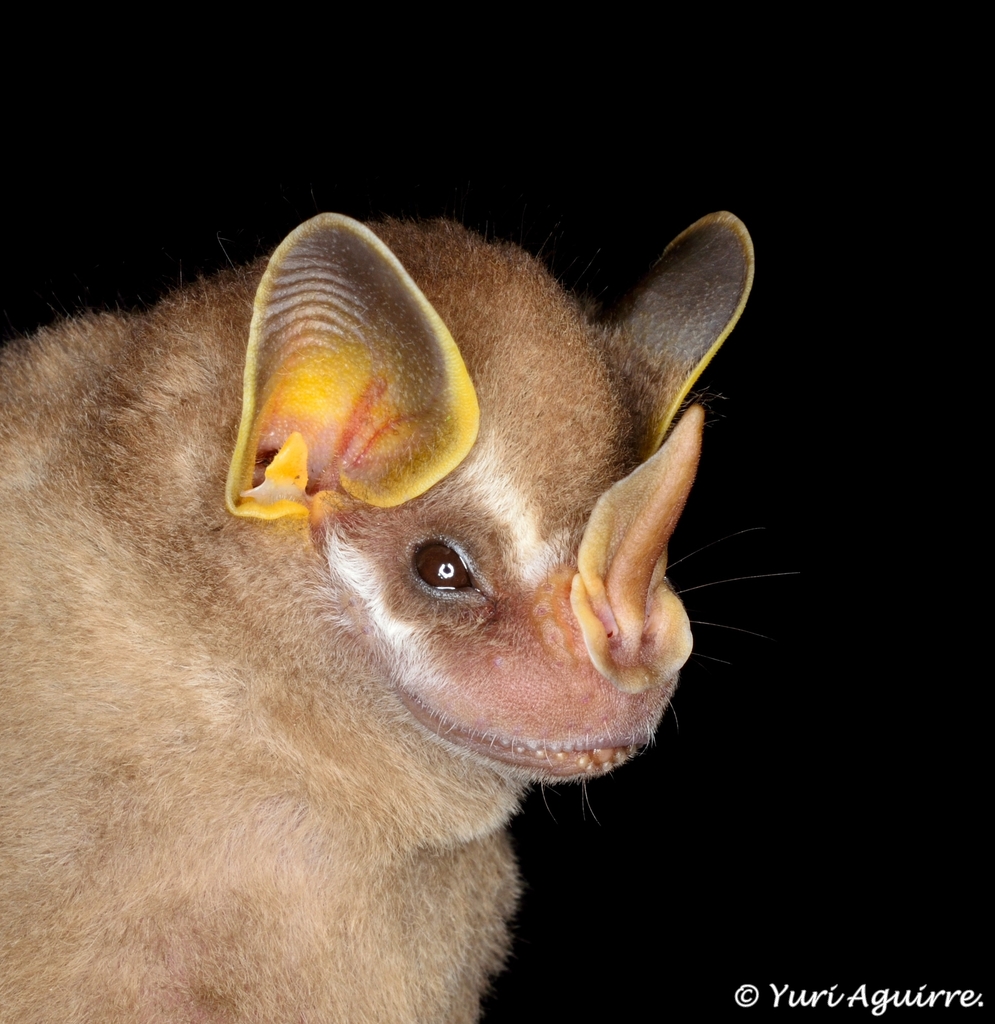
Pygmy Fruit-eating Bat
Dermanura phaeotis
The pygmy fruit-eating bat (Dermanura phaeotis) is a bat of the family Phyllostomidae. The specific name phaeotis is of Greek derivation, coming from the word phaios meaning dusky, referring to their dusky gray coloration.
From the article Pygmy fruit-eating bat on Wikipedia (CC BY-SA), quoted section by section
Description
D. phaeotis are identified by their uniform dark brown, or pale grayish brown fur that reaches to the base of the forearms. The fur is soft and moderately thick. Pygmy fruit-eating bats have moderately sized ears that are round, brown, and usually have a white edge. They are very small mammals and they have a small body size of about 51–60 millimetres (2.0–2.4 in) and a weight between 8 and 15 grams (0.28 and 0.53 oz). The reproductive pattern of D. phaeotis is characterized as seasonal. They are known to have a gestation period of 112–120 days that can be stretched longer due to dormancy.
== References ==
What it does
Dermanura phaeotis is a species of bat that is native to tropical deciduous forest in Central America. They are flying mammals that are primarily frugivorous as their common name implies, however they will also eat pollen and insects. Populations of fruit bats are low in density but they are widespread in their regions and evenly dispersed. They are nocturnal and modify leaves to form roosts for the daytime, making 'tents' to take refuge beneath.
Wikipedia: “Ecology”
Listen
Looking for field recordings…
Where it lives
Recorded sightings
—
geo-referenced records in GBIF, from museums, herbaria and field observers.
Drag the globe to turn it. Dots are where records exist, not a range map; darker means more records.
In the stacks
Searching the stacks…
Every page naming Dermanura phaeotis in the Biodiversity Heritage Library →
This page is assembled live from iNaturalist, GBIF, Wikipedia, the Source Library and the Internet Archive. It is not yet part of the hand-edited codex. iNaturalist taxon 197799.