- Animals
- ›Chordates
- ›Vertebrates
- ›Amphibians
- ›Frogs and Toads
- ›Terraranas
- ›Fleshbelly and Terrestrial-breeding Frogs
- ›Pristimantinae
- ›Yunganastes
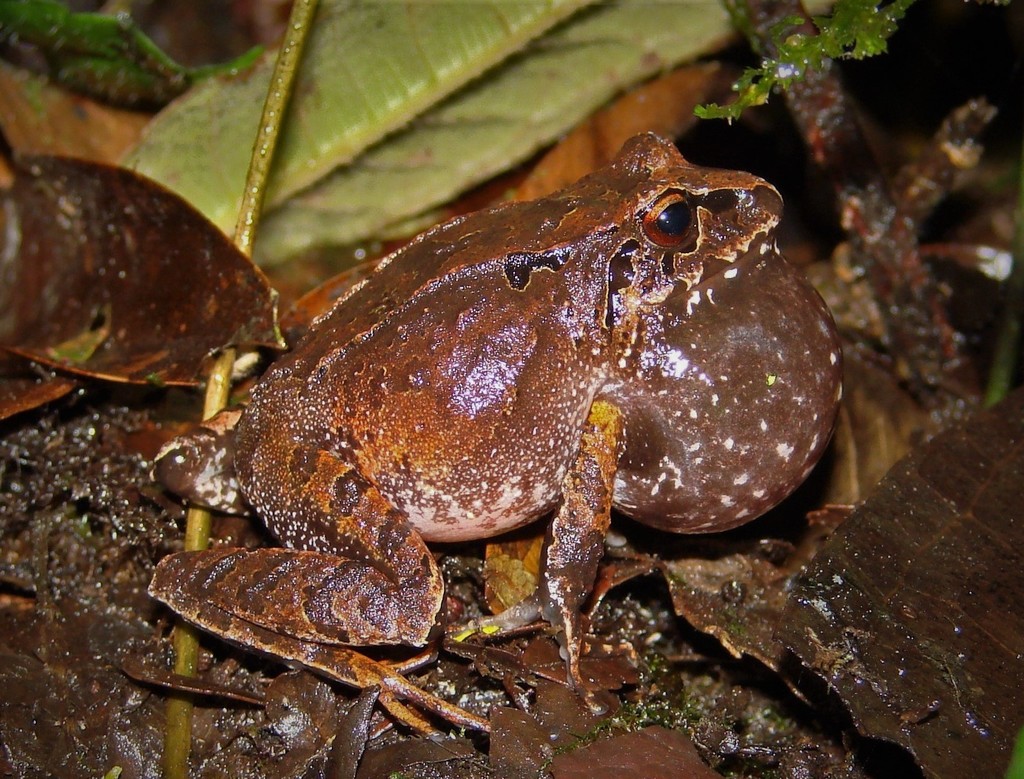
Yunganastes pluvicanorus
Yunganastes pluvicanorus is a species of frog in the family Craugastoridae. It is endemic to Bolivia and found on the eastern slopes of the Cordillera Oriental in the Cochabamba and Santa Cruz Departments.
From the article Yunganastes pluvicanorus on Wikipedia (CC BY-SA), quoted section by section
Description
Adult males measure 31–41 mm (1.2–1.6 in) and adult females 34–47 mm (1.3–1.9 in) in snout–vent length. The head is wider than it is long; the snout is rounded. The tympanum is ovoid. The dorsolateral folds start from above the tympanum and extend to the groin. The canthus rostralis is sharp. Neither fingers nor toes have webbing or lateral fringes. The outer fingers have expanded discs; the toe discs are small. Dorsal skin is shagreened. The dorsum is beige to brown and has some darker markings. There is a dark brown canthal and supra-tympanic stripe. The upper lip has irregular brown blotches. The limbs are barred. The venter is cream, bearing some brown spots. Males have a large vocal sac.
Range & habitat
Yunganastes pluvicanorus lives in cloud forest and humid montane forests (Yungas) at elevations of 2,000–2,550 m (6,560–8,370 ft) above sea level. It is both diurnal and nocturnal; males call both day and night on the ground or perching on bushes. Yunganastes pluvicanorus is threatened by habitat loss and degradation caused primarily by agriculture. Carrasco and Amboró National Parks might protect it.
== References ==
Wikipedia: “Habitat and conservation”
Listen
Looking for field recordings…
Where it lives
Recorded sightings
—
geo-referenced records in GBIF, from museums, herbaria and field observers.
Drag the globe to turn it. Dots are where records exist, not a range map; darker means more records.
In the stacks
Searching the stacks…
Every page naming Yunganastes pluvicanorus in the Biodiversity Heritage Library →
This page is assembled live from iNaturalist, GBIF, Wikipedia, the Source Library and the Internet Archive. It is not yet part of the hand-edited codex. iNaturalist taxon 199805.