On eBird ↗
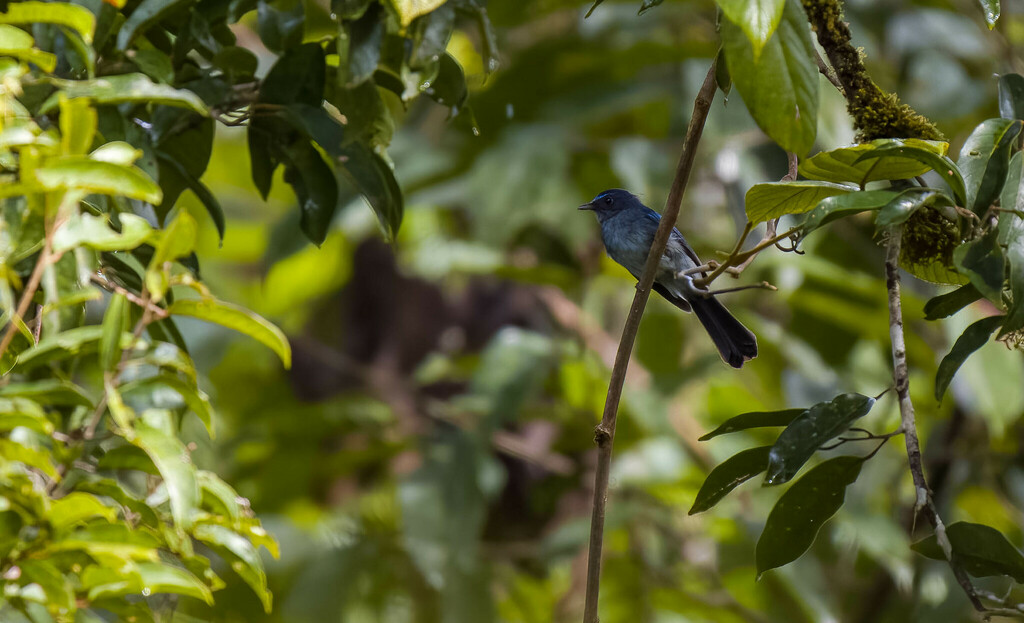
Visayan Blue-Fantail
Live sightings near you, the range map, bar charts of when it is seen, and Macaulay Library photos and recordings.
Visayan Blue-Fantail
Rhipidura samarensis
The Visayan blue fantail (Rhipidura samarensis) is a species of bird in the family Rhipiduridae. It is endemic to the Philippines on the islands of Bohol, Leyte and Samar. Its natural habitat is tropical moist lowland forests. It was previously conspecific with the Mindanao blue fantail.
From the article Visayan blue fantail on Wikipedia (CC BY-SA), quoted section by section
Description
It was previous conspecific with the Mindanao blue fantail and is differentiated by its darker crown, lighter blue wing fringes and tail, a slower paced call and through molecular studies. This species is monotypic and has no subspecies.
Wikipedia: “Description and taxonomy”
Range & habitat
It is found in tropical moist lowland forest up to 1,200 meters above sea level, IUCN has assessed this bird as least-concern species. Occurs in a few protected areas like Rajah Sikatuna Protected Landscape in Bohol and Samar Island Natural Park but actual protection and enforcement from illegal logging and hunting are lax.
Wikipedia: “Habitat and conservation status”
What it does
The diet of the Mindanao blue fantail consists of insects. It is often observed in mixed flocks with other birds such as Rufous paradise flycatcher, Black-naped monarch, Celestial monarch, Philippine leaf warbler, Short-crested monarch, Yellow-bellied whistler, Visayan babbler and Visayan pygmy babbler. Breeding has been recorded from February to August. Nests in low bushes. Not much else information on breeding habits.
Wikipedia: “Ecology and behavior”
Listen
Looking for field recordings…
Where it lives
Recorded sightings
—
geo-referenced records in GBIF, from museums, herbaria and field observers.
Drag the globe to turn it. Dots are where records exist, not a range map; darker means more records.
In the stacks
Searching the stacks…
Every page naming Rhipidura samarensis in the Biodiversity Heritage Library →
This page is assembled live from iNaturalist, GBIF, Wikipedia, the Source Library and the Internet Archive. It is not yet part of the hand-edited codex. iNaturalist taxon 201151.