On eBird ↗
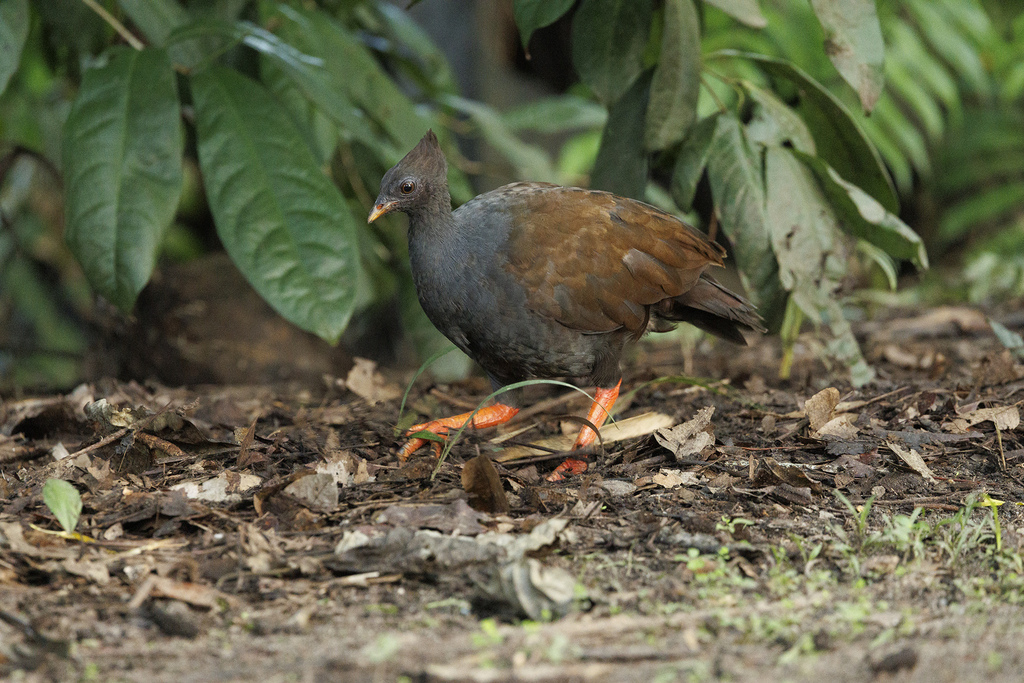
Orange-footed Megapode
Live sightings near you, the range map, bar charts of when it is seen, and Macaulay Library photos and recordings.
Orange-footed Scrubfowl
Megapodius reinwardt
The orange-footed scrubfowl (Megapodius reinwardt), also known as orange-footed megapode or just scrubfowl, is a small megapode of the family Megapodiidae native to many islands in the Lesser Sunda Islands as well as southern New Guinea and northern Australia.
From the article Orange-footed scrubfowl on Wikipedia (CC BY-SA), quoted section by section
Description
It is a terrestrial bird the size of a domestic chicken and dark-coloured with strong orange legs and a pointed crest at the back of the head. It utilises a range of forest and scrub habitats and has colonised many small islands throughout its range. It is prolific in suburban Darwin gardens, where people refer to it as a bush chook, bush chicken, bush turkey, or most commonly, the bush boiby
What it does
The orange-footed scrubfowl feeds on seeds, fallen fruit and terrestrial invertebrates.
Wikipedia: “Diet”
In human culture
The Kunwinjku people of west Arnhem Land know this bird as kurrukurldanj. The people of Flores Islands in Indonesia named this bird as Wodon
Wikipedia: “In Aboriginal language and culture”
Listen
Looking for field recordings…
Where it lives
Recorded sightings
—
geo-referenced records in GBIF, from museums, herbaria and field observers.
Drag the globe to turn it. Dots are where records exist, not a range map; darker means more records.
In the stacks
Searching the stacks…
Every page naming Megapodius reinwardt in the Biodiversity Heritage Library →
This page is assembled live from iNaturalist, GBIF, Wikipedia, the Source Library and the Internet Archive. It is not yet part of the hand-edited codex. iNaturalist taxon 2025.