- Animals
- ›Chordates
- ›Vertebrates
- ›Amphibians
- ›Frogs and Toads
- ›Poison Frogs
- ›Cryptic Forest Frogs
- ›Aromobatinae
- ›Mannophryne
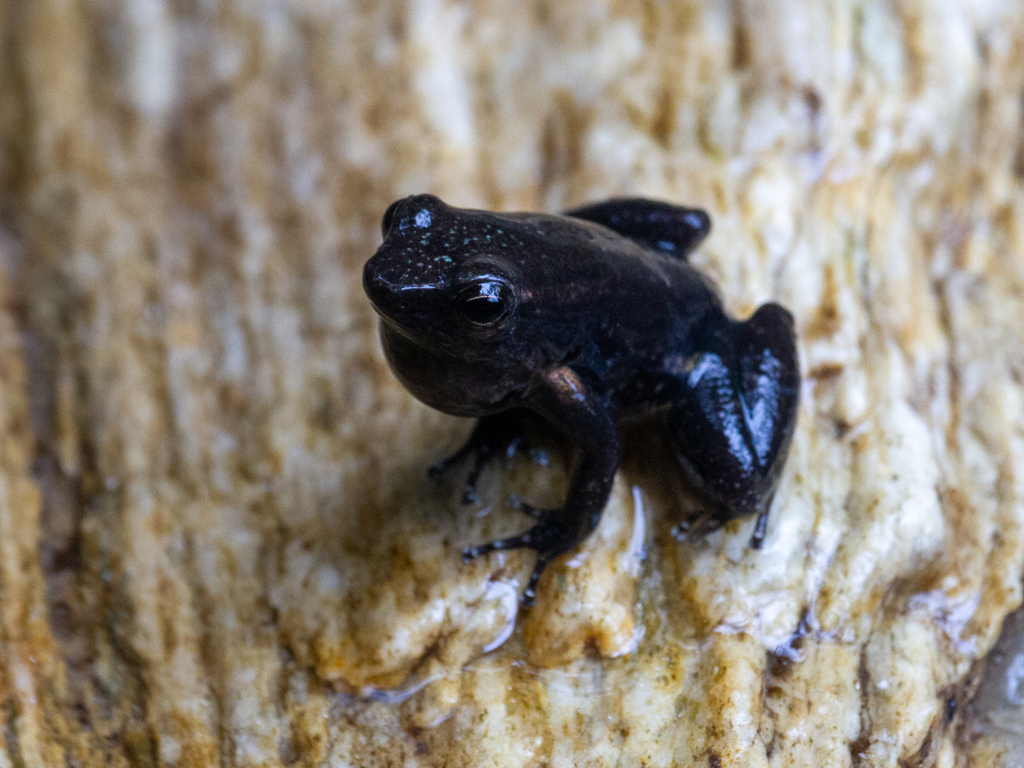
Hermina's Poison Frog
Mannophryne herminae
Mannophryne herminae is a species of frog in the family Aromobatidae. It is endemic to Venezuela.
From the article Mannophryne herminae on Wikipedia (CC BY-SA), quoted section by section
Range & habitat
This diurnal frog lives near narrow streams that run through in forests on mountains and in lowlands. It can survive in primary forest, secondary forest, and on coffee and cocoa plantations that have sufficient shade. Scientists have seen the frog between 0 and 1200 meters above sea level. There are two national parks in the frog's range: San Esteban National Park and Henri Pittier National Park.
Wikipedia: “Habitat”
What it does
The male frogs perch on rocks near streams and call to the female frogs. The female frogs exhibit some territorial behavior. The female frogs lay eggs in the leaf litter near streams. After the eggs hatch, the male frogs carry the tadpoles to ponds in the streams.
Wikipedia: “Reproduction”
Listen
Looking for field recordings…
Where it lives
Recorded sightings
—
geo-referenced records in GBIF, from museums, herbaria and field observers.
Drag the globe to turn it. Dots are where records exist, not a range map; darker means more records.
In the stacks
Searching the stacks…
Every page naming Mannophryne herminae in the Biodiversity Heritage Library →
This page is assembled live from iNaturalist, GBIF, Wikipedia, the Source Library and the Internet Archive. It is not yet part of the hand-edited codex. iNaturalist taxon 21197.