 NL·0713
Herbarium of the Nature Library
- Name
- Chauliodus macouni
- Family
- Stomiidae
- Native to
- North Pacific from Japan and the Bering Sea to Baja California
- Habitat
- Mesopelagic (twilight zone), Bathypelagic (midnight zone)
Pacific viperfish
Chauliodus macouni
Also calledPez víbora (Spanish)
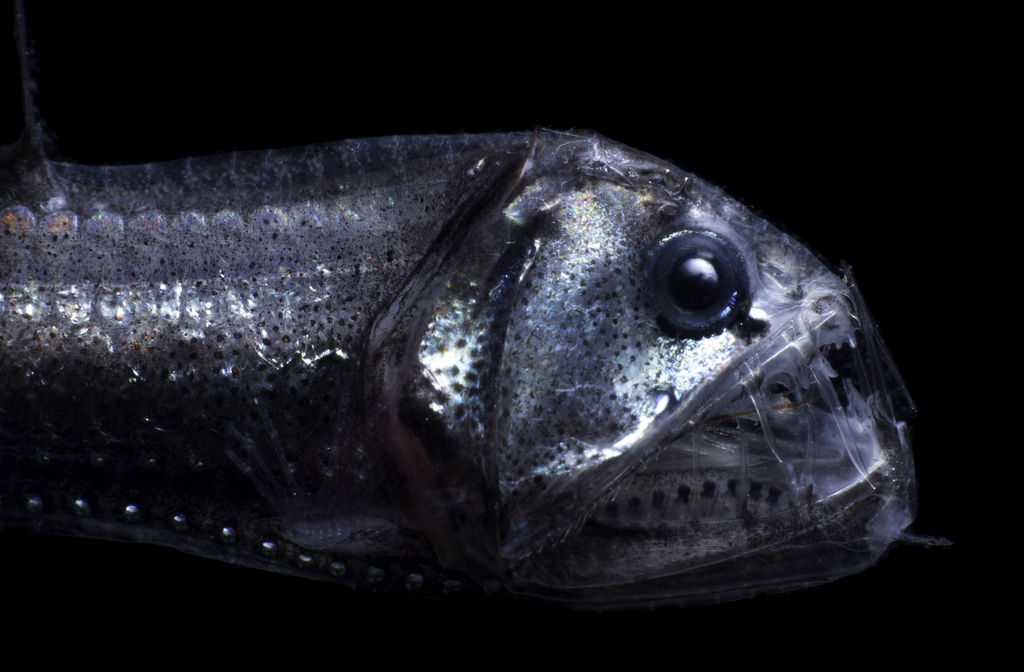
A slender deep-sea hunter whose needle-like fangs are so long they cannot fit inside its mouth. Rows of light organs along its belly let it blend with faint light from above.
The Pacific viperfish (Chauliodus macouni), is a predatory deep-sea fish found in the North Pacific. It is reported as being either mesopelagic or bathypelagic, with diel vertical migration to shallower waters. The Pacific viperfish is one of the nine different species that belong to the genus Chauliodus, the viperfish. The Pacific viperfish tend to be the largest of the species, typically reaching lengths of up to 1 foot and are considered an example of deep-sea gigantism. The length-weight relationship of the pacific viperfish varies with sex with females tending to be longer and heavier than males. Wikipedia
What it can do
- iVentral photophores produce counter-illumination camouflage
- iiCan open its jaws extremely wide to take large prey
- iiiMigrates hundreds of metres upward at night to feed
- ivLure on the first dorsal ray may attract prey
In the field
Field marks
- aLong, slender, dark body with bluish-silver sheen
- bEnormous fang-like teeth projecting outside the closed mouth
- cRows of photophores along the belly
- dFirst dorsal ray elongated, set far forward
- Not to be confused with
- Sloane's viperfish (C. sloani) occurs in warmer waters worldwide and differs in photophore arrangement and dorsal position; dragonfishes have a chin barbel.
- Where to see it
- ROV footage from Monterey Canyon; museum specimens
- When
- Year-round
Life & habits
- Diet
- Small fish, crustaceans
- Habitat
- Deep open ocean, about 200–1,500 m and deeper
- Size
- Up to about 25 cm
Makes daily vertical migrations, rising toward shallower water at night and descending by day.
Where it lives
Recorded sightings
—
geo-referenced records in GBIF, from museums, herbaria and field observers.
Native range
North Pacific from Japan and the Bering Sea to Baja California
Drag the globe to turn it. Dots are where records exist, not a range map; darker means more records.
In the old herbals & bestiaries
No plate in the Source Library names this exact species, so these show its closest relatives as the old naturalists drew them: same genus, or the same kind of animal. Click a plate to read the page it came from, with translation.

In the stacks
Searching the stacks…
Every page naming Chauliodus macouni in the Biodiversity Heritage Library →
Marginalia
Named for Canadian naturalist John Macoun; its fangs have inspired many deep-sea monster illustrations.
Curiosity
Its lower fangs are so long that when the mouth shuts they sit outside the upper jaw, reaching up toward the eyes.
Kinship




Photographs: iNaturalist contributors under the licences shown. Records: GBIF.org. Historical plates: Source Library (CC BY-SA 4.0; originals public domain). Summary text: Nature Library editors and Wikipedia (CC BY-SA). Medicinal and edibility notes are historical and educational, not advice. iNaturalist taxon 216648.