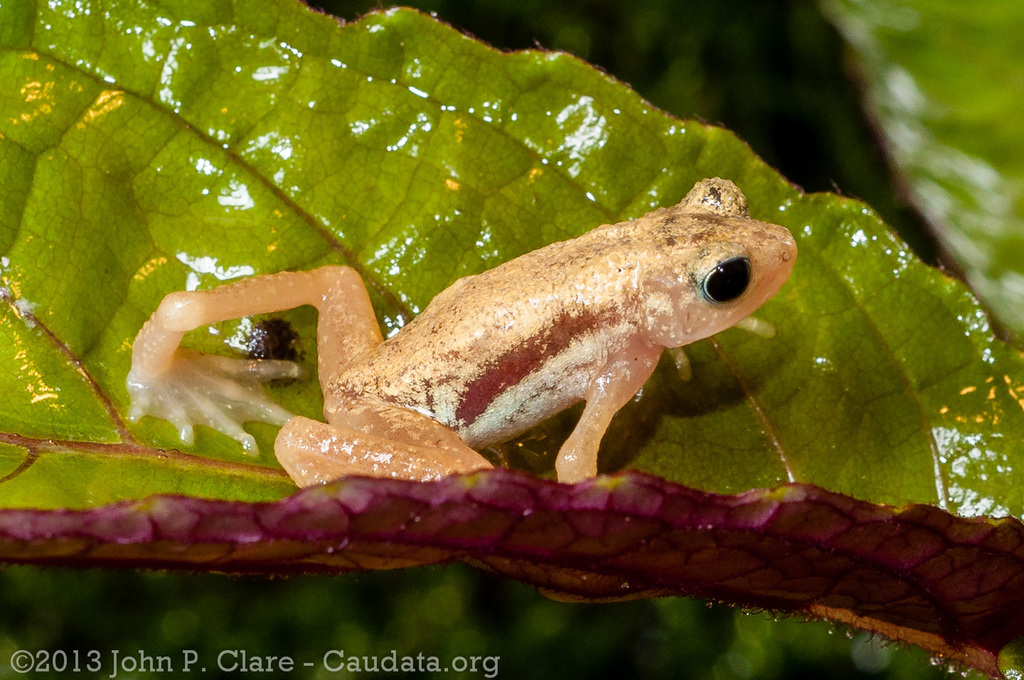
Kihansi Spray Toad
Nectophrynoides asperginis
The Kihansi spray toad (Nectophrynoides asperginis) is a small toad that was endemic to Tanzania. The species is live-bearing and insectivorous. The Kihansi spray toad is currently categorized as extinct in the wild by the International Union for Conservation of Nature (IUCN), though the species persists in ex situ, captive breeding populations. Currently, there are an estimate of 6,200 Kihansi spray toads in captivity, a majority in the Bronx Zoo and Toledo Zoo.
From the article Kihansi spray toad on Wikipedia (CC BY-SA), quoted section by section
Range & habitat
Prior to its extirpation, the Kihansi spray toad was endemic only to a two-hectare (5-acre) area at the base of the Kihansi River waterfall in the Udzungwa escarpment of the Eastern Arc Mountains in Tanzania. The Kihansi Gorge is about 4 km (2.5 mi) long with a north–south orientation. A number of wetlands made up the habitat of this species, all fed by spray from the Kihansi River waterfall. These wetlands were characterized by dense, grassy vegetation including Panicum grasses, Selaginella kraussiana clubmosses, and snail ferns (Tectaria gemmifera). Areas within the spray zones of the waterfall experienced near-constant temperatures and 100% humidity. Currently, an artificial gravity-fed sprinkler system is in place to mimic the original conditions of the spray zones. The species' global range covered an area of less than two hectares around the Kihansi Falls, and no additional populations have been located after searching for it around other waterfalls on the escarpment of the Udzungwa Mountains.
Wikipedia: “Habitat”
Listen
Looking for field recordings…
Where it lives
Recorded sightings
—
geo-referenced records in GBIF, from museums, herbaria and field observers.
Drag the globe to turn it. Dots are where records exist, not a range map; darker means more records.
In the stacks
Searching the stacks…
Every page naming Nectophrynoides asperginis in the Biodiversity Heritage Library →
This page is assembled live from iNaturalist, GBIF, Wikipedia, the Source Library and the Internet Archive. It is not yet part of the hand-edited codex. iNaturalist taxon 21747.