- Animals
- ›Chordates
- ›Vertebrates
- ›Amphibians
- ›Frogs and Toads
- ›Terraranas
- ›Rain Frogs
- ›Eleutherodactylinae
- ›Eleutherodactylus
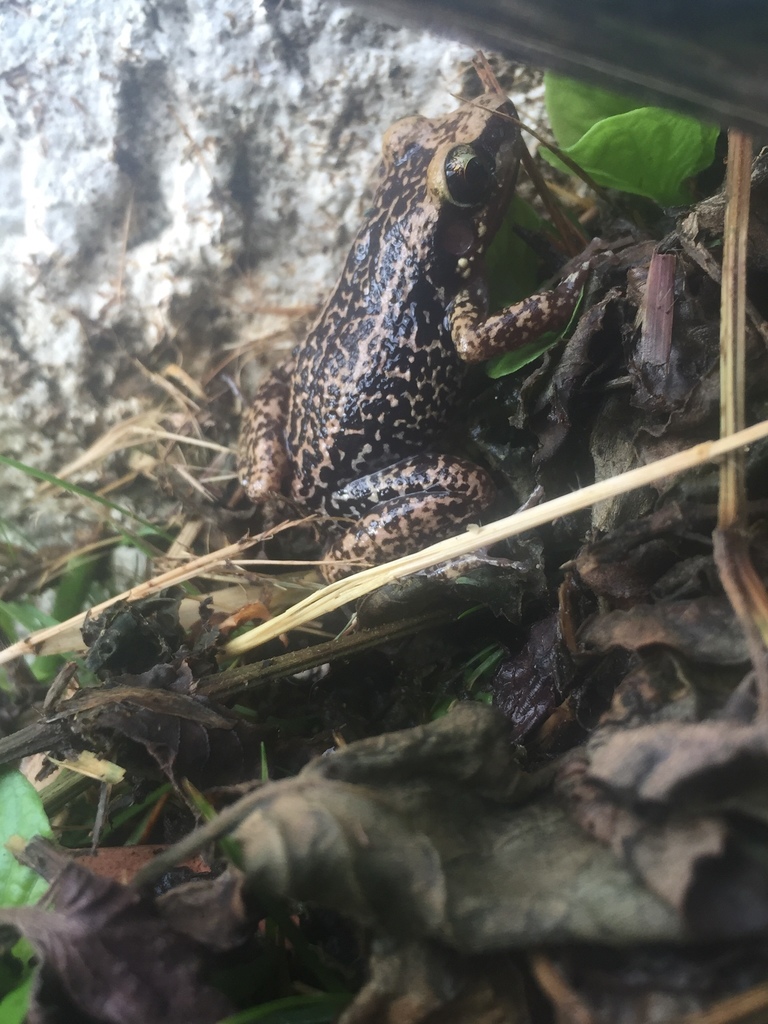
Mute Coqui
Eleutherodactylus lentus
The yellow-mottled coqui or mute coqui (Eleutherodactylus lentus) is a species of frog in the family Eleutherodactylidae endemic to the Virgin Islands. Its natural habitat is subtropical or tropical dry forests, often near streams or other moist habitats. It is threatened by habitat loss.
From the article Yellow mottled coqui on Wikipedia (CC BY-SA), quoted section by section
Range & habitat
This species is endemic to the Virgin Islands, where it is found on St. Thomas, St. John, St. Croix, and Hassel Island in the US Virgin Islands, and on the island of Jost Van Dyke in the British Virgin Islands. The population on Jost Van Dyke was first recorded in 2007 and it is unclear whether it is introduced or was simply previously overlooked. It has been suggested that the species being introduced to the BVI is more likely, as several intensive herpetological surveys before 2007 failed to document this species and locals on the island were completely unaware of the species, despite knowing about several other Eleutherodactylus frogs native to Jost Van Dyke. The yellow-mottled coqui prefers semi-xeric habitats, where it hides under debris. On Jost Van Dyke, it has been encountered in backyards sheltering under wooden boards and other objects, as well as freshwater puddles in garbage. On St. Thomas, it is known from agricultural areas. It is found from sea level up to an elevation of 10 m (33 ft). Despite its common name, it can be heard calling occasionally, with vocalizing sometimes performed from under debris on the ground. It lays its eggs on the ground and is thought to reproduce via direct development.
Wikipedia: “Distribution and habitat”
Listen
Looking for field recordings…
Where it lives
Recorded sightings
—
geo-referenced records in GBIF, from museums, herbaria and field observers.
Drag the globe to turn it. Dots are where records exist, not a range map; darker means more records.
In the stacks
Searching the stacks…
Every page naming Eleutherodactylus lentus in the Biodiversity Heritage Library →
This page is assembled live from iNaturalist, GBIF, Wikipedia, the Source Library and the Internet Archive. It is not yet part of the hand-edited codex. iNaturalist taxon 22384.