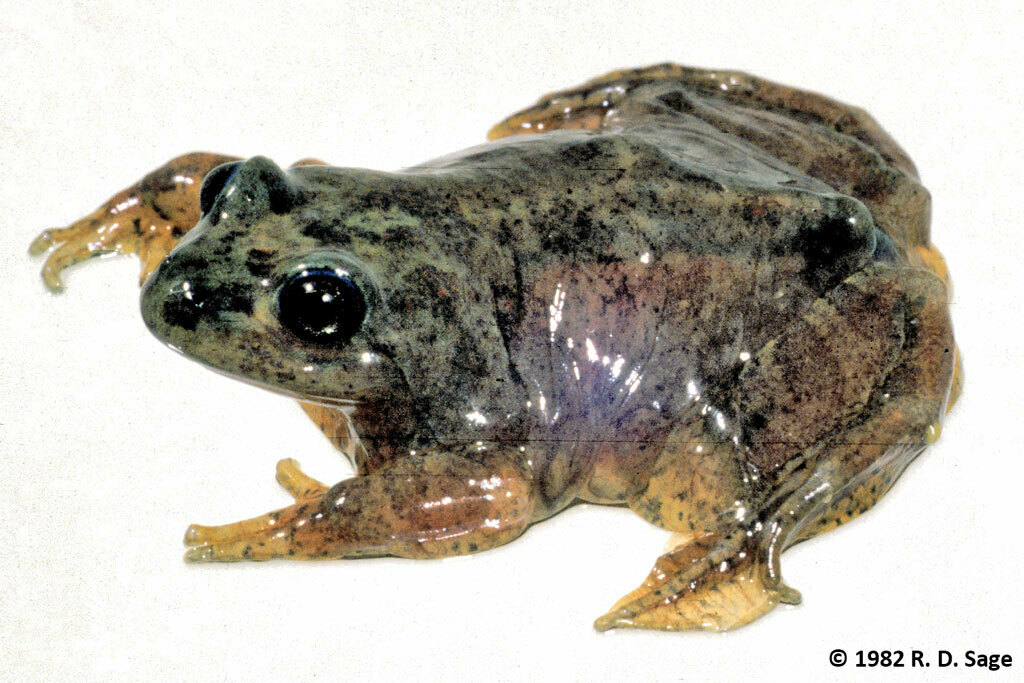
Patagonia Frog
Atelognathus patagonicus
Atelognathus patagonicus is a species of frog in the Batrachylidae family. It is endemic to the volcanic tablelands of Neuquén Province, western Argentina. Its common name is Patagonia frog. Its natural habitats are permanent lagoons surrounded by steppe and/or semi-desert. They are mostly aquatic but can also be found in the vegetation surrounding the lagoons. Breeding takes place in water.
From the article Atelognathus patagonicus on Wikipedia (CC BY-SA), quoted section by section
Description
The adult measures about 50 mm in snout-vent length. The skin of the dorsum is brown or green in color with dark spots. This frog has two body types, and individuals can transition between the two during their lives. Frogs with the aquatic body type spend a great deal of time in the water. They have more folds in their skin and more webbed skin between their toes. Their bellies are also notably orange in color. Frogs with the littoral or terrestrial body type spend time more land. They have less excess skin and gray bellies. The frogs tend to have the aquatic body type if they have access to a year-round or permanent lagoon. They become littoral if they have access to only temporary bodies of water (which dry up for at least part of the year). Scientists believe this is related to the foods they eat in these two different lifestyles.
Range & habitat
Its natural habitats are permanent lagoons surrounded by steppe and/or semidesert. They are mostly aquatic but can also be found in the vegetation surrounding the lagoons. Breeding takes place in water.
Wikipedia: “Habitat”
What it does
The adult frogs eat invertebrates. The amphipods in pools of water have carotenoids in their bodies. This may be the cause of the yellow ventral areas of aquatic frogs. Littoral frogs eat insects and arachnids that they find on land.
Wikipedia: “Diet”
Listen
Looking for field recordings…
Where it lives
Recorded sightings
—
geo-referenced records in GBIF, from museums, herbaria and field observers.
Drag the globe to turn it. Dots are where records exist, not a range map; darker means more records.
In the stacks
Searching the stacks…
Every page naming Atelognathus patagonicus in the Biodiversity Heritage Library →
This page is assembled live from iNaturalist, GBIF, Wikipedia, the Source Library and the Internet Archive. It is not yet part of the hand-edited codex. iNaturalist taxon 23165.