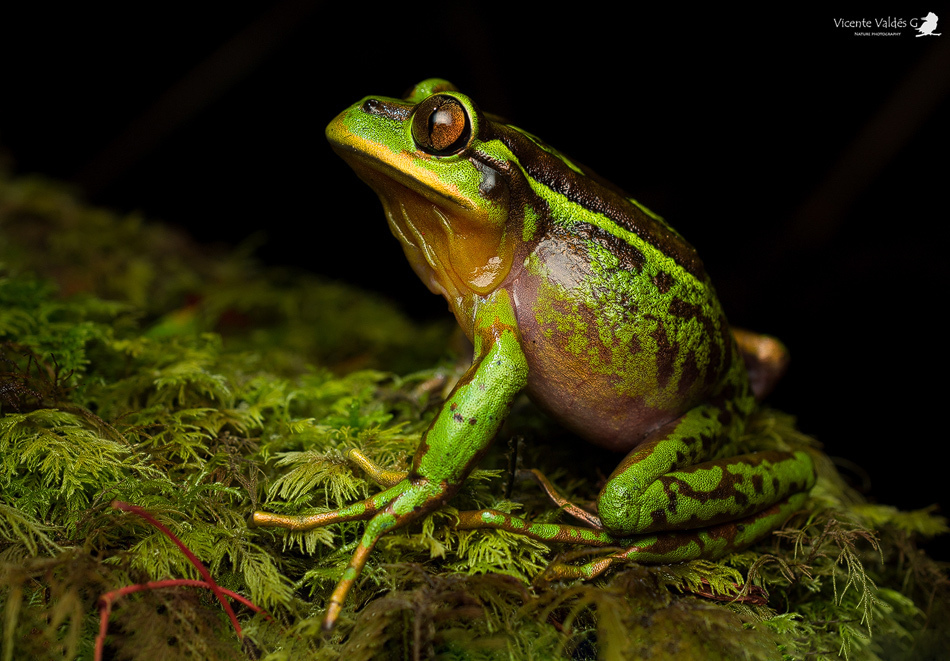
Emerald Forest Frog
Hylorina sylvatica
Hylorina sylvatica (also known as the Emerald forest frog, or in Spanish, sapo arboreo) is a species of frog in the Batrachylidae family. It is monotypic within the genus Hylorina. It is found in Argentina and Chile. This species is endemic to the austral Nothofagus forests of Chile and Argentina with a narrow distribution along the eastern slopes of the Andes.
From the article Hylorina sylvatica on Wikipedia (CC BY-SA), quoted section by section
Description
Male Hylorina sylvatica grow to snout-vent length of 53–56 mm (2.1–2.2 in) and females to 60–66 mm (2.4–2.6 in). They are emerald-green during the day while they turn dark green at night. Adults can be found in permanent and temporary pools, swamps, and marshes.
What it does
This species requires wetlands surrounded by vegetation to breed. The female lays eggs in pools and bonds. Larvae are aquatic and found in pools and ponds. Because this species spends a long time as a tadpoles, including overwintering, it requires bodies of water that remain present year round. The tadpoles are light brown in color on top and darker brown underneath. There is a circular mark around the nostrils and a rhomboid mark between the eyes.
Wikipedia: “Reproduction”
Listen
Looking for field recordings…
Where it lives
Recorded sightings
—
geo-referenced records in GBIF, from museums, herbaria and field observers.
Drag the globe to turn it. Dots are where records exist, not a range map; darker means more records.
In the stacks
Searching the stacks…
Every page naming Hylorina sylvatica in the Biodiversity Heritage Library →
This page is assembled live from iNaturalist, GBIF, Wikipedia, the Source Library and the Internet Archive. It is not yet part of the hand-edited codex. iNaturalist taxon 23222.