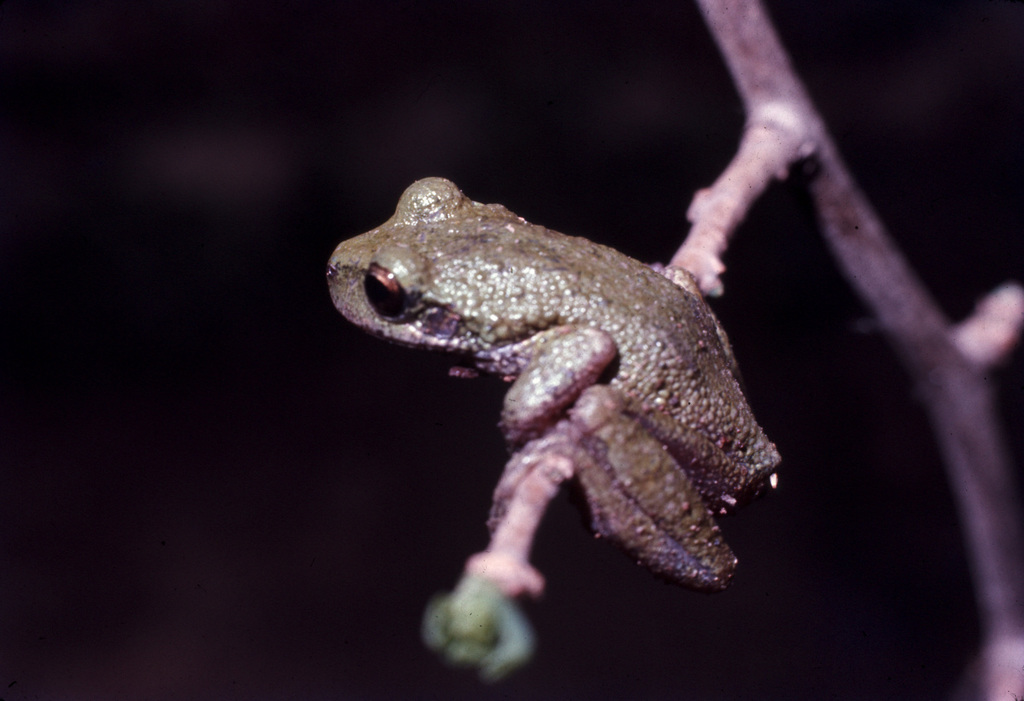
La Banderita Marsupial Frog
Gastrotheca gracilis
Gastrotheca gracilis is a species of frog in the Hemiphractidae family. It is found in Argentina and possibly Bolivia. Its natural habitats are subtropical or tropical moist lowland forests and intermittent freshwater marshes. It is threatened by habitat loss.
From the article Gastrotheca gracilis on Wikipedia (CC BY-SA), quoted section by section
Range & habitat
It dwells in the Southern Andean Yungas montane forests and adjacent high-altitude Central Andean puna grasslands of Catamarca and Tucumán provinces in northwestern Argentina, from 1,400 and 2,800 m (4,600 and 9,200 ft) in elevation. It known from five locations, and it has an estimated extent of occurrence of 1,407 km2. Adults dwell in tree crowns, tree holes, and rock crevices. Scientists have reported this frog in protected places: Campo de los Alisos National Park and Los Sosa Provincial Reserve.
Wikipedia: “Habitat”
What it does
During amplexus (breeding), male frogs place eggs in a marsupial pouch on the female's back. The eggs hatch and the larvae develop in the pouch. The females later deposit the larvae in seasonal or intermittent pools and streams to complete their metamorphosis.
Wikipedia: “Reproduction”
Listen
Looking for field recordings…
Where it lives
Recorded sightings
—
geo-referenced records in GBIF, from museums, herbaria and field observers.
Drag the globe to turn it. Dots are where records exist, not a range map; darker means more records.
In the stacks
Searching the stacks…
Every page naming Gastrotheca gracilis in the Biodiversity Heritage Library →
This page is assembled live from iNaturalist, GBIF, Wikipedia, the Source Library and the Internet Archive. It is not yet part of the hand-edited codex. iNaturalist taxon 24134.