- Animals
- ›Chordates
- ›Vertebrates
- ›Amphibians
- ›Frogs and Toads
- ›Narrow-mouthed Frogs
- ›American Narrow-mouthed and Sheep Frogs
- ›Hamptophryne
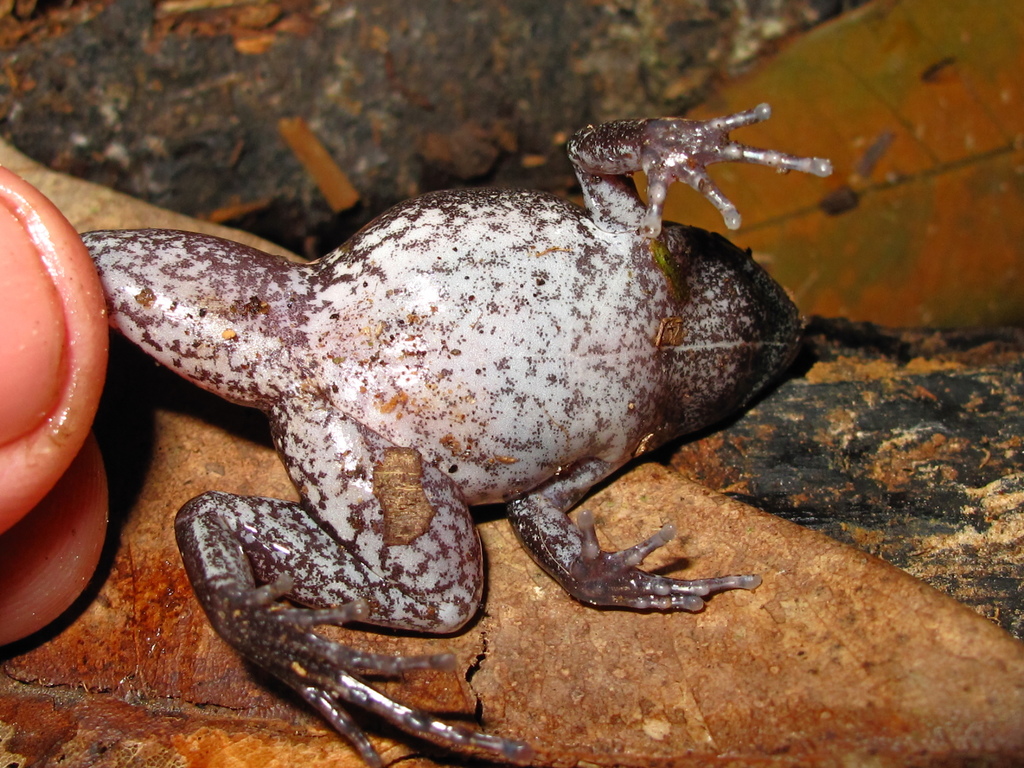
Amazon Sheep Frog
Hamptophryne boliviana
Hamptophryne boliviana, also known as the Bolivian bleating frog or Amazon sheep frog, is a species of frogs in the family Microhylidae. It is found in the northern and western sides of the Amazon basin in Bolivia, Brazil, Colombia, Ecuador, French Guiana, Guyana, Peru, Suriname, and Venezuela. Genetic analysis suggests hidden diversity within the nominal species.
From the article Hamptophryne boliviana on Wikipedia (CC BY-SA), quoted section by section
Description
Adult males from Peru measure 34–39 mm (1.3–1.5 in) and adult females 39–44 mm (1.5–1.7 in) in snout–vent length; some populations might be smaller in body size. The body is moderately robust. The fingers and toes bear distinct terminal discs; lateral fringes and webbing are not present. The dorsum is tan with a large, brown mid-dorsal blotch. There is usually a faint, creamy white mid-dorsal stripe. The flanks, sides of the head, and concealed surfaces of the limbs are dark brown. Males have dark brown throat. The belly and ventral surfaces of the hind limbs are creamy white with brown spots or reticulations. The iris is pale bronze and has fine black reticulations.
Range & habitat
These frogs are found in the leaf litter of primary and secondary tropical rainforests at elevations up to 400 m (1,300 ft) above sea level. They are nocturnal and feed on ants on the ground or on tree trunks and branches. Breeding takes place in ponds and flooded areas within forest after heavy rains. This species is widespread but uncommon in much of its range. No significant threats affecting this species have been identified.
Wikipedia: “Habitat and conservation”
What it does
The frog has been spotted in close association with Xenesthis immanis, the Colombian lesser black tarantula. It is possible that they have a mutualistic relationship in which the spider may protect the frog and its eggs from predators while the frog protects the spider's eggs from ants, as observed between frog Chiasmocleis ventrimaculata and the same species of tarantula.
== References ==
Wikipedia: “Behavior”
Listen
Looking for field recordings…
Where it lives
Recorded sightings
—
geo-referenced records in GBIF, from museums, herbaria and field observers.
Drag the globe to turn it. Dots are where records exist, not a range map; darker means more records.
In the stacks
Searching the stacks…
Every page naming Hamptophryne boliviana in the Biodiversity Heritage Library →
This page is assembled live from iNaturalist, GBIF, Wikipedia, the Source Library and the Internet Archive. It is not yet part of the hand-edited codex. iNaturalist taxon 25094.