Indian Balloon Frog
Uperodon globulosus
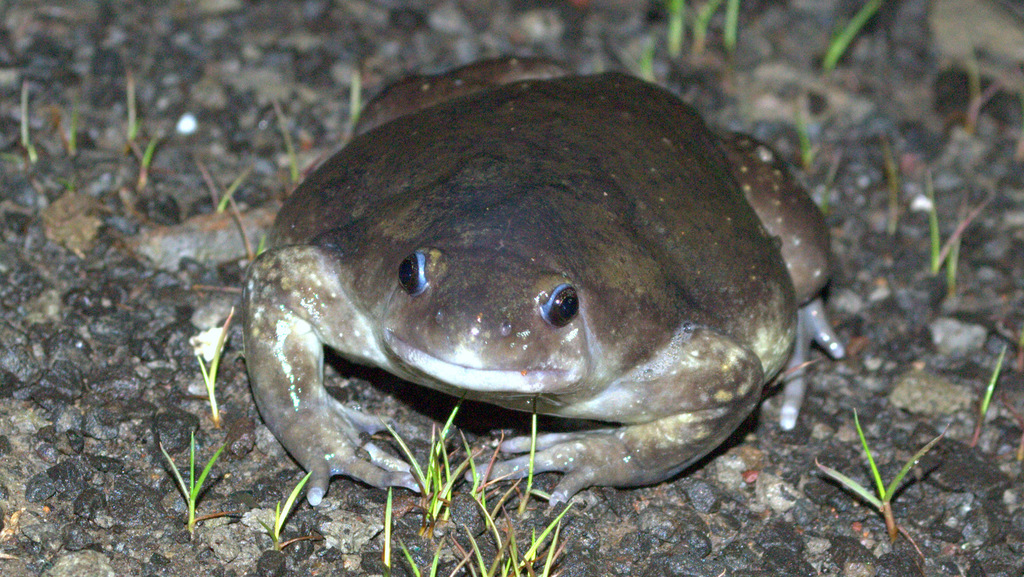
Uperodon globulosus, or Indian balloon frog, is a species of narrow-mouthed frog found in India, Nepal, Bhutan, Myanmar, and Bangladesh. It is known under many common names: Indian globular frog, Indian balloon frog, grey balloon frog, and greater balloon frog. Specimens from the Western Ghats may represent an undescribed species.
Uperodon globulosus is very stout in appearance, even more so than its close relative Uperodon systoma. They grow up to 76 mm (3 in) in snout–vent length.
From the article Uperodon globulosus on Wikipedia (CC BY-SA), quoted section by section
Description
The adult male frog is 65 mm in snout-vent length and the adult female frog is 85 mm. The skin of the dorsum is gray-brown in color and the belly is white in color. During the breeding season, the frog's throat becomes yellow with black spots. This frog uses its short and sturdy back legs to burrow.
Range & habitat
It is a fossorial species that is found in both scrub forests and agricultural land. Scientists have seen it as high as 1200 meters above sea level. This frog lives in many protected parks, for example Vansda National Park, Nagarjunasagar Srisailam Tiger Reserve, Tadoba Andhari Tiger Reserve, Dudhwa National Park, Radhanagari Wildlife Sanctuary, Phansad Wildlife Sanctuary, Shuklaphanta National Park, Bardia National Park, and Royal Manas National Park.
Wikipedia: “Habitat”
What it does
This frog breeds explosively in shallow ponds. The tadpole's back is brown in color. The tail is whitish in color with darker stripes. The flanks and ventral areas have dark spots.
Wikipedia: “Reproduction”
Listen
Looking for field recordings…
Where it lives
Recorded sightings
—
geo-referenced records in GBIF, from museums, herbaria and field observers.
Drag the globe to turn it. Dots are where records exist, not a range map; darker means more records.
In the stacks
Searching the stacks…
Every page naming Uperodon globulosus in the Biodiversity Heritage Library →
This page is assembled live from iNaturalist, GBIF, Wikipedia, the Source Library and the Internet Archive. It is not yet part of the hand-edited codex. iNaturalist taxon 25217.