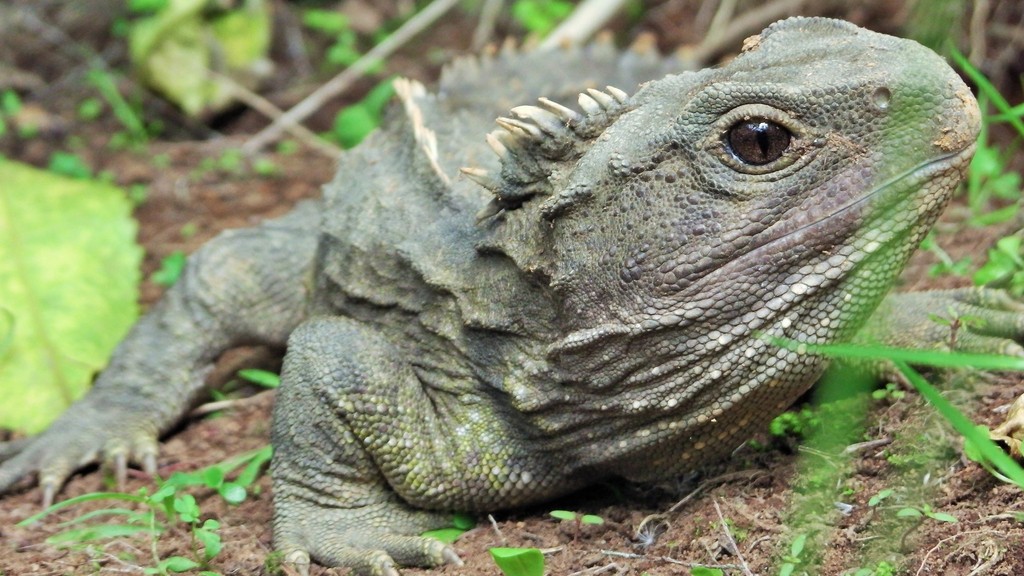
Rhynchocephalians
Rhynchocephalia
Rhynchocephalia (; lit. 'beak-heads') is an order of lizard-like reptiles that includes only one living species, the tuatara (Sphenodon punctatus) of New Zealand. Despite its current lack of diversity, during the Mesozoic rhynchocephalians were a speciose group with high morphological and ecological diversity. The oldest record of the group is dated to the Middle Triassic around 244 million years ago, and they had achieved global distribution by the Early Jurassic. Most rhynchocephalians belong to the suborder Sphenodontia ('wedge-teeth'). Their closest living relatives are lizards and snakes in the order Squamata, with the two orders being grouped together in the superorder Lepidosauria.
Rhynchocephalians are distinguished from squamates by a number of traits, including the retention of rib-like gastralia bones in the belly, and a proatlas bone in the neck as well as most rhynchocephalians having acrodont teeth that are fused to the crests of the jaws (the latter also found among a small number of modern lizard groups like agamids).
1 branches of this order, most-observed first · about 1 known species
See this branch on the Wheel of Life →
Where it lives
Recorded sightings
—
geo-referenced records in GBIF, from museums, herbaria and field observers.
Drag the globe to turn it. Dots are where records exist, not a range map; darker means more records.
In the stacks
Searching the stacks…
Every page naming Rhynchocephalia in the Biodiversity Heritage Library →
This page is assembled live from iNaturalist, GBIF, Wikipedia, the Source Library and the Internet Archive. It is not yet part of the hand-edited codex. iNaturalist taxon 26162.