Mexican Burrowing Toads
Rhinophrynus
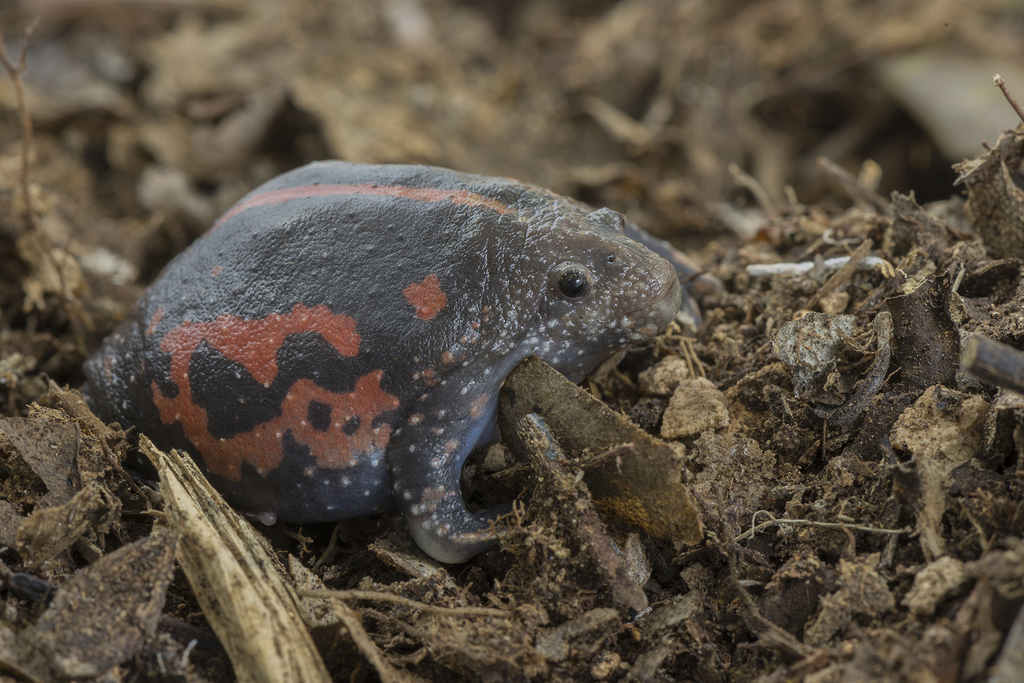
The Mexican burrowing toad (Rhinophrynus dorsalis) is the single living representative of the family Rhinophrynidae. It is a unique species in its taxonomy and morphology, with special adaptations to assist them in digging burrows where they spend most of their time. These adaptations include a small pointed snout and face, keratinized structures and a lack of webbing on front limbs, and specialized tongue morphology to assist in feeding on ants and termites underground. The body is nearly equal in width and length. It is a dark brown to black color with a red-orange stripe on its back along with splotches of color on its body. The generic name Rhinophrynus means 'nose-toad', from rhino- (ῥῑνο-), the combining form of the Ancient Greek rhis (ῥίς, 'nose') and phrunē (φρύνη, 'toad').
The Mexican burrowing toad diverged from other amphibians over 190 million years ago and has been evolving independently for a longer period of time than the evolutionary differences between mammals like humans, fruit bats, polar bears and killer whales. Its closest sister group is Pipidae, or the aquatic clawed frogs.
1 branches of this genus, most-observed first · about 1 known species
See this branch on the Wheel of Life →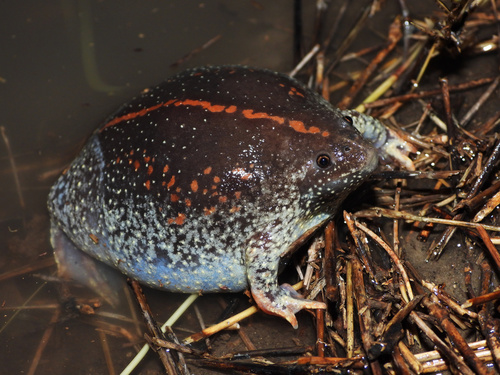
Where it lives
Recorded sightings
—
geo-referenced records in GBIF, from museums, herbaria and field observers.
Drag the globe to turn it. Dots are where records exist, not a range map; darker means more records.
In the stacks
Searching the stacks…
Every page naming Rhinophrynus in the Biodiversity Heritage Library →
This page is assembled live from iNaturalist, GBIF, Wikipedia, the Source Library and the Internet Archive. It is not yet part of the hand-edited codex. iNaturalist taxon 26684.