- Animals
- ›Chordates
- ›Vertebrates
- ›Amphibians
- ›Salamanders
- ›Asian Salamanders
- ›Hynobiine Salamanders
- ›Hynobius
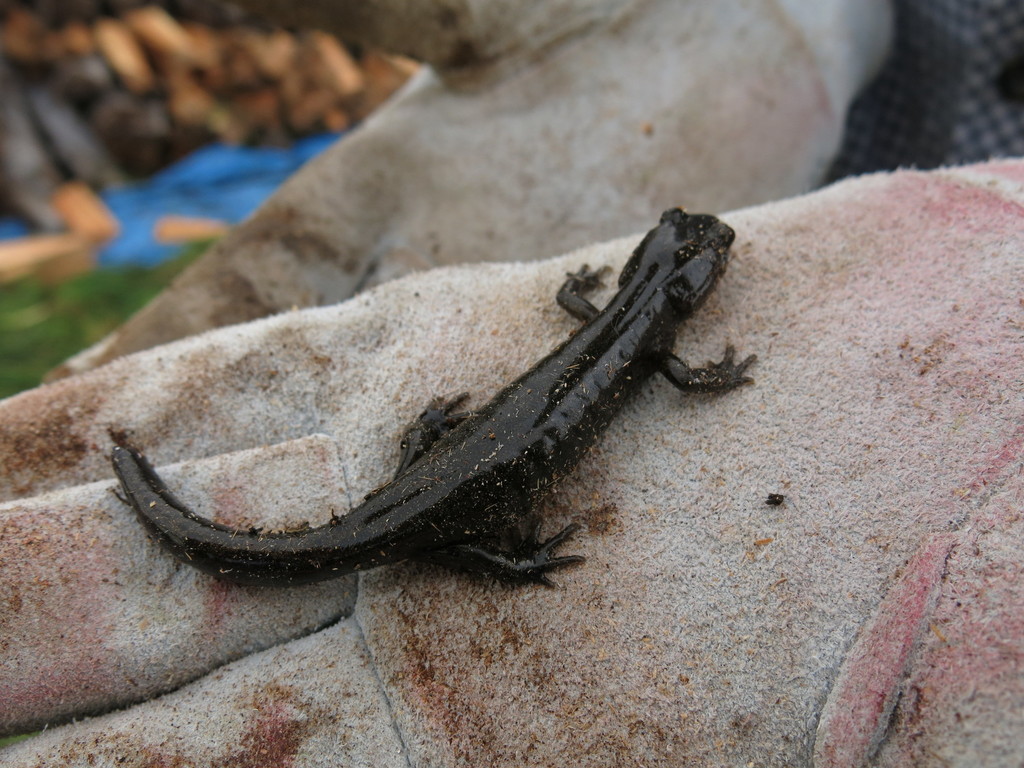
Hokkaido Salamander
Hynobius retardatus
The Ezo salamander (Hynobius retardatus), also known as the Hokkaido salamander, Noboribetsu salamander, or Ezo Sanshouo in Japanese is a species of salamander in the family Hynobiidae. Prior to 1923, the species was also classified by the binomial scientific name Satobius retardatus. H. retardatus is endemic to Japan's northernmost prefecture, the island of Hokkaido. The species is a pond-type salamander, and its natural habitats are temperate forests, temperate shrubland, swamps, freshwater marshes, intermittent freshwater marshes, freshwater springs, irrigated land, canals, and ditches.
In 1923, the species was discovered by American herpetologist Emmett Reid Dunn, the same year the Hida and Amber salamander species were discovered. H. retardatus was first observed on the eastern edge of the Noboribetsu region within Lake Kuttara (Kuttara-ko), although this specific population is now extinct. The name Ezo comes from Yezo, the old name of Hokkaido.
From the article Ezo salamander on Wikipedia (CC BY-SA), quoted section by section
Description
Adult Ezo salamanders can reach 115–200 mm (4.52-7.87 inch) in length. Hindlimbs of the terrestrial adults have five digits. Adults are dark brown in coloration and aquatic juveniles are a similar dark brown sprinkled with golden flecks across the body. The Ezo salamander is distantly related to others of its genus. A unique characteristic of this species is that individuals have only 20 chromosome pairs, a significantly smaller amount than the 28-29 pairs found in other salamanders of the Hynobius genus.
Range & habitat
The Ezo salamander lives in alpine forests and grasslands only on the island of Hokkaido, and is not found on any of the surrounding islands. The Ezo salamander likely migrated to the island of Hokkaido from continental Eurasia via land bridges. These bridges connected the two regions until the end of the last glacial period, approximately 10,000 years ago. The divergence of H. retardatus vastly predates this migration, occurring between 14 and 18 million years ago. This time frame encompasses parts of the Miocene, Pliocene, and Pleistocene epochs, where the Japanese archipelago first rose from the Pacific Ocean.
Wikipedia: “Habitat and distribution”
What it does
Adults of the species feed on invertebrates like snails and worms. H. retardatus larvae are known to consume the tadpoles of multiple frog species such as the Japanese brown frog (Rana pirica) and the Hokkaido frog, as well as sewage worms (Tubifex), gammaridean amphipods, caddisfly larvae, and possibly larvae of Siberian salamanders. Cannibalism by the larvae is not uncommon when prey items are scarce. H. retardatus, like other salamander species, is a gape-limited predator that swallows its prey whole.
Cannibalism. Aquatic larvae of H. retardatus are known to utilize cannibalism under specific circumstances influenced by availability and inducible defenses of prey as well as asymmetry of size between conspecific larvae. Some Japanese brown frog tadpoles (R. pirica) have adapted thicker bodies to reduce predation by H. retardatus larvae (as they are gape-limited). In response, Ezo salamander larvae are capable of developing into larger morphs with longer bodies, wider heads, and a relatively greater gape, allowing them to consume larger prey. However, as the difference between smaller and larger H. retardatus larvae increases, the propensity towards cannibalism increases as well. Ezo salamanders seem to be capable of distinguishing between conspecific and heterospecific prey, with a preference for heterospecific prey, but higher frequencies of the thicker R. …
Wikipedia: “Diet”
Listen
Looking for field recordings…
Where it lives
Recorded sightings
—
geo-referenced records in GBIF, from museums, herbaria and field observers.
Drag the globe to turn it. Dots are where records exist, not a range map; darker means more records.
In the stacks
Searching the stacks…
Every page naming Hynobius retardatus in the Biodiversity Heritage Library →
This page is assembled live from iNaturalist, GBIF, Wikipedia, the Source Library and the Internet Archive. It is not yet part of the hand-edited codex. iNaturalist taxon 26872.