- Animals
- ›Chordates
- ›Vertebrates
- ›Amphibians
- ›Salamanders
- ›Lungless Salamanders
- ›Plethodontine Salamanders
- ›Desmognathus
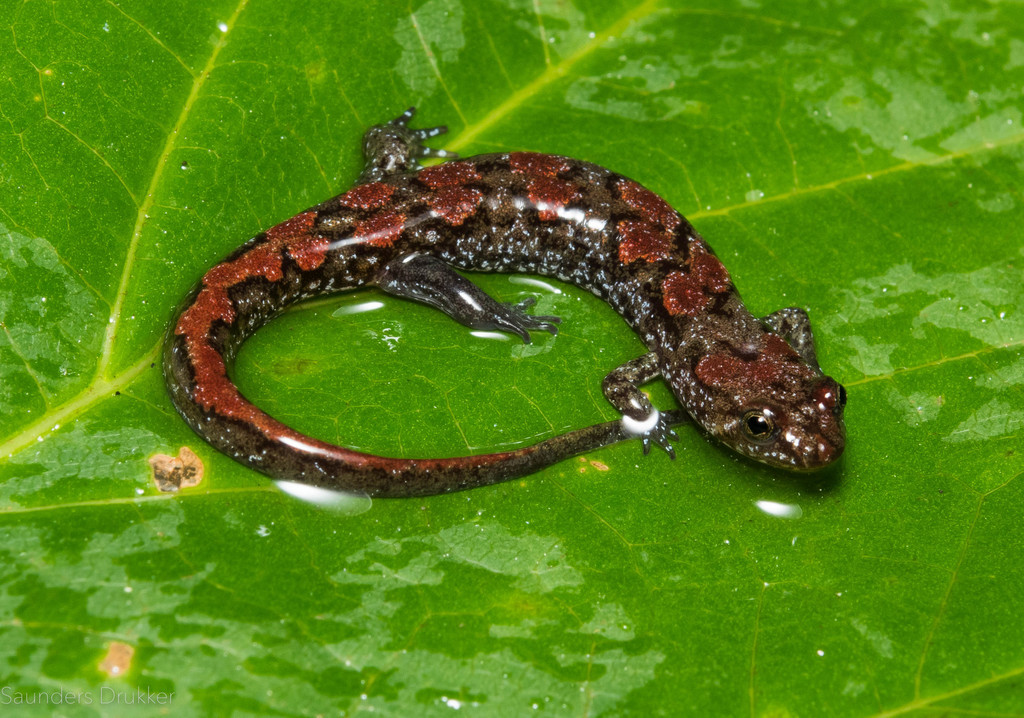
Cumberland Dusky Salamander
Desmognathus abditus
The Cumberland dusky salamander (Desmognathus abditus) is a species of salamander in the family of lungless salamanders, Plethodontidae. It is endemic to the United States. Its natural habitats are temperate forests and rivers. This species is threatened by habitat loss.
From the article Cumberland dusky salamander on Wikipedia (CC BY-SA), quoted section by section
Range & habitat
This species was first described by Anderson and Tilley in 2003 and little information is known about it. Prior to that time the Allegheny Mountain dusky salamander (Desmognathus ochrophaeus) had been thought to be a single species but studies using nucleic acid sequencing and agar gel electrophoresis have since shown it to be a species complex. The Cumberland dusky salamander is one of five members of this complex and has been found at several sites in Tennessee on the Cumberland Plateau. The most northerly of these is near Wartburg in Morgan County and the most southerly is on the southern side of the Cumberland Plateau near Tracy City in Grundy County. All known specimens have been found under rocks in streams or within a metre (yard) of flowing water and a favoured location is moss-covered rocks behind cascades.
Wikipedia: “Distribution and habitat”
What it does
Several other species of salamander occupy the same range as the Cumberland dusky salamander and it is believed to hybridize with the Allegheny Mountain dusky salamander (Desmognathus ochrophaeus) and the Ocoee Salamander (Desmognathus ocoee). It is likely that the Cumberland dusky salamander feeds on small invertebrates found in leaf litter. It may itself be eaten by small mammals, birds and snakes and perhaps by other larger salamanders in the genus Desmognathus.
Wikipedia: “Ecology”
Listen
Looking for field recordings…
Where it lives
Recorded sightings
—
geo-referenced records in GBIF, from museums, herbaria and field observers.
Drag the globe to turn it. Dots are where records exist, not a range map; darker means more records.
In the stacks
Searching the stacks…
Every page naming Desmognathus abditus in the Biodiversity Heritage Library →
This page is assembled live from iNaturalist, GBIF, Wikipedia, the Source Library and the Internet Archive. It is not yet part of the hand-edited codex. iNaturalist taxon 27382.