- Animals
- ›Chordates
- ›Vertebrates
- ›Amphibians
- ›Caecilians
- ›Neotropical and Afrotropical Caecilians
- ›Schistometopum
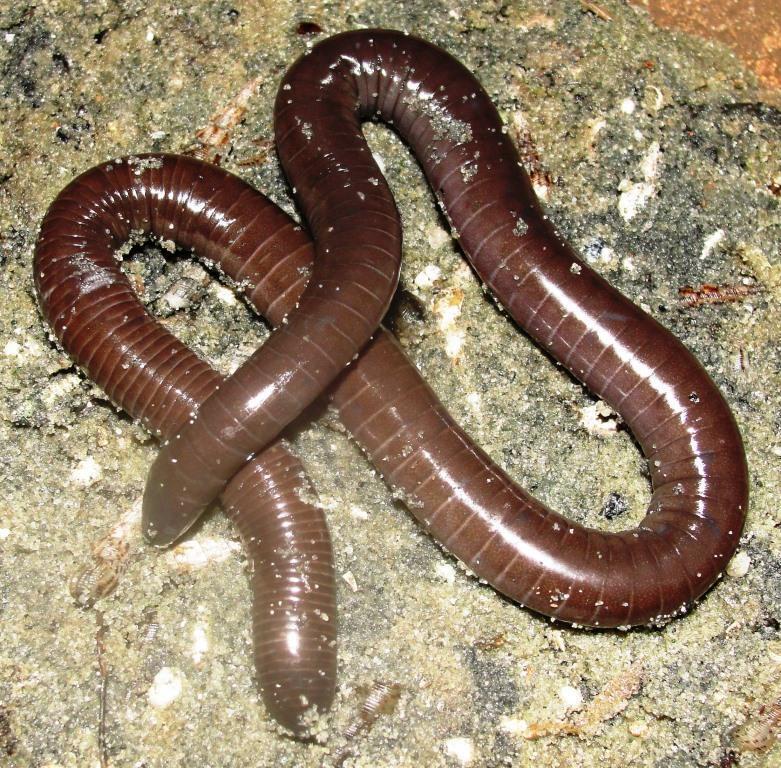
Flood-plain-dwelling Caecilian
Schistometopum gregorii
Schistometopum gregorii, also known as Witu caecilian, mud-dwelling caecilian, and flood-plain-dwelling caecilian, is a species of amphibian in the family Dermophiidae from East Africa.
From the article Schistometopum gregorii on Wikipedia (CC BY-SA), quoted section by section
Description
Schistometopum gregorii is glossy black dorsolaterally and somewhat lighter ventrally. There are 110–119 primary annuli (ring-shaped folds). Kenyan males measure 141–336 mm (5.6–13.2 in) (mean 247 mm) and females 152–350 mm (6.0–13.8 in) (mean 260 mm) in total length.
Range & habitat
Schistometopum gregorii is endemic to the coastal East Africa in Kenya and Tanzania; it is known from the Tana River Delta area in Kenya (its type locality) and between Bagamoyo and Rufiji River in Tanzania. It is possible that the Kenyan and Tanzanian populations are distinct species.
Wikipedia: “Distribution”
In human culture
The specific name gregorii honours John Walter Gregory, a British geologist and explorer and the collector of the holotype.
Wikipedia: “Etymology”
Listen
Looking for field recordings…
Where it lives
Recorded sightings
—
geo-referenced records in GBIF, from museums, herbaria and field observers.
Drag the globe to turn it. Dots are where records exist, not a range map; darker means more records.
In the stacks
Searching the stacks…
Every page naming Schistometopum gregorii in the Biodiversity Heritage Library →
This page is assembled live from iNaturalist, GBIF, Wikipedia, the Source Library and the Internet Archive. It is not yet part of the hand-edited codex. iNaturalist taxon 28079.