- Animals
- ›Chordates
- ›Vertebrates
- ›Reptiles
- ›Snakes and Lizards
- ›Snakes
- ›Colubrid Snakes
- ›Colubrine Snakes
- ›Tantilla
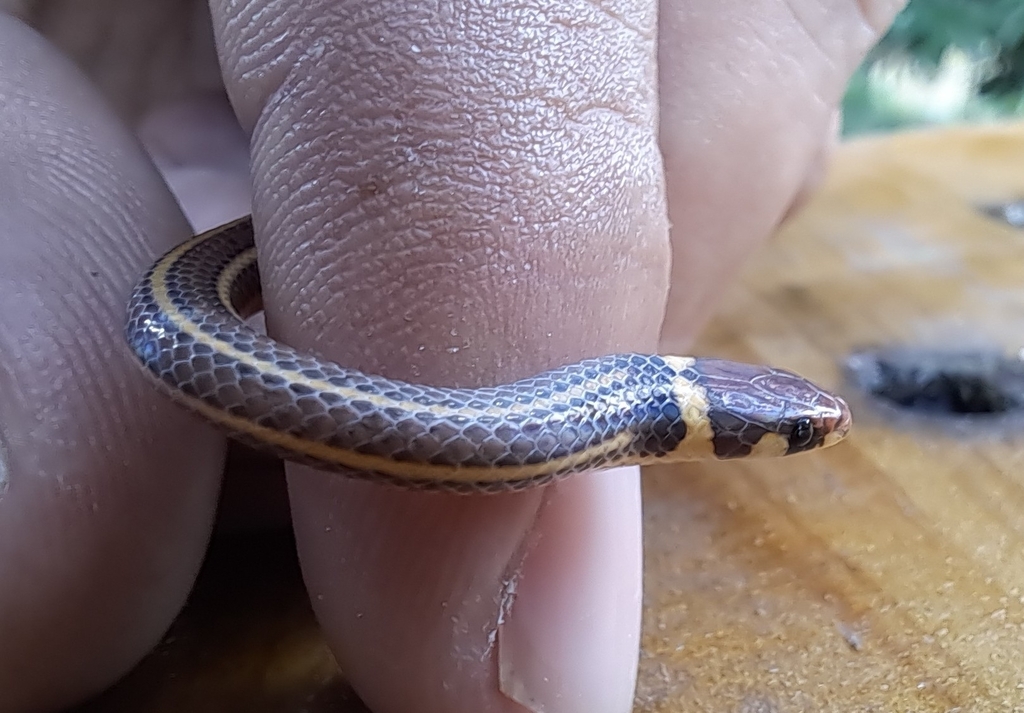
Central Guatemalan Centipede Snake
Tantilla impensa
Tantilla impensa, the greater centipede snake, is a non venomous species of snake of the family Colubridae. The species was first described by Jonathan A. Campbell in 1998.
From the article Tantilla impensa on Wikipedia (CC BY-SA), quoted section by section
Description
Tantilla impensa are brown and gray in coloration with pale lateral and mid-dorsal stripes through the center of the body and around the head. These stripes differentiate the species from others in genus Tantilla. Tantilla impensa are considered the largest species in genus Tantilla, with some measured specimens being approximately 2 feet long.
Etymology. Species name 'impensa' is derived from the Latin term 'impensus', translating to "great" or "large", referencing the snake's larger size relative to others in the genus.
Reproduction. Tantilla impensa display oviparous reproduction.
== References ==
Range & habitat
Tantilla impensa is found in Guatemala, Honduras, and Mexico in low to moderate elevations. They have been observed residing in leaf litter and decomposed logs in tropical and subtropical forests.
Wikipedia: “Distribution and habitat”
Where it lives
Recorded sightings
—
geo-referenced records in GBIF, from museums, herbaria and field observers.
Drag the globe to turn it. Dots are where records exist, not a range map; darker means more records.
In the stacks
Searching the stacks…
Every page naming Tantilla impensa in the Biodiversity Heritage Library →
This page is assembled live from iNaturalist, GBIF, Wikipedia, the Source Library and the Internet Archive. It is not yet part of the hand-edited codex. iNaturalist taxon 28500.