- Animals
- ›Chordates
- ›Vertebrates
- ›Reptiles
- ›Snakes and Lizards
- ›Lizards
- ›Iguanas and Allies
- ›Dragons and Chameleons
- ›Dragons
- ›Bearded Dragons, Water Dragons, and Allies
- ›Ctenophorus
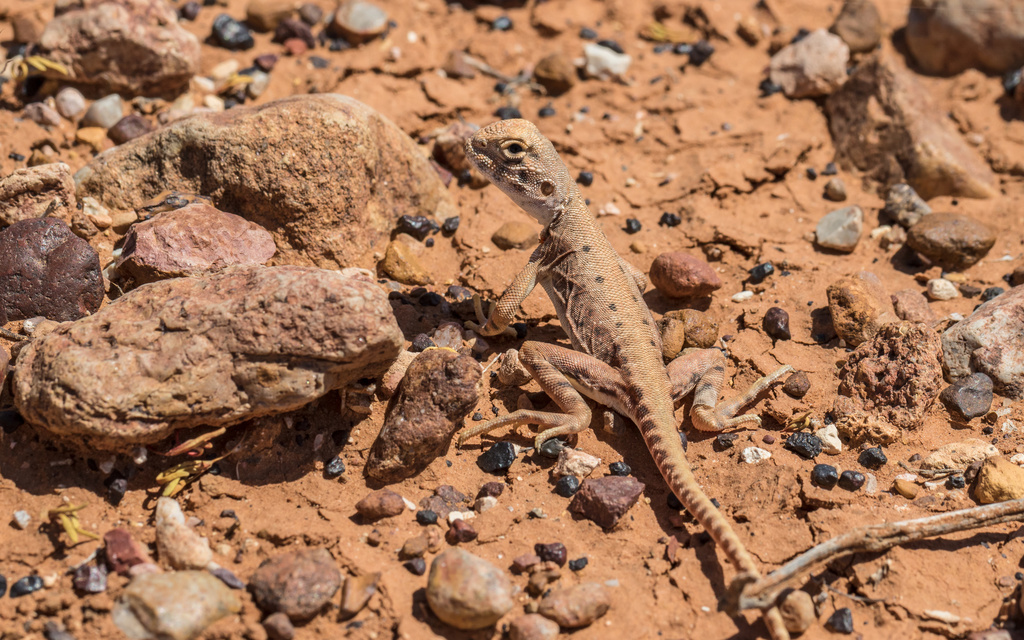
Gibber Dragon
Ctenophorus gibba
Ctenophorus gibba, commonly known as the bulldust ground-dragon or gibber dragon, is a species of agamid lizard (Agamidae family) occurring in the sparsely vegetated gibber plains of northern South Australia.
From the article Ctenophorus gibba on Wikipedia (CC BY-SA), quoted section by section
Description
Ctenophorus gibba is a medium-sized lizard with a robust body and a tail longer than its body. The species displays sexual dimorphism, with males being larger and more brightly colored than females. Typical coloration includes shades of brown and gray, with patterns that help it blend into its arid surroundings. Adult Gibber dragons range in colour from yellowish-brown to reddish-brown to grey, with dark flecks. They are stout, with a round head, blunt snout, short limbs and tail. Adults have a total length (including tail) of 10.5–11.5 cm (4.1–4.5 in).
Range & habitat
Ctenophorus gibba is typically found in arid and semi-arid regions of central Australia. It prefers rocky outcrops and gibber plains, which provide ample basking sites and shelter from predators.
Wikipedia: “Habitat”
What it does
This species is diurnal and primarily insectivorous, feeding on a variety of insects and other small invertebrates. Ctenophorus gibba is known for its territorial behavior, with males establishing and defending territories during the breeding season. The Gibber dragon lives in the arid, sparsely vegetated gibber plains of northern South Australia. They bask on low protruding rocks and shelter in burrows dug into the soft soil between rocks.
Wikipedia: “Ecology and behaviour”
Where it lives
Recorded sightings
—
geo-referenced records in GBIF, from museums, herbaria and field observers.
Drag the globe to turn it. Dots are where records exist, not a range map; darker means more records.
In the stacks
Searching the stacks…
Every page naming Ctenophorus gibba in the Biodiversity Heritage Library →
This page is assembled live from iNaturalist, GBIF, Wikipedia, the Source Library and the Internet Archive. It is not yet part of the hand-edited codex. iNaturalist taxon 31240.