- Animals
- ›Chordates
- ›Vertebrates
- ›Ray-finned Fishes
- ›Spiny-rayed fishes
- ›Needlefishes, Halfbeaks, and Allies
- ›Flyingfishes
- ›Cheilopogon
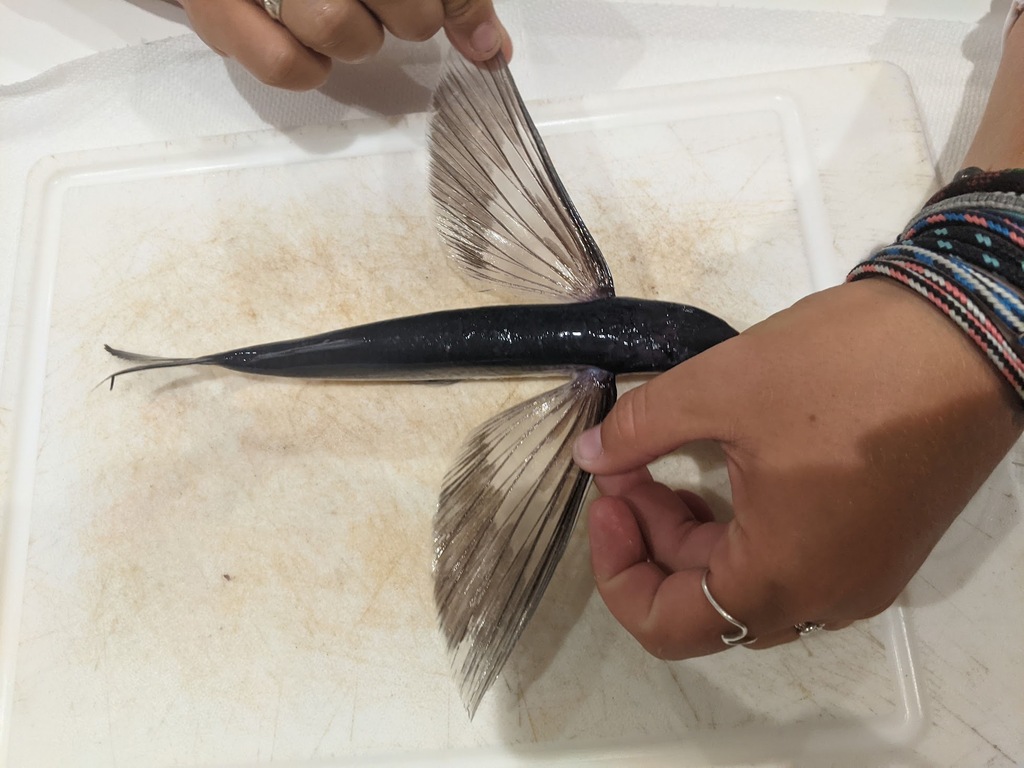
Atlantic Flyingfish
Cheilopogon melanurus
The Atlantic flyingfish (Cheilopogon melanurus) is a flying fish of the family Exocoetidae; the species is one of 6 in the genus Cheilopogon. It was first described by the French zoologist Achille Valenciennes in a 22-volume work entitled Histoire naturelle des poissons (Natural History of Fish), which was written in collaboration with fellow zoologist Georges Cuvier.
From the article Atlantic flyingfish on Wikipedia (CC BY-SA), quoted section by section
Range & habitat
As its name suggests, the Atlantic flyingfish is only found in the pelagic to neritic zones of the Atlantic Ocean. Atlantic flyingfish live in surface waters near shore, where they are preyed upon by several species of larger fishes and seabirds, such as the wahoo and Sooty tern..
Atlantic flyingfish rarely occur outside of these coastal waters and show a strong preference for shallow areas. Consistently, C. melanurus tends to live in warm tropical waters and generally do not go further than about 640 km (400 mi) away from the shoreline. In the western Atlantic, they are known to live in Gulf Stream waters from Massachusetts south to Brazil. They are found in the Caribbean Sea and around the Antilles, while in the north, they are found off the coast of Canada. Off Africa, Atlantic flyingfish are known from Senegal to Liberia and have been reported from São Tomé and Príncipe. They are especially abundant off the coast of North Carolina and other nearby regions of the Atlantic Ocean.
Wikipedia: “Distribution and habitat”
What it does
The Atlantic flyingfish primarily consumes zooplankton using its gill rakers and surface feeding techniques. Their diet is highly linked to their epipelagic habitat preference, as plankton can be found in shallow or top layers of water. However, the gills of the Atlantic flyingfish, which are vital for effective feeding, can be subject to parasites such as parasitic flatworms of the suborder Gastrocotylinae.
Wikipedia: “Diet”
Where it lives
Recorded sightings
—
geo-referenced records in GBIF, from museums, herbaria and field observers.
Drag the globe to turn it. Dots are where records exist, not a range map; darker means more records.
In the stacks
Searching the stacks…
Every page naming Cheilopogon melanurus in the Biodiversity Heritage Library →
This page is assembled live from iNaturalist, GBIF, Wikipedia, the Source Library and the Internet Archive. It is not yet part of the hand-edited codex. iNaturalist taxon 317047.