- Animals
- ›Chordates
- ›Vertebrates
- ›Reptiles
- ›Snakes and Lizards
- ›Lizards
- ›Wall lizards, amphisbaenians, and allies
- ›Amphisbaenians
- ›Typical Worm Lizards
- ›Amphisbaena
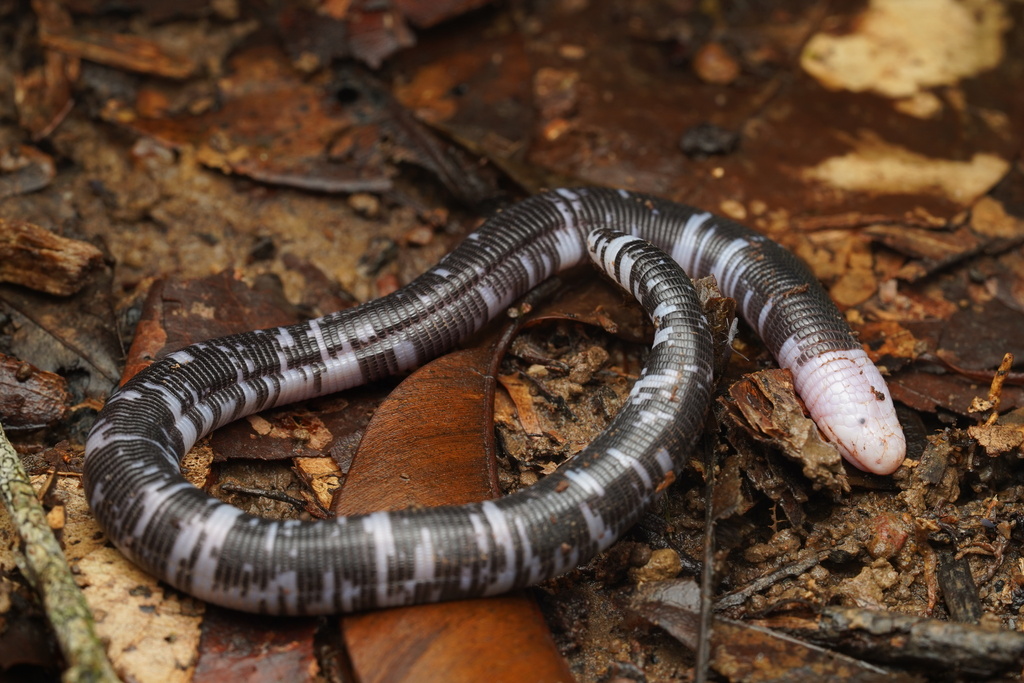
Black-and-white Worm Lizard
Amphisbaena fuliginosa
Amphisbaena fuliginosa, also known as the black-and-white worm lizard, speckled worm lizard or spotted worm lizard, is a species of amphisbaenian in the genus Amphisbaena. The ecology of A. fuliginosa is poorly known due to its fossorial habits. However, this species can be easily distinguished from others because of its characteristic white and black mosaic pattern that covers both the dorsal and ventral side.
From the article Amphisbaena fuliginosa on Wikipedia (CC BY-SA), quoted section by section
Description
Amphisbaena fuliginosa grows to a total length (body + tail) of 30–45 centimetres (12–18 in).
Range & habitat
It is found in northern South America including the island of Trinidad, and southwards to the Brazilian Cerrado biome. The southernmost areas of the Brazilian Cerrado where A. fuliginosa is found are Minas Gerais and Goiás.
Wikipedia: “Geographic range”
What it does
It is a burrowing nocturnal species and spends most of its time underground. A. fuliginosa will feed on any small invertebrate, or insect, that it can find while burrowing. Some of those insects include beetles, ants (especially adults of the subfamily Ecitoninae), termites, and other arthropods (such as spiders, centipedes, millipedes, and earthworms), but they also consume species of Orthoptera, such as crickets and grasshoppers, and sometimes on small vertebrates, lizard eggs and their shells, and other egg shells. When it finds its prey it will use its strong jaws to catch and kill it.
Wikipedia: “Behavior and diet”
Where it lives
Recorded sightings
—
geo-referenced records in GBIF, from museums, herbaria and field observers.
Drag the globe to turn it. Dots are where records exist, not a range map; darker means more records.
In the stacks
Searching the stacks…
Every page naming Amphisbaena fuliginosa in the Biodiversity Heritage Library →
This page is assembled live from iNaturalist, GBIF, Wikipedia, the Source Library and the Internet Archive. It is not yet part of the hand-edited codex. iNaturalist taxon 31842.