- Animals
- ›Chordates
- ›Vertebrates
- ›Reptiles
- ›Snakes and Lizards
- ›Lizards
- ›Wall lizards, amphisbaenians, and allies
- ›Whiptails and Tegus
- ›Tupinambinae
- ›Salvator
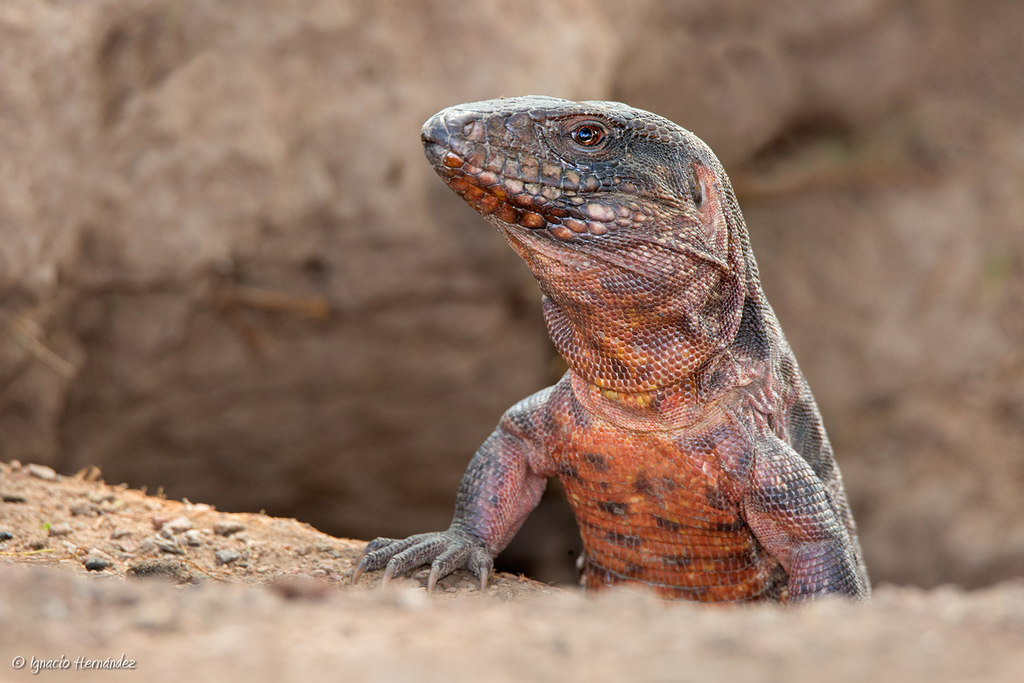
Red Tegu
Salvator rufescens
The red tegu (Salvator rufescens) is a lizard native to western Argentina, Bolivia and Paraguay. It is sold in the pet trade around the world because of its relatively docile nature and because it is comparatively easy to keep.
From the article Red tegu on Wikipedia (CC BY-SA), quoted section by section
Description
As hatchlings, most red tegus display little, if any, red coloration. The red tegu grows rapidly, typically reaching maturity in two to three years. It is not uncommon for well-fed juveniles to experience growth spurts of more than an inch per week. They are typically brownish-green with black strips across their width and several broken white stripes down their length. They develop red coloration as they mature; males are usually brighter than females. Adult females can reach 91 cm (just under 3 ft) in length. Males are significantly larger, reaching up to 140 cm (4.5 ft) and developing large jowls.
What it does
In the wild, red tegus are diurnal and terrestrial. Living in a temperate climate in Argentina, they brumate in the winter, burying themselves and remaining largely dormant during the coldest periods, in some areas for up to seven months. They also burrow as a matter of habit at other times of year. In the ecotone between the arid Chaco and the Espinal of central Argentina, they are known to naturally hybridise with the Argentine black and white tegu (Salvator merianae) with a stable hybrid zone.
Diet. The red tegu is a very opportunistic feeder. Wild specimens will eat a variety of plant and animal matter: fruits, vegetables, insects, rodents, birds, and fish. Red tegus raised in captivity will often be more picky eaters, especially as juveniles, and may prefer a diet of mostly meat. Being omnivores, red tegus will eat a diverse range of foods, with a focus on animal protein, including small to medium rodents, birds, many insects, and any dead animal they can scavenge.
Wikipedia: “Behavior”
Where it lives
Recorded sightings
—
geo-referenced records in GBIF, from museums, herbaria and field observers.
Drag the globe to turn it. Dots are where records exist, not a range map; darker means more records.
In the stacks
Searching the stacks…
Every page naming Salvator rufescens in the Biodiversity Heritage Library →
This page is assembled live from iNaturalist, GBIF, Wikipedia, the Source Library and the Internet Archive. It is not yet part of the hand-edited codex. iNaturalist taxon 318759.