 NL·0285
Herbarium of the Nature Library
- Name
- Eunectes murinus
- Family
- Boidae
- Native to
- Tropical South America east of the Andes: Amazon and Orinoco basins, the Llanos, the Guianas, and Trinidad
- Habitat
- Tropical rainforest, Flooded savanna, Swamp, Rivers
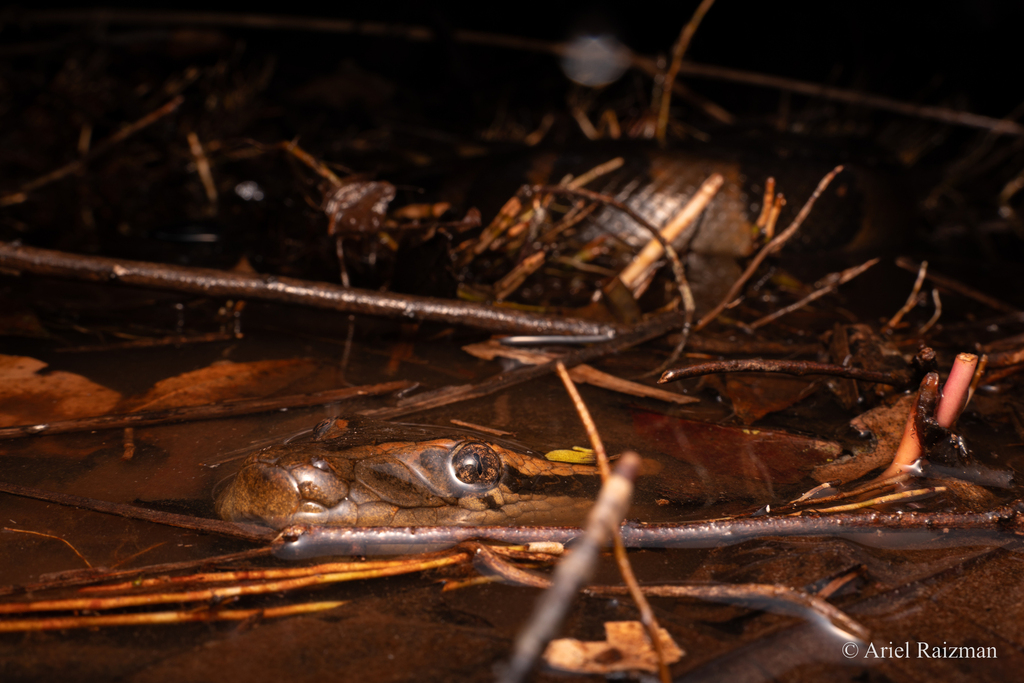
Green anaconda
Eunectes murinus
Also calledSucuri (Portuguese, from Tupi) · Sucuriju (Tupi) · Yacumama (Quechua, 'mother of the water') · Culebra de agua (Spanish) · Camoodi (Guyanese English)
The heaviest snake in the world, a swamp-dwelling constrictor of South American rivers and flooded savannas. Females are far larger than males, and in the breeding season they are tangled in mating balls of a dozen males.
The green anaconda is a species of snake in the family Boidae (boas). The species is native to northern South America. It is one of the longest and heaviest known extant snake species. Like all boas, it is a non-venomous constrictor. The green anaconda generally has a life expectancy of ten years in the wild, although some specimens live longer when taken care of in captivity. The green anaconda lives in tropical rainforests and tends to prefer shallow, slow-moving waters, such as streams, rivers, and flooded grasslands. It spends most of its time in the water but is also found on land in thick vegetation. Wikipedia
What it can do
- iLarge females can exceed 5 m and weigh well over 70 kg, more than any other snake
- iiEyes and nostrils on top of the head let it stay hidden underwater with only these exposed
- iiiKills prey as large as capybaras, caimans and deer by constriction
- ivGives birth to live young, sometimes 20–40 or more
In the field
Field marks
- aOlive-green to dark green body with large, paired, round black blotches along the back
- bBlack-ringed, yellow-centred spots along the sides
- cOrange-yellow and black stripes behind the eye
- dVery heavy body; eyes and nostrils on top of the narrow head
- Not to be confused with
- The yellow anaconda (E. notaeus) of the Pantanal and Paraguay is yellowish with more irregular black blotches and is smaller. Boa constrictors have a brown, saddle-patterned body with a reddish tail and do not live in the water. In 2024 a study proposed splitting off the northern green anaconda as E. akayima, but this is still debated.
- Where to see it
- Venezuelan Llanos (such as Hato El Cedral), the Brazilian Amazon and Pantanal edges, Peru's Pacaya-Samiria; best seen basking in the dry season
- When
- Resident; easiest to see in the dry season (January–April in the Llanos)
Life & habits
- Diet
- Fish, birds, capybaras, peccaries, deer, turtles and caimans
- Habitat
- Slow rivers, swamps, oxbow lakes and seasonally flooded grassland
- Size
- Females usually 3–5 m, exceptionally more; males much smaller
In the Venezuelan Llanos dry season, a female may be courted by up to a dozen males wrapped around her in a 'breeding ball' that can last weeks. It is not venomous, and attacks on people are extremely rare.
Where it lives
Recorded sightings
—
geo-referenced records in GBIF, from museums, herbaria and field observers.
Native range
Tropical South America east of the Andes: Amazon and Orinoco basins, the Llanos, the Guianas, and Trinidad
Drag the globe to turn it. Dots are where records exist, not a range map; darker means more records.
In the stacks
Searching the stacks…
Every page naming Eunectes murinus in the Biodiversity Heritage Library →
Marginalia
Amazonian peoples tell of the Yacumama or Boiúna, a giant serpent mother of the rivers. Tales of 20–30 m anacondas led the New York Zoological Society to offer a reward, eventually $50,000, for a live snake over 30 feet (9.1 m). It was never claimed.
Curiosity
Female anacondas can go seven months without eating while pregnant, and may eat a male after mating.
Kinship


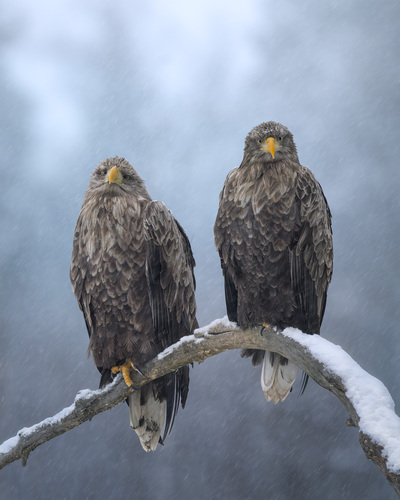

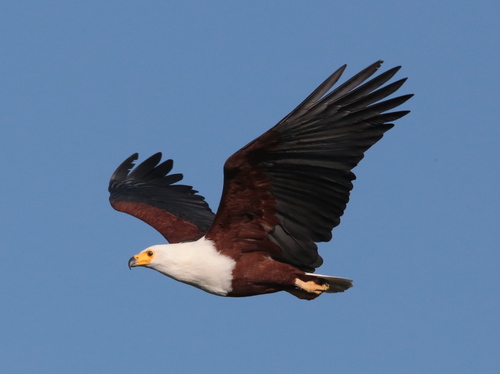
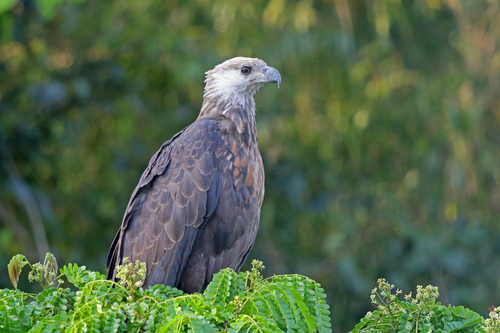
Photographs: iNaturalist contributors under the licences shown. Records: GBIF.org. Historical plates: Source Library (CC BY-SA 4.0; originals public domain). Summary text: Nature Library editors and Wikipedia (CC BY-SA). Medicinal and edibility notes are historical and educational, not advice. iNaturalist taxon 32213.