
Typical Blind Snakes
Typhlopidae
The Typhlopidae are a family of blind snakes. They are found mostly in the tropical regions of Africa, Asia, the Americas, and all mainland Australia and various islands. The rostral scale overhangs the mouth to form a shovel-like burrowing structure. They live underground in burrows, and since they have no use for vision, their eyes are mostly vestigial. They have light-detecting black eye spots, and teeth occur in the upper jaw. Typhlopids do not have dislocatable lower jaw articulations, restricting them to prey smaller than their oral aperture. All species in the family Typhlopidae are fossorial and feed on social fossorial invertebrates such as termites and ants. The tracheal lung is present and chambered in all species. One species, the Brahminy blind snake, is the only unisexual snake, with the entire population being female and reproducing via parthenogenesis. The tail ends with a horn-like scale. Most of these species are oviparous. Currently, 18 genera are recognized containing over 200 species.
4 branches of this family, most-observed first · about 279 known species
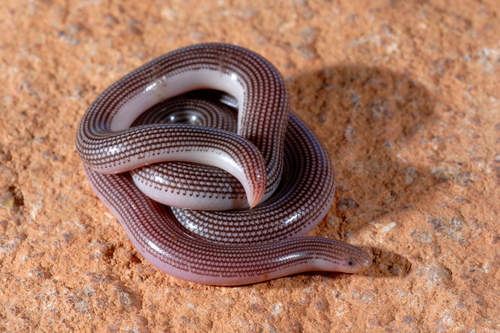
Asiatyphlopinae
subfamilyAsiatyphlopinae

Afrotyphlopinae
subfamilyAfrotyphlopinae

Typhlopinae
subfamilyTyphlopinae
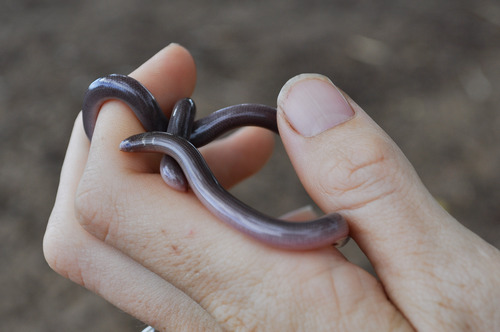
Madatyphlopinae
subfamilyMadatyphlopinae
Where it lives
Recorded sightings
—
geo-referenced records in GBIF, from museums, herbaria and field observers.
Drag the globe to turn it. Dots are where records exist, not a range map; darker means more records.
In the stacks
Searching the stacks…
Every page naming Typhlopidae in the Biodiversity Heritage Library →
This page is assembled live from iNaturalist, GBIF, Wikipedia, the Source Library and the Internet Archive. It is not yet part of the hand-edited codex. iNaturalist taxon 32548.