- Animals
- ›Chordates
- ›Vertebrates
- ›Ray-finned Fishes
- ›Carps, Characins, Catfishes and Allies
- ›Catfishes
- ›Siluroidei
- ›Sea Catfishes
- ›Typical Sea Catfishes
- ›Neoarius
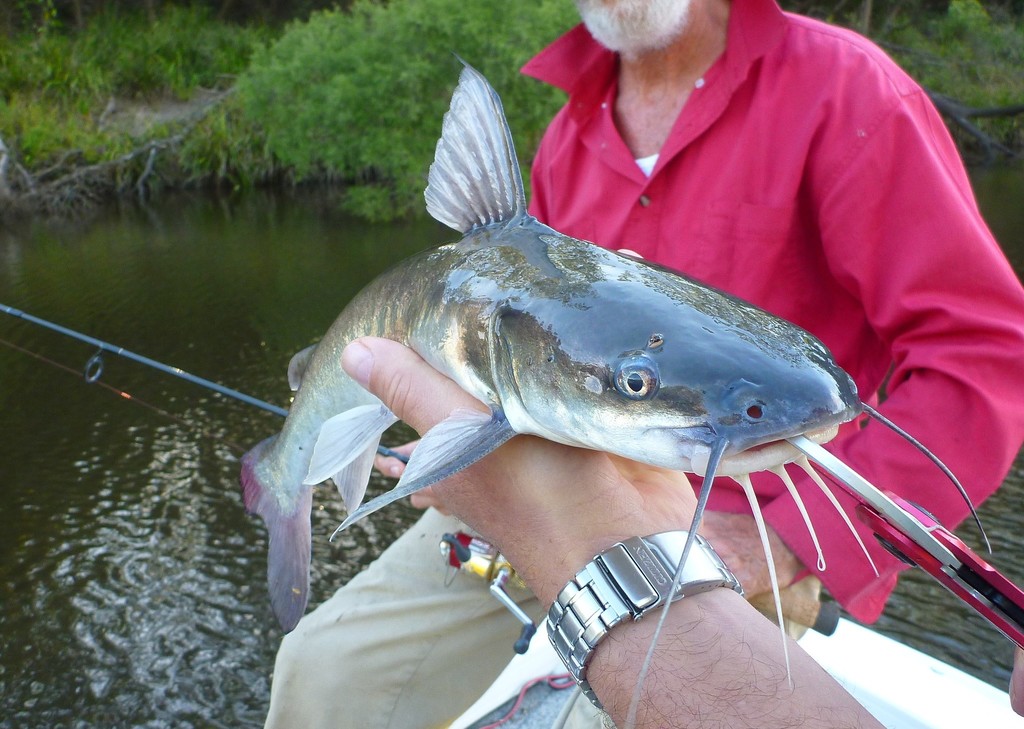
Blue Catfish
Neoarius graeffei
Neoarius graeffei, or blue salmon catfish, is a species of catfish found in freshwater rivers of Australia and Papua New Guinea. This species is most identifiable by its large, shark-like dorsal fin that is led by a poisonous spine. Like other catfish, the blue salmon catfish is known to use electrical pulses to sense prey in the water. This prey sensing mechanism may be the reason that these catfish are known to eat the land dwelling hopping mouse at a high rate.
From the article Neoarius graeffei on Wikipedia (CC BY-SA), quoted section by section
Range & habitat
Neoarius graeffei is found in the freshwater rivers of Australia and Papua New Guinea.
== References ==
Wikipedia: “Distribution”
What it does
Their diets include arthropods, insects, aquatic plants, mollusks, prawns, crayfish, fishes and bottom detritus. Recent studies have found large sections of the population are eating hopping mice, but it is not known if these mice are consumed after drowning or picked out of the air. These food sources are found using an internal system that resembles electrical sonar.
Wikipedia: “Diet”
Where it lives
Recorded sightings
—
geo-referenced records in GBIF, from museums, herbaria and field observers.
Drag the globe to turn it. Dots are where records exist, not a range map; darker means more records.
In the stacks
Searching the stacks…
Every page naming Neoarius graeffei in the Biodiversity Heritage Library →
This page is assembled live from iNaturalist, GBIF, Wikipedia, the Source Library and the Internet Archive. It is not yet part of the hand-edited codex. iNaturalist taxon 337763.