- Animals
- ›Chordates
- ›Vertebrates
- ›Reptiles
- ›Snakes and Lizards
- ›Lizards
- ›Geckos
- ›Phyllodactylid Geckos
- ›Ptyodactylus
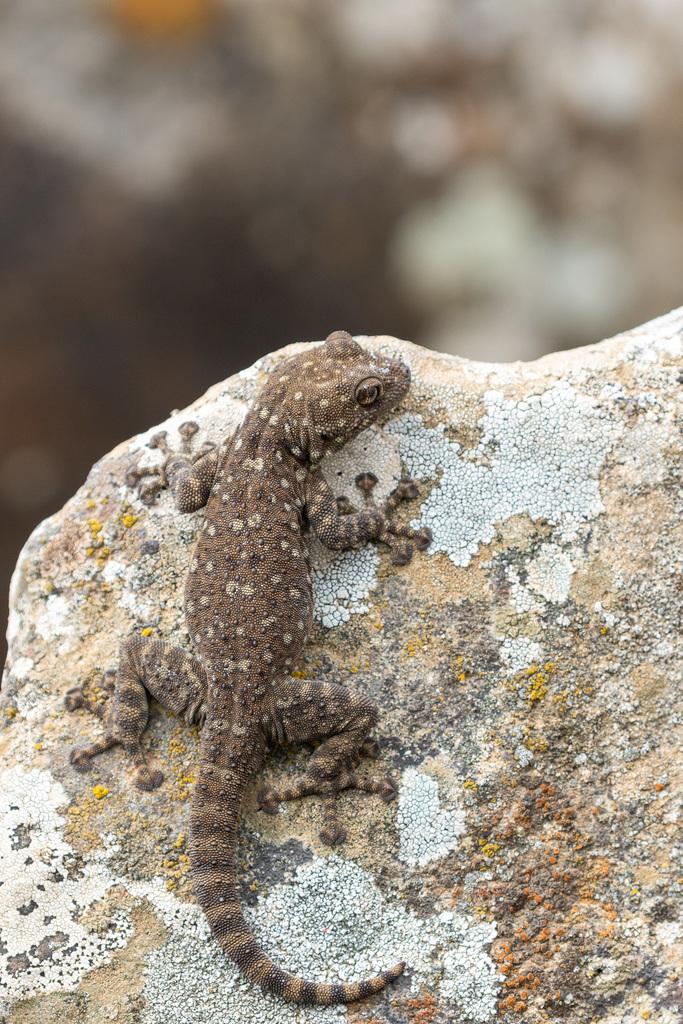
Levant Fan-fingered Gecko
Ptyodactylus puiseuxi
Ptyodactylus puiseuxi, also known commonly as the Israeli fan-fingered gecko, the northern fan-footed gecko, and the Syrian fan-fingered gecko, is a species of lizard in the family Phyllodactylidae. The species is native to the Middle East.
From the article Ptyodactylus puiseuxi on Wikipedia (CC BY-SA), quoted section by section
Description
Ptyodactylus puiseuxi is a medium-sized gecko. It is light to dark brown, with numerous white spots on the dorsal surface. The head is large and triangular. The tail has several white bands, and is shorter than the overall head and body length (snout-to-vent length). The dorsal scales are small and granular.
Range & habitat
Ptyodactylus puiseuxi is found in Iraq, Israel, Jordan, Lebanon, Saudi Arabia, and Syria.
Wikipedia: “Geographic range”
What it does
Ptyodactylus puiseuxi usually emerges after dark to feed, but can be seen in rocky, shady areas, and near caves.
Wikipedia: “Behaviour”
In human culture
The specific name, puiseuxi, is in honour of French astronomer Victor Alexandre Puiseux.
Wikipedia: “Etymology”
Where it lives
Recorded sightings
—
geo-referenced records in GBIF, from museums, herbaria and field observers.
Drag the globe to turn it. Dots are where records exist, not a range map; darker means more records.
In the stacks
Searching the stacks…
Every page naming Ptyodactylus puiseuxi in the Biodiversity Heritage Library →
This page is assembled live from iNaturalist, GBIF, Wikipedia, the Source Library and the Internet Archive. It is not yet part of the hand-edited codex. iNaturalist taxon 33873.